
Smog Check Oakland Broadway: What Drivers Need to Know
The DMV envelope usually arrives when you're focused on something else. You open it at the kitchen counter, see that your Oakland-registered car needs a smog certificate, and start wondering whether you can stop at a nearby shop on Broadway or need to drive elsewhere. Before booking, check what the notice requires, what kind of inspection fits your vehicle, and whether a recent battery change could make the test premature.
California's Smog Check program is more than a registration formality. More than 10 million vehicles are tested each year at over 5,000 independently owned stations, and the California Air Resources Board estimates the program removes roughly 400 tons of smog-forming pollutants from the air each day (California Smog Check performance report). Knowing the basic rules can save you an unnecessary trip and help you choose a station that can issue the certificate your DMV notice calls for.
Table of Contents
- When the Renewal Notice Lands on Your Counter
- How California Decides Which Test Your Car Gets
- What STAR Certification Really Means
- The Hidden Reason a Healthy Car Can Still Fail
- What to Bring and How to Time Your Visit
- If Your Car Fails, the Math Changes
- Where Broadway Drivers Usually End Up Going
- Your Two Next Steps Before You Book
When the Renewal Notice Lands on Your Counter
Start with the notice itself, not a map search. It tells you whether your renewal requires a Smog Check and may specify that the inspection must take place at a STAR station. That instruction matters: a vehicle directed to STAR testing can't be tested at any authorized shop, even if another location is closer to home or work.
Most California vehicles are required to pass an emissions inspection every two years, with additional inspections applying in certain registration and ownership situations. For example, an out-of-state vehicle from model year 1976 or newer generally needs a Smog Check when it's registered in California for the first time, subject to the DMV's rules for the specific registration circumstance. A valid certificate helps satisfy registration requirements, while the inspection checks whether the emissions system is functioning within applicable limits.
For a Broadway-area driver, choosing a station is about more than convenience. A test has to match the vehicle and the DMV's instructions. A shop without the necessary authorization or equipment may not be able to complete the inspection your vehicle needs.
Make three decisions before you book
First, identify the vehicle and likely inspection path: model year, fuel type, and whether it's a hybrid or diesel all matter. Second, check whether the notice specifically says STAR. Third, ask the station whether it can test your vehicle and when it can see you.
Practical rule: Treat the DMV notice as the instruction sheet. Confirm its requirements before choosing a station based on distance or advertised speed.
These checks turn a vague errand into a simple plan. Once you know the required station type and the vehicle's test path, you can call with useful details and avoid booking an appointment that can't satisfy the notice.
How California Decides Which Test Your Car Gets
The inspection method depends mostly on the car, not whether you bring it to Broadway, San Leandro, or another East Bay neighborhood. For most 2000-and-newer vehicles, California's Bureau of Automotive Repair generally uses the BAR On-Board Diagnostic Inspection System, or OIS. It checks information from the vehicle's onboard computer and emissions-related systems.
A 1998 gasoline sedan, by contrast, generally falls under the BAR-97 system for 1999-and-older vehicles. That system measures exhaust directly at the tailpipe. A 2017 hybrid generally follows the newer OIS path, but hybrids and diesels can have vehicle-specific requirements, so it's wise to confirm the test type with the station before arriving. The California Smog Check rules and inspection overview can help you understand what to ask.
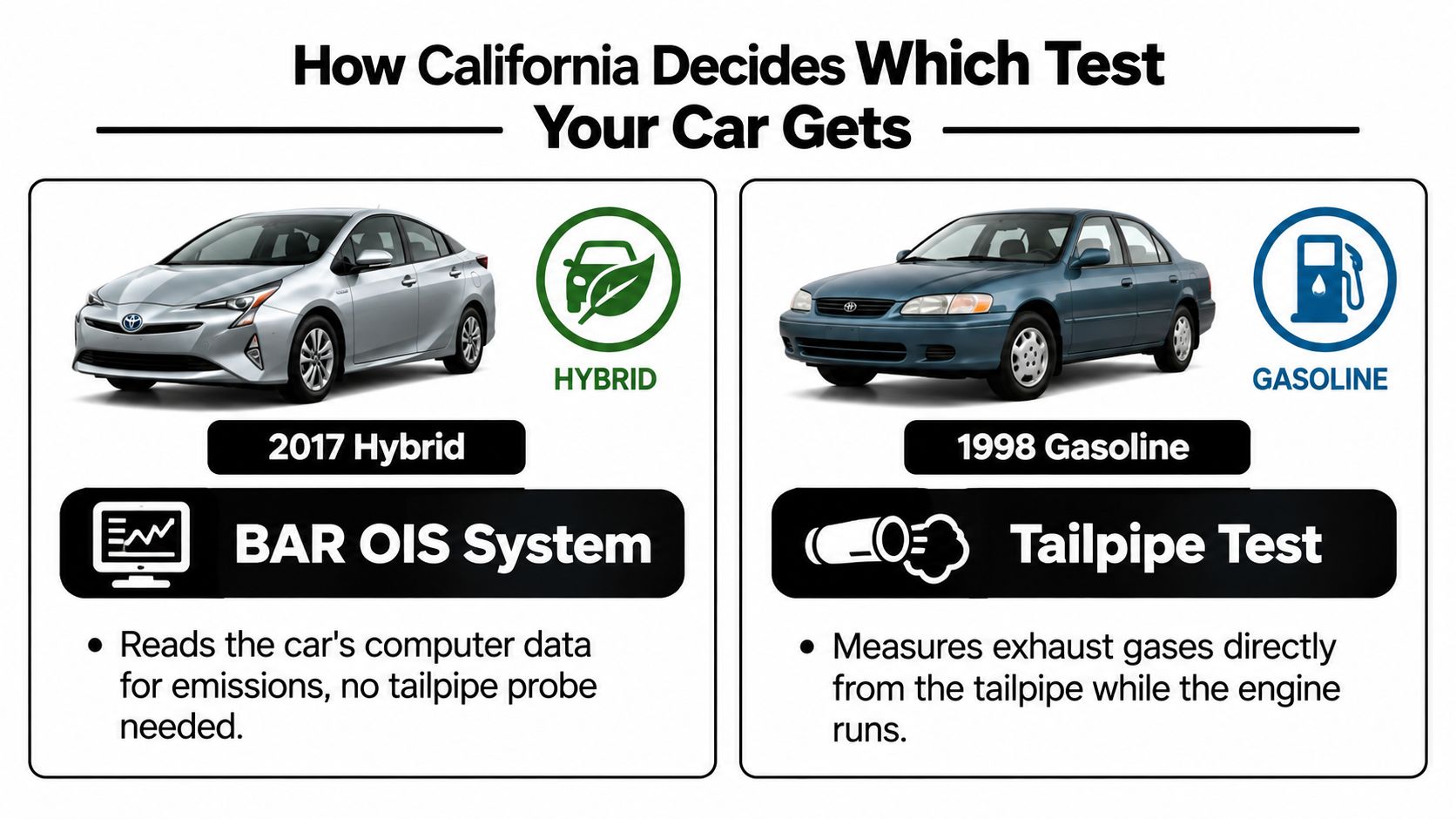
The tailpipe reading isn't the whole test
Both inspection paths can involve visual and functional checks of required emissions equipment. A car may have acceptable measured exhaust and still fail if the catalytic converter, evaporative-emissions system, or fuel cap doesn't pass the required checks. These components help control emissions, so the inspection isn't only asking whether the engine seems to run smoothly.
That distinction explains why a vehicle's neighborhood doesn't determine the procedure. The test equipment and station authorization must suit the car and the DMV's instructions. If a notice directs a vehicle to STAR, the station must also be authorized for that requirement.
Before booking, have the model year, fuel type, and DMV notice available. If the car is a hybrid or diesel, say so when you call rather than assuming that every shop handles every configuration. That small confirmation can prevent a trip to a station that can't complete the right inspection.
What STAR Certification Really Means
A STAR badge isn't just another way of saying a shop offers smog testing. California introduced the STAR program in January 2013, and the Bureau of Automotive Repair evaluates participating stations and inspectors against performance standards. The program also directs certain higher-risk vehicles, including some with prior excessive emissions or a higher predicted likelihood of failing, to qualifying STAR stations.
The share of stations and the share of inspections tell an important part of the story. In 2023, 48% of licensed Smog Check stations were STAR certified, while STAR stations performed 83% of all tests. California reported 3,550 STAR stations as of March 31, 2025 (California STAR program background and station data). These figures show that STAR stations handled a large portion of the inspection workload, even though they made up less than half of licensed stations.
How the oversight works
BAR reviews performance measures that look for inaccurate or improperly conducted tests. One measure, the Similar Vehicle Failure Rate, compares a station's results with outcomes for comparable vehicles. Another, the Follow-up Pass Rate, tracks whether vehicles that passed later show patterns suggesting that an inspection may not have been accurate.
The program also considers test deviations and procedures such as gear selection during dynamometer testing. That's why a STAR designation is best understood as participation in a performance-based oversight system, not a promise that a test will be faster or that every vehicle will pass.
Use the notice as your screening rule
If the DMV notice says STAR inspection is required, choose a STAR station. If it doesn't, STAR status may still be a useful factor when comparing stations, but the notice determines whether it's mandatory.
Before you set out, verify the station's STAR status and confirm that it can inspect your vehicle's model year and fuel type. That quick check is more useful than relying on a short advertised turnaround time alone.
The Hidden Reason a Healthy Car Can Still Fail
A car can feel normal on the road and still be unready for a Smog Check. The check-engine light is an obvious warning: BAR says a vehicle won't pass with the light illuminated. Less obvious is what happens after a battery is disconnected or replaced. The vehicle's emissions readiness monitors may need time to run their self-checks again.
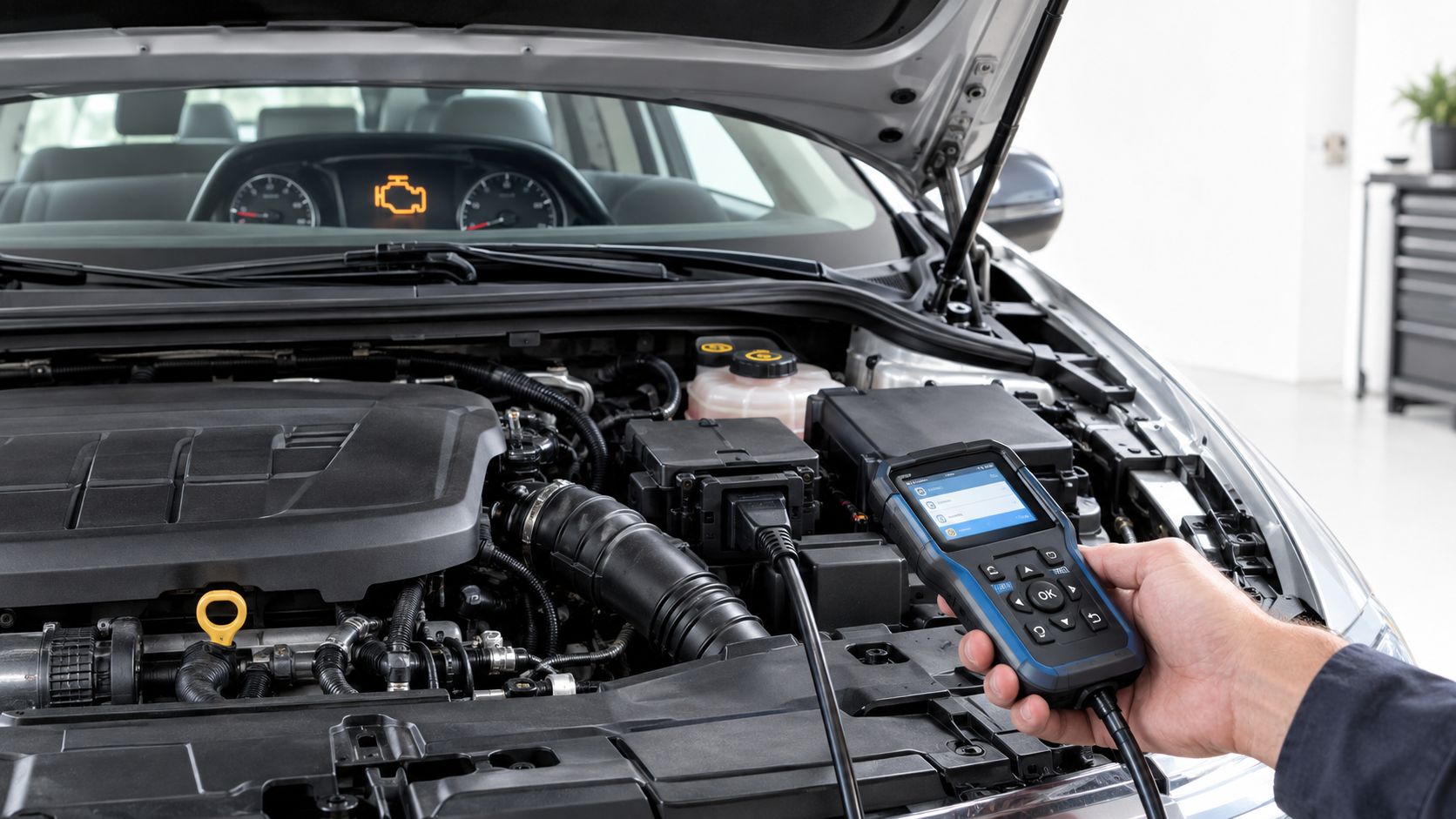
For instance, someone may buy a used car outside California or get a leased car back after service, only to discover that the battery was recently changed. The engine starts, the car drives normally, and there may be no warning light. But if the readiness monitors haven't completed their checks, the inspection may return an incomplete result rather than the pass the owner expected.
BAR advises drivers who recently disconnected or replaced a battery to drive normally for a week or two before testing so those monitors have time to reset (BAR guidance on Smog Check preparation). Clearing trouble codes just before an appointment can create the same problem: the warning might disappear temporarily, but the underlying issue may remain, and the monitors may still be incomplete.
Know the difference between incomplete and failed
An incomplete readiness result doesn't necessarily mean the car has failed because a component is defective. It means the system hasn't finished the checks needed for the inspection to determine readiness. A true failure can result from an emissions-system problem, including one indicated by the check-engine light.
If you're unsure, ask a repair professional to scan the vehicle before paying for a test. BAR's guidance on common reasons a vehicle can fail a Smog Check can also help you prepare questions. Don't assume turning off a warning light or clearing codes has fixed the issue.
A useful sequence is straightforward: check for warning lights, consider whether battery work or repairs happened recently, then book when the car is ready for testing. That's more reliable than using the appointment itself as a diagnostic step.
The following video offers another look at diagnostic checks and vehicle readiness.
What to Bring and How to Time Your Visit
Make the DMV notice your first stop when preparing for the appointment. Confirm whether the vehicle needs STAR testing and check that the notice's vehicle details match the car you'll bring. If someone else is taking the vehicle, make sure they know what the notice requires.
Bring the vehicle's registration and proof of insurance, and be ready to confirm its model year, fuel type, and configuration. Accurate vehicle information matters because the inspection system uses vehicle details to select the correct test parameters. If the recorded information is wrong, the station may need to correct it before the inspection can be completed properly.
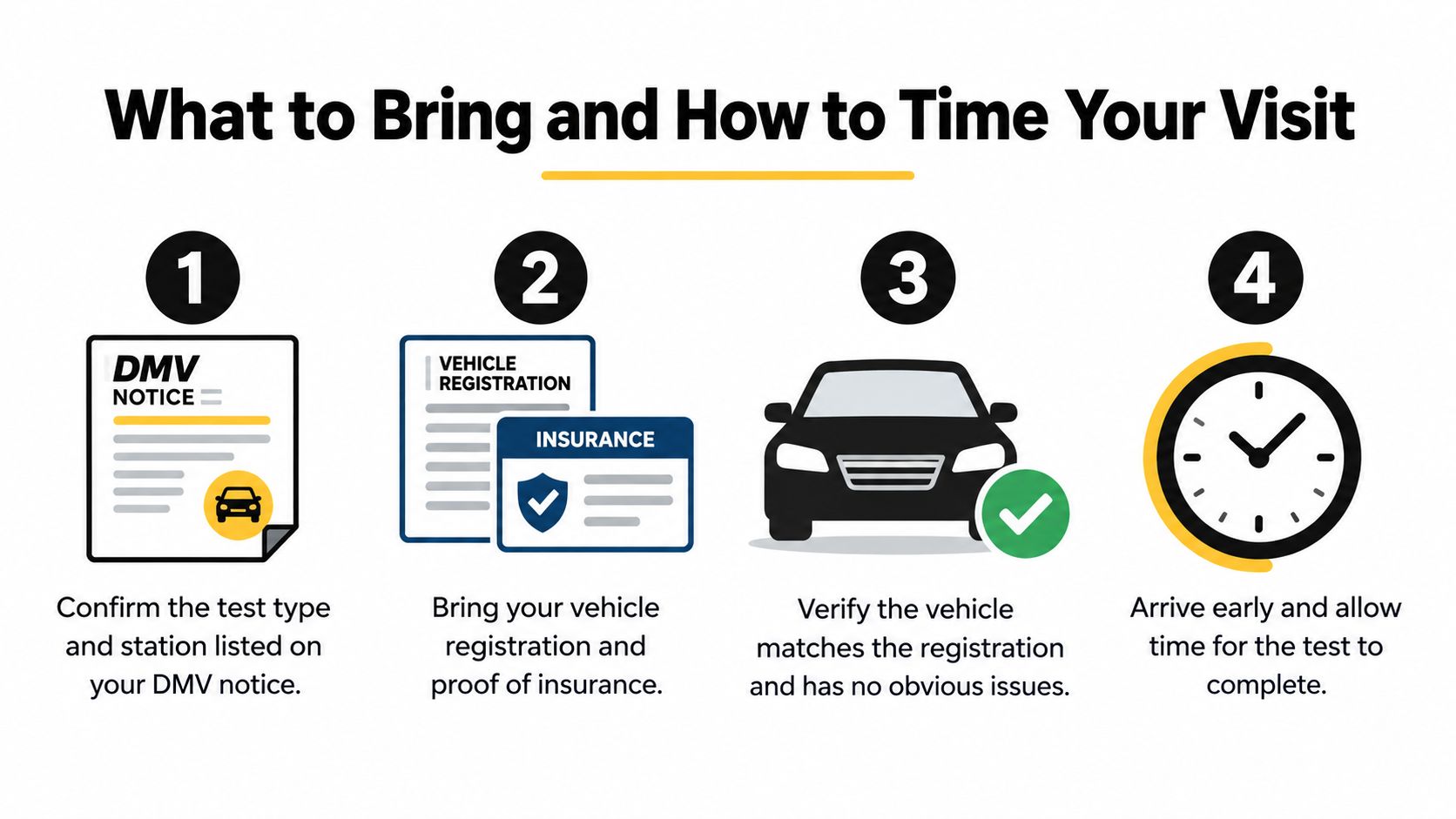
Choose a time that fits your day
If you're coming from Oakland Broadway, call ahead and ask about the likely wait for your particular test type. An early visit may suit a driver trying to avoid a busy period, but don't assume every station follows the same traffic pattern. Ask whether you need an appointment, whether the shop handles your vehicle, and how long you should allow.
Consider a 2017 hybrid whose owner sees a renewal notice requiring STAR testing. The owner should confirm STAR status, tell the station the vehicle is a hybrid, and avoid booking immediately after battery work. Those details matter more than choosing the shop that advertises the shortest visit.
The Smog Check preparation guide provides additional pre-visit guidance. If you're comparing costs, check whether a station currently offers a coupon for your vehicle type. Speedy Smog periodically advertises a $25-off coupon for most smogs on newer vehicles, so confirm the current terms before relying on it.
Before you leave, check:
- DMV instructions: Confirm whether the notice requires STAR.
- Vehicle details: Check that the car, fuel type, and model year are clear.
- Documents: Bring registration and proof of insurance.
- Readiness: Don't test immediately after battery work if monitors may need time to reset.
- Station fit: Confirm the shop can inspect your vehicle and the required test type.
If Your Car Fails, the Math Changes
If a vehicle fails, don't immediately pay for another test without understanding the result. First, keep the Vehicle Inspection Report. It records the inspection outcome and gives you and a repair shop a starting point for deciding what needs attention. Ask the station to explain whether the result was a failure or an incomplete test, and what the report says about the next step.
Your options may include a test-only station, which performs inspections but doesn't carry out repairs, or a test-and-repair station, which can diagnose and repair emissions-related issues as well as test the vehicle. The right choice depends on what the report shows, whether you have a mechanic you trust, and whether the vehicle may qualify for repair assistance.
Check assistance rules before paying for repairs
California's Consumer Assistance Program may provide qualified owners with up to $1,450 for emissions-related repairs on vehicles from model year 1996 onward, or up to $1,100 for vehicles from model years 1976 through 1995 (BAR Consumer Assistance Program repair assistance). The amounts are maximums, not automatic payments. Eligibility depends on program requirements, including a qualifying biennial inspection failure, and the vehicle can't have a tampered emissions system. A required STAR test-and-repair copayment also applies.
Some results, including aborted or manual-mode tests, don't qualify for assistance. That's another reason to preserve the report and check the program rules before authorizing work. The cheapest first test isn't always the least expensive route overall if you then need to arrange a separate diagnosis, repair, and retest.
Match the next step to the vehicle
For a newer gasoline car, use the inspection report to guide diagnosis, then ask whether assistance rules apply before approving emissions repairs. For a 1999-and-older vehicle, make sure the repair shop understands the tailpipe-testing path and the model-year requirements.
A diesel or hybrid owner should confirm that a prospective station and repair shop handle that vehicle type. If the DMV notice directs the vehicle to STAR, that requirement still governs where it can be tested. In each case, the sensible first move after a failure is the same: keep the report, clarify the result, and check eligibility before choosing between separate testing and repair services.
Where Broadway Drivers Usually End Up Going
A driver near Oakland Broadway usually has two workable paths: stay close to the corridor, or go a little farther for a station that matches the car. The better choice is the one that can legally run the exact inspection on the DMV notice. A shop can be five minutes away and still be the wrong stop if it lacks STAR authorization, cannot test a diesel, or uses the wrong method for an older gasoline vehicle.
Speedy Smog is a STAR Certified station at 15275 Washington Avenue in San Leandro. It tests newer and older vehicles, diesels, and hybrids, and typical tests for 2000-and-newer vehicles take about 10 to 15 minutes. The shop is open Monday through Saturday. Those details make it a practical option for drivers comparing a Broadway-area stop with a short trip to San Leandro, provided the station matches the vehicle and the DMV notice.
Compare the whole visit, not just the map
Distance is only the first filter. The question is whether the visit produces a result the DMV will accept. Ask three things before you go: Does the notice require STAR? Can the station inspect your model year, fuel type, and test method? If the car fails, will you need a separate repair shop anyway?
A fast advertised turnaround helps only when it applies to your vehicle and the lane is clear. A test-and-repair shop can save a second trip after a marginal result, while a test-only visit can keep the inspection independent if you already trust a mechanic. The cheapest coupon can also stop looking cheap if a failed result leads to a new diagnosis, a repair visit, and a retest at different addresses.
For an Oakland driver, the practical choice is the station that can legally inspect the vehicle and fits the day's needs. Verify authorization and vehicle fit first, then compare drive time and price.
Your Two Next Steps Before You Book
Start with the renewal deadline and count backward. If the date is still a few weeks out, a recently replaced or disconnected battery is a small problem: normal driving for a week or two lets the readiness monitors reset, as BAR advises. If the deadline is less than three weeks away and the battery was recently replaced, call the station today, describe the situation, and schedule the test for after the monitors reset.
When you call, give one complete sentence: model year, fuel type, and anything unusual such as a cleared check engine light. Then leave a buffer. A pass takes minutes, but a marginal result needs room for the Vehicle Inspection Report, a repair-assistance check, and a retest before the tags expire.
Speedy Smog offers STAR-certified smog testing in San Leandro for newer and older vehicles, diesels, and hybrids, with typical tests for 2000-and-newer vehicles completed in about 10 to 15 minutes. If you're comparing options for a Smog Check near Oakland Broadway, check your DMV requirements and vehicle details, then visit Speedy Smog.