
Brake and Light Inspection Oakland: 2026 VSSI Guide &
You open a DMV notice, see “brake and light inspection”, and assume you need the same old certificate everyone talks about. Then you call a shop, hear a different term, and wonder whether you're about to book the wrong service and lose a day chasing paperwork around Oakland.
That confusion is real. The official term for revived salvage vehicles is now Vehicle Safety Systems Inspection (VSSI), and California's Bureau of Automotive Repair says the old Brake & Lamp Inspection wording is legally outdated even though some paperwork still uses it. If you ask for the wrong thing, you can end up with the wrong appointment and a registration problem instead of a solution. You can review that terminology change on the California BAR safety systems page.
This guide on brake and light inspection Oakland is meant to save you time, money, and repeat trips. It uses the common phrase people still search for, but keeps the official jargon straight so you know what to request, what gets checked, and how to show up prepared.
Table of Contents
- Introduction Navigating Oakland's Brake and Light Inspection
- What Is a California Vehicle Safety Systems Inspection
- Common Reasons for a Brake and Light Inspection Failure
- Your DIY Pre-Inspection Checklist Before You Go
- What to Expect at an Oakland Inspection Station
- Finding a Certified VSSI Station in the East Bay
- Conclusion Pass Your Inspection with Confidence
Introduction Navigating Oakland's Brake and Light Inspection
Most drivers don't start this process because they want to. They start because the DMV, a rebuilder, or a title issue puts the inspection on the to-do list and the wording is inconsistent from the first phone call.
The first thing to know is simple. In everyday conversation, people still say brake and light inspection. In official California use for revived salvage vehicles, you should be asking about a Vehicle Safety Systems Inspection, or VSSI.
That distinction matters because the certificate has to match what the DMV expects. A shop may understand what you mean when you say brake and lamp, but you still want to confirm they perform the current inspection required for your vehicle category and paperwork.
Practical rule: When you call a station, say, “I need a Vehicle Safety Systems Inspection for a revived salvage or rebuilt vehicle. My paperwork may still say brake and lamp.”
That one sentence clears up most of the confusion before it becomes a wasted trip.
What Is a California Vehicle Safety Systems Inspection
A California Vehicle Safety Systems Inspection is a state-required safety inspection tied to putting certain repaired vehicles back on the road. California requires reconstructed vehicles or vehicles involved in a significant accident to pass this inspection before they can be legally registered with the DMV, and technicians must hold the proper certification to sign off on it, as explained in this California brake and lamp certification overview video.
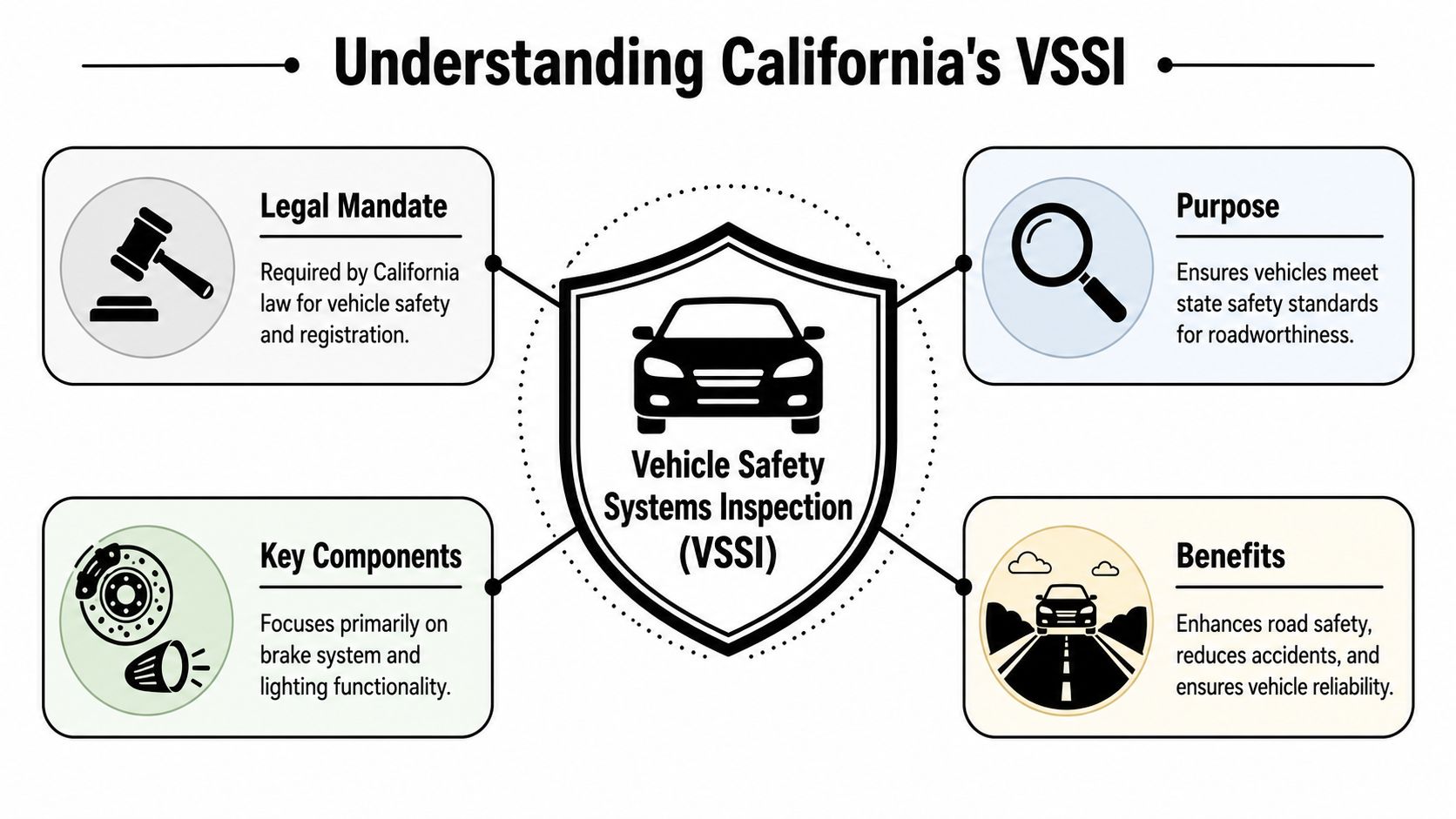
This inspection functions as a post-repair safety signoff, not a routine annual check. The state isn't asking whether the car merely starts and drives around the block. The state wants confirmation that the critical systems tied to stopping and visibility were restored to a roadworthy condition after major damage or reconstruction.
Who actually needs one
This inspection is typically part of the path back to registration for vehicles that have been salvaged, rebuilt, or heavily repaired after a serious incident. If you're dealing with title revival, reconstructed status, or DMV follow-up after major repairs, this is the lane you're probably in.
Regular maintenance customers often confuse VSSI with a smog test or a quick safety look-over. It isn't the same thing. It sits in a different bucket, with different paperwork and different legal consequences.
For a broad overview of how inspection services fit into vehicle compliance, this vehicle inspection service guide gives helpful general context.
Why the state treats it differently
The reason is public safety. When a vehicle has had major structural or collision-related work, the state needs more than verbal assurance that “everything was fixed.” Brakes and lighting are basic survival systems on the road. If either one was repaired poorly, the risk doesn't stay with the owner alone. It affects everyone around that vehicle.
A proper VSSI is also narrower than many drivers expect. It focuses on the systems that determine whether the vehicle can stop correctly and communicate correctly to other drivers. That's why the inspection can feel strict. It should.
A revived vehicle doesn't get the benefit of the doubt. It has to earn its way back onto the road with documentation.
Common Reasons for a Brake and Light Inspection Failure
Most failed inspections come down to things that are mechanical, visible, or both. The inspector isn't grading style or making a guess. They're checking whether specific parts work the way the standard requires.
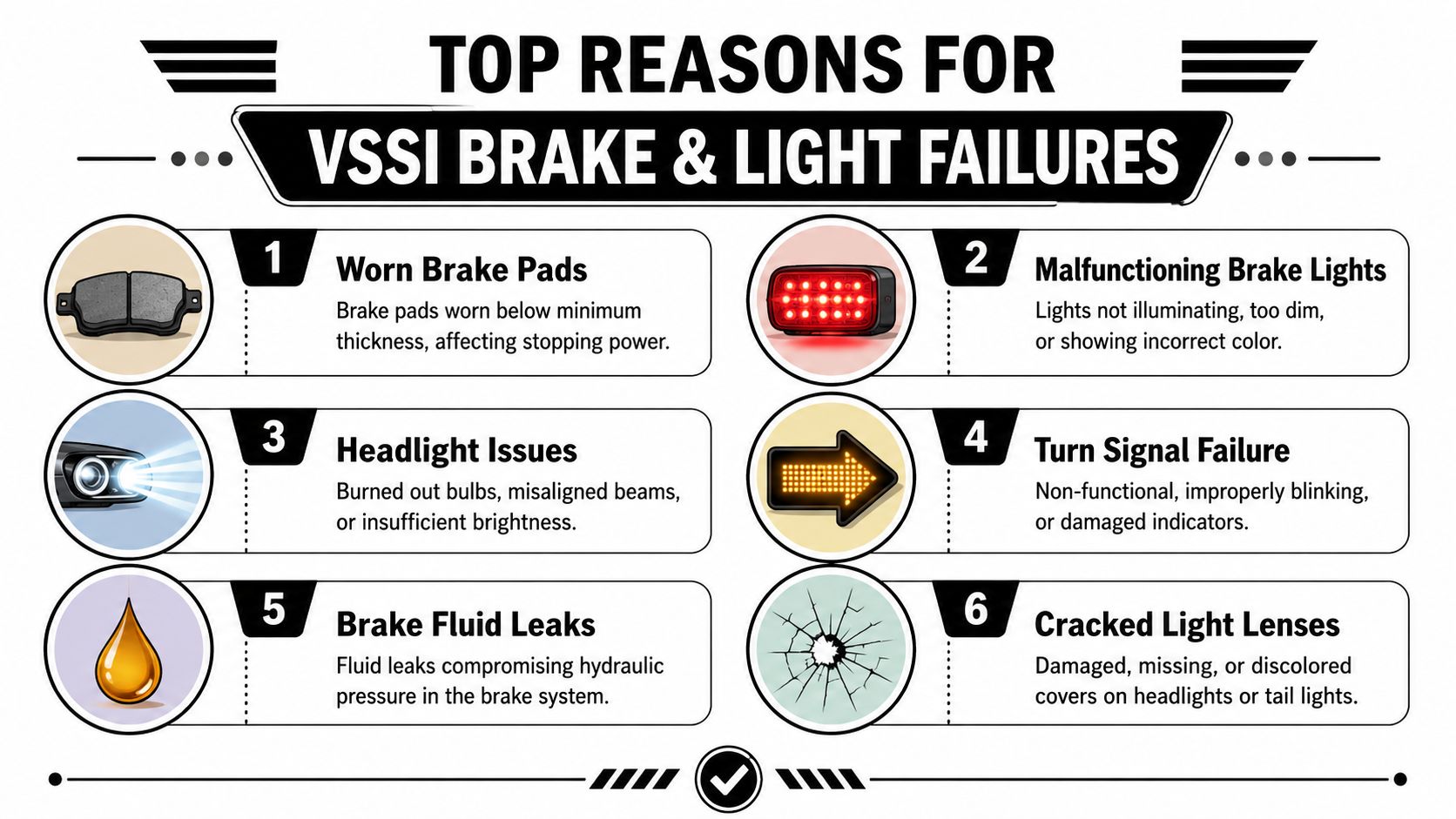
For brakes, the inspection has to verify the performance of the pads, rotors, and hydraulic system. A functioning brake warning lamp is also required unless the vehicle has ABS, and failure can result from problems such as brake pad thickness under 3mm, according to this VSSI brake and lamp inspection reference.
Brake system failures
Here's what tends to knock a car out on the brake side:
- Pads worn too thin. If friction material is below the standard, the vehicle won't pass.
- Rotor condition issues. Rotors that are excessively damaged or inconsistent in operation can raise a red flag.
- Hydraulic leaks or weakness. If the system can't maintain pressure correctly, the inspection stops there.
- Brake warning lamp problems. On vehicles where that lamp is required, it must function because it alerts the driver to hydraulic pressure loss or master cylinder trouble.
Balanced braking matters too. If one side grabs harder than the other and the vehicle pulls during a hard stop, that points to a real safety defect rather than a minor annoyance.
Lighting issues that stop the process
Lighting failures often look small until paperwork is involved. A cracked lens, dim output, wrong color, or a signal that works only sometimes can be enough to send you back for repairs.
Common light-related problems include:
- Brake lamps that don't activate consistently
- Turn signals with erratic blinking or no output
- Headlights that are burned out or visibly compromised
- Damaged lamp covers or lenses
- Rear lighting that doesn't present clearly to traffic behind you
If a light only fails once in a while, assume the inspector will find it on the appointment day.
What doesn't work is treating a flickering bulb or a soft brake pedal like a cosmetic issue. On a VSSI, those are exactly the kinds of faults the process is built to catch.
Your DIY Pre-Inspection Checklist Before You Go
The best way to lower your chance of a failed appointment is to catch the obvious stuff in your driveway first. You don't need a scan tool or a lift to spot many of the issues that derail a brake and light inspection in Oakland.
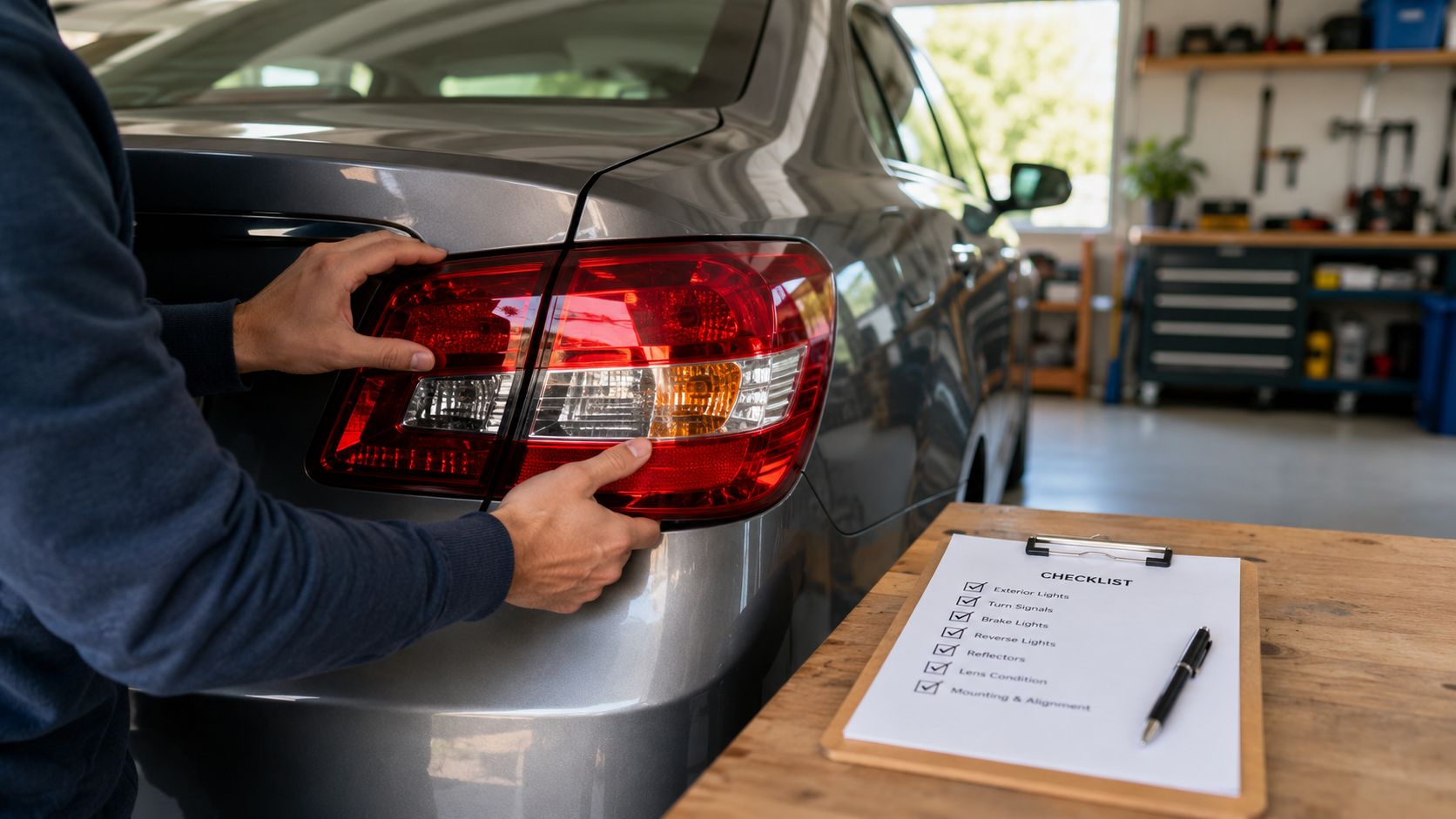
A good pre-check is basic, but it works. If you're methodical for ten minutes at home, you can avoid paying for a professional inspection only to fail on something simple.
A simple check you can do at home
Use this quick sequence:
- Walk around the car with the lights on. Check headlights, tail lights, turn signals, and brake lights. If possible, have another person step on the brake pedal while you watch.
- Look at every visible lens. Cracks, heavy discoloration, moisture inside the housing, or a loose lamp assembly deserve attention.
- Check the brake fluid reservoir. You're not diagnosing the whole hydraulic system here. You're looking for an obviously low level or signs that something isn't right.
- Pay attention to pedal feel. A brake pedal that feels unusually soft, sinks, or behaves inconsistently should be inspected before your VSSI appointment.
- Notice how the car behaves when stopping. Pulling to one side, shuddering, or unusually weak braking is not something to “see if it passes.”
For more practical prep habits before an inspection appointment, these essential vehicle inspection tips for every driver are worth reviewing.
When to fix it before booking
Some problems are easy yes-or-no items. Burned-out bulb. Broken lens. Brake light out. Handle those before you book.
Other problems need a shop first:
- Soft pedal feel
- Visible fluid leak
- Brake warning light concerns
- Uneven stopping
- Recent salvage repair with unfinished electrical work
This walkthrough can also help you think through common inspection-ready checks before your visit:
Don't use the official inspection as your diagnostic appointment. Use it as your certification appointment.
That mindset saves both money and frustration.
What to Expect at an Oakland Inspection Station
The biggest surprise for many drivers is cost. A California Vehicle Safety Systems Inspection in Oakland typically ranges between $250 and $300, and it's separate from a smog check, according to this discussion of California VSSI pricing in the Oakland market. It usually costs more than a standard emissions test because the inspection requires specialized certification.
That doesn't mean every station feels the same to deal with. Some are organized and clear about paperwork. Others are vague on what they provide. Before you drive over, confirm that the station performs the current VSSI required for your DMV situation.
Cost and paperwork
Bring more paperwork than you think you'll need. The exact documents can vary by vehicle history, but drivers usually save themselves trouble by bringing ownership-related paperwork, DMV forms, and records tied to the repairs or rebuild.
Here's a practical snapshot:
| Item | Typical Expectation |
|---|---|
| Inspection type requested | Ask for Vehicle Safety Systems Inspection (VSSI) |
| Price expectation | $250 to $300 in Oakland for VSSI |
| Smog included | No, it's a separate requirement |
| Technician qualification | The station should have properly certified personnel |
| Documents to bring | DMV paperwork, ownership documents, and repair-related records |
| Best phone question | Confirm they perform VSSI for revived salvage or rebuilt vehicles |
How the appointment usually feels
At the counter, the useful conversation is straightforward. What vehicle is it, what's the title status, what paperwork do you have, and what inspection are you requesting. If the staff has to “figure out what you mean” after you say brake and lamp, slow down and confirm they can issue the right certificate.
A smooth appointment usually comes from doing three things first:
- Use the current term. Say VSSI, even if your paperwork says brake and lamp.
- Show up organized. Loose forms and missing receipts create delays.
- Fix obvious defects first. Inspection stations certify condition. They don't erase problems.
Finding a Certified VSSI Station in the East Bay
Many drivers often lose time at this point. Not every general repair shop, smog station, or quick-service garage is authorized and prepared to handle this kind of inspection correctly.
If you're shopping only on price, you can end up with a station that isn't the right fit for a rebuilt vehicle, especially if the car is older or has more complicated systems. That's a poor place to save money.
Not every shop can do this inspection
The right question isn't just “How much do you charge?” Ask these instead:
- Do you perform VSSI for revived salvage vehicles?
- Do you have the proper certified personnel for this inspection?
- What documents should I bring for my specific registration situation?
Those questions tell you very quickly whether the station does this work regularly or whether you're about to become their practice run.
If you're also comparing East Bay stations for regulated vehicle testing more broadly, this STAR-certified emissions testing station overview helps show what a compliance-focused shop looks like.
Why certification matters more on difficult vehicles
For older, diesel, or hybrid vehicles, thoroughness matters more than bargain advertising. Data from 2025 indicates that STAR-certified stations detect 40% more latent defects in advanced braking systems than non-certified shops, according to this report on brake and lamp inspection value and certification differences.
That doesn't mean every non-certified shop does poor work. It does mean certification is a meaningful signal when you're dealing with a vehicle that already has higher risk, more complex systems, or a rebuilt history.
Cheap is only cheap if you pass once, register cleanly, and don't uncover missed problems later.
For a brake and light inspection in Oakland, the smart move is to choose a station that understands the paperwork, the terminology, and the inspection standard well enough to get it right the first time.
Conclusion Pass Your Inspection with Confidence
The hardest part of this process is usually the confusion before the appointment, not the inspection itself. Once you know the official name, the purpose, and the common failure points, the path gets much simpler.
Keep the essentials straight. Ask for a Vehicle Safety Systems Inspection if your vehicle falls into the revived salvage or rebuilt category. Do a quick home check before you book. Bring organized paperwork. Choose a properly qualified station instead of chasing the lowest number you hear over the phone.
That approach saves headaches because it matches how the DMV process works. It also protects you from the two most common problems. Booking the wrong service and showing up with a vehicle that still has obvious defects.
A brake and light inspection in Oakland can feel like one more bureaucratic hurdle. In practice, it's the final confirmation that a repaired vehicle can return to the road safely and legally. If you treat it that way, you'll walk into the appointment far more prepared than most drivers.
If you need a compliance-focused East Bay shop, Speedy Smog is a practical place to start. As a STAR Certified station in San Leandro, it's known for fast, friendly testing and clear communication, which is exactly what drivers want when DMV requirements already feel complicated.