
What Fails a Smog Check: 8 Top Reasons
You've got the DMV renewal notice in one hand and a failed Vehicle Inspection Report in the other, and the car drove fine on the way in. That disconnect is normal in California. A smooth idle doesn't mean the emissions systems have proven themselves to the car's computer, and on most newer vehicles that proof is what the test measures.
California checks three things. There's a visual inspection for missing or modified emissions equipment, a functional check that includes the OBD II scan on newer vehicles, and for older vehicles a tailpipe or dynamometer test that measures gases directly. In an August 2025 statewide sample, the overall initial test failure rate was 8.45%, based on 975,369 initial tests and 82,389 failures, according to California BAR smog check performance reporting. Most of those failures aren't mysteries. They trace back to eight fixable causes, and knowing which one you're dealing with tells you whether you need a gas cap, a drive cycle, or a real repair before you pay for a retest.
Table of Contents
- 1. Illuminated Check Engine Light (Malfunction Indicator Lamp)
- 2. Incomplete OBD II Readiness Monitors
- 3. Failing Catalytic Converter
- 4. Faulty Oxygen (O2) Sensors
- 5. EVAP System Leaks
- 6. Engine Misfires and Ignition System Faults
- 7. Vacuum Leaks
- 8. Malfunctioning EGR (Exhaust Gas Recirculation) Valve
- 8 Common Smog Check Failures Compared
- Fix It Fast and Pass Your Retest
1. Illuminated Check Engine Light (Malfunction Indicator Lamp)
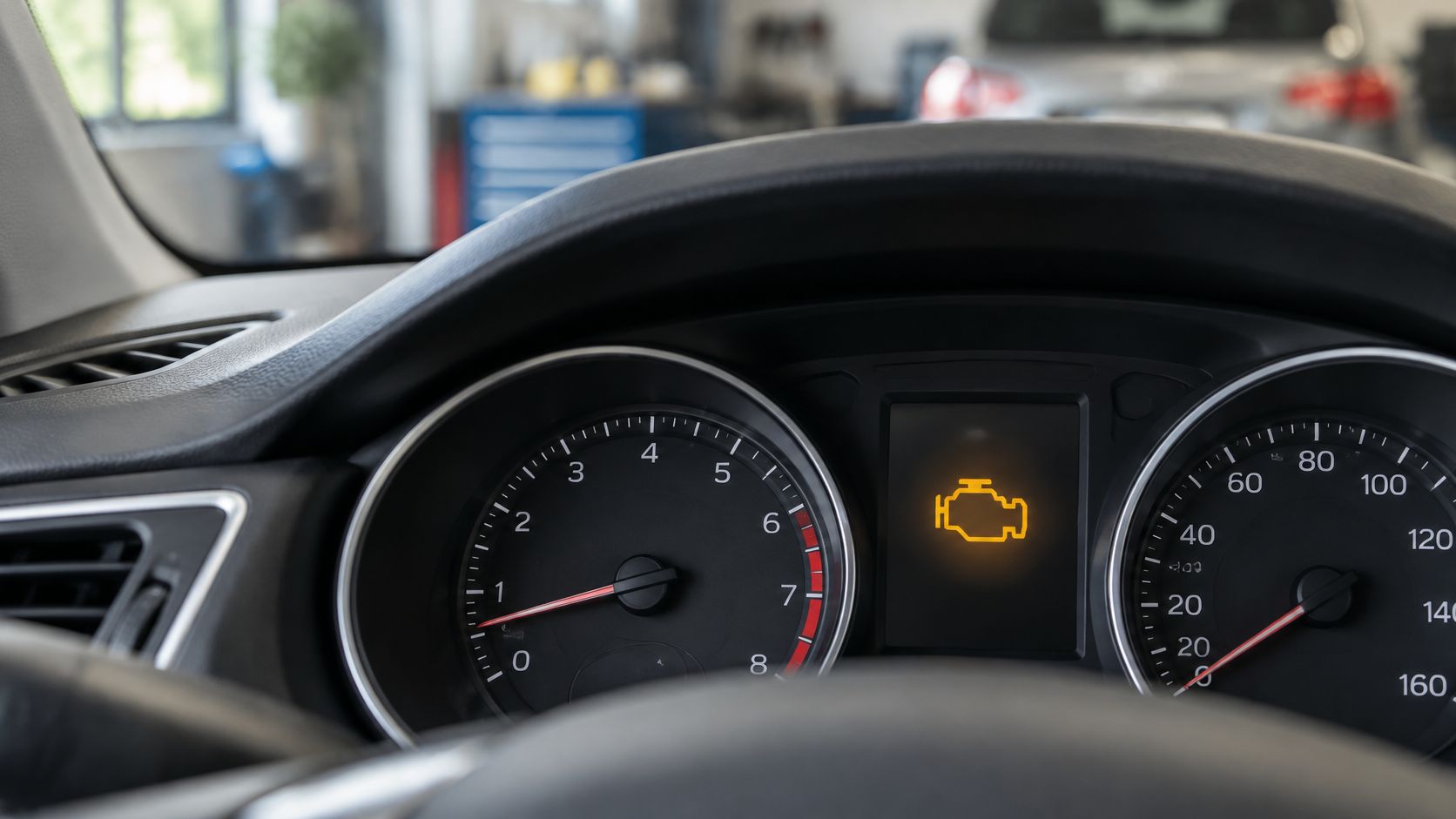
If the Malfunction Indicator Lamp, or MIL, is on with the engine running, you fail. There's no partial credit and no argument about how well the car drives. On 2000 and newer vehicles, the inspector plugs into the OBD II port and the car reports its own verdict. A commanded-on MIL or a stored emissions related diagnostic trouble code means the computer has already found a fault.
That's also why the bulb check matters. Turn the key to on without starting the engine and the light should illuminate briefly. If it doesn't, that fails too, because there's no way to prove the warning system works.
A quick diagnostic example
A driver comes in with the light on, gets the codes read first, and finds a faulty oxygen sensor code. The shop replaces the sensor, confirms the code doesn't return after driving, and the car passes on the next visit. The order matters. Reading the code before you test saves you a documented failure, and learning how to read OBD codes helps you tell a loose gas cap code from something that needs a shop.
- Scan before you test: Get the codes read so you know what repair you're facing.
- Don't clear and rush in: Erasing codes turns the light off but wipes readiness, which creates a different failure.
- Treat a flashing light as urgent: A flashing MIL usually signals a severe misfire that can overheat and destroy the catalytic converter.
Practical rule: The light is the test on a newer car. Fix the cause the code points to, then let the car prove the fix through normal driving.
2. Incomplete OBD II Readiness Monitors
A car can run normally and still fail because its emissions self-tests are incomplete. Readiness monitors check systems such as the catalytic converter, EVAP, oxygen sensors, and EGR. Disconnecting the battery or clearing diagnostic codes can reset monitors to “not ready.” After a repair, the vehicle also needs suitable driving conditions to run those tests again.
California's readiness requirements depend on the vehicle and the monitor. A smog technician can check the car's status against the applicable BAR rules; an incomplete monitor does not automatically mean every vehicle fails. The percentage reported in BAR's August 2025 smog check executive summary should not be read as a readiness-only failure rate without a clear definition of what the figure measures.
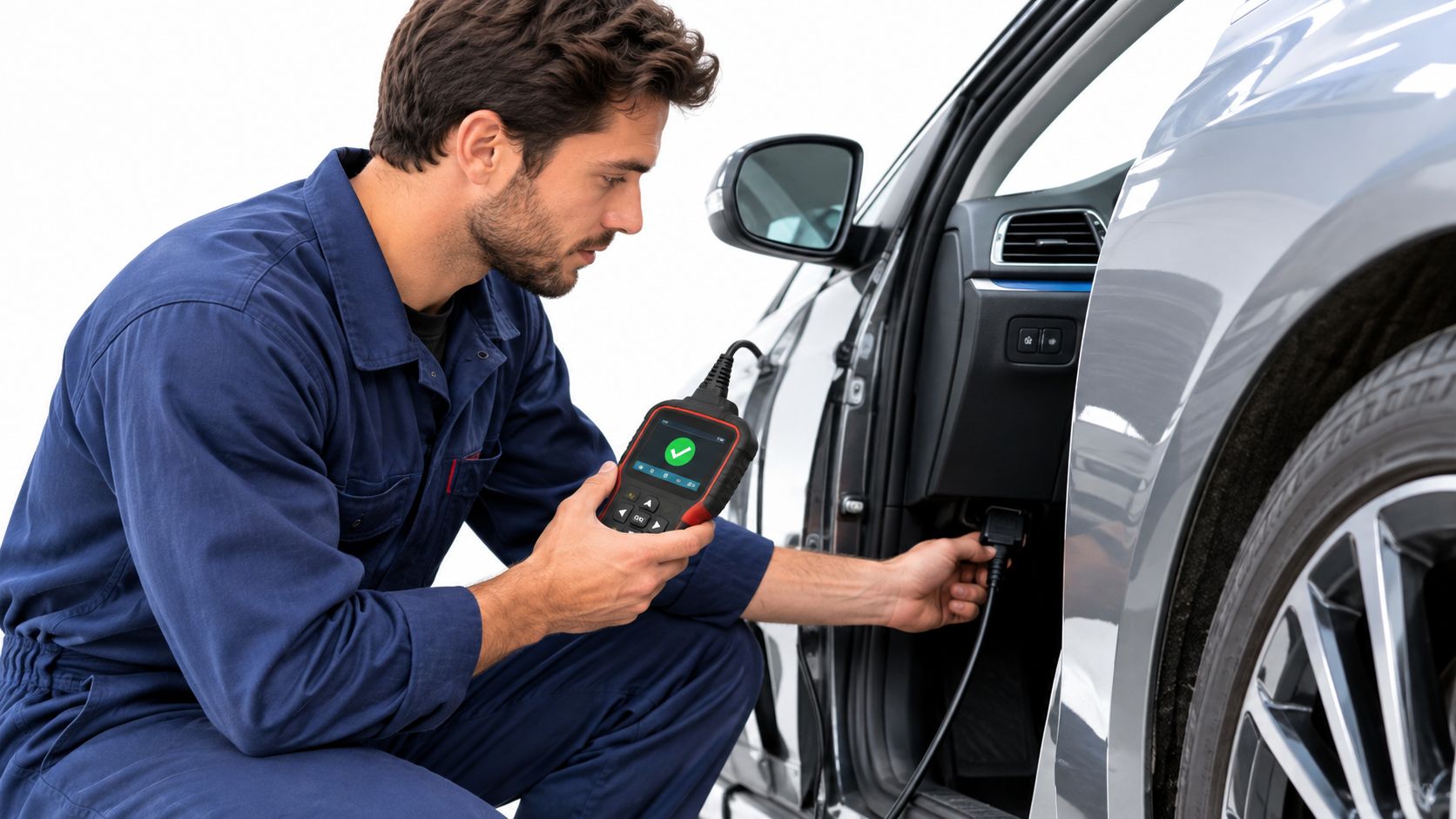
For example, an owner replaces a dead battery on Saturday and drives to the test station Monday. The engine runs well and the warning light is off, but one or more monitors may not have completed. A mix of city and freeway driving, with the engine cooling fully between trips, can help. There is no universal mileage target: fuel level, temperature, cold starts, and steady cruising affect monitor operation, and some vehicles require a manufacturer-specific drive cycle.
- Avoid resets before testing: Don't disconnect the battery or clear codes before an appointment. If a repair requires either, check readiness afterward.
- Vary your driving: Include stop-and-go trips, steady freeway cruising, and full cool-downs.
- Check before the test: Ask a technician to scan monitor status and identify any incomplete tests.
A basic scan tool can show whether monitors are ready before you pay for an inspection. If one remains incomplete, use the vehicle's specified drive cycle or have a technician diagnose why the test has not run.
3. Failing Catalytic Converter
The catalytic converter is where the expensive failures live. It uses platinum, palladium, and rhodium to convert hydrocarbons, carbon monoxide, and nitrogen oxides into less harmful gases. When it wears out, clogs, or gets contaminated by oil or unburned fuel, pollutants pass straight through. Newer cars get caught by a catalyst efficiency code, often P0420. Older cars get caught by the tailpipe numbers themselves.
Age works against you here. California data shows the failure rate rising from about 4% for eight year old vehicles to approximately 15% for 23 year old vehicles, a pattern tied to aging emissions equipment and converter wear in the Bureau of Automotive Repair performance report. Age alone doesn't doom a converter, but wear plus neglected upstream problems usually does.
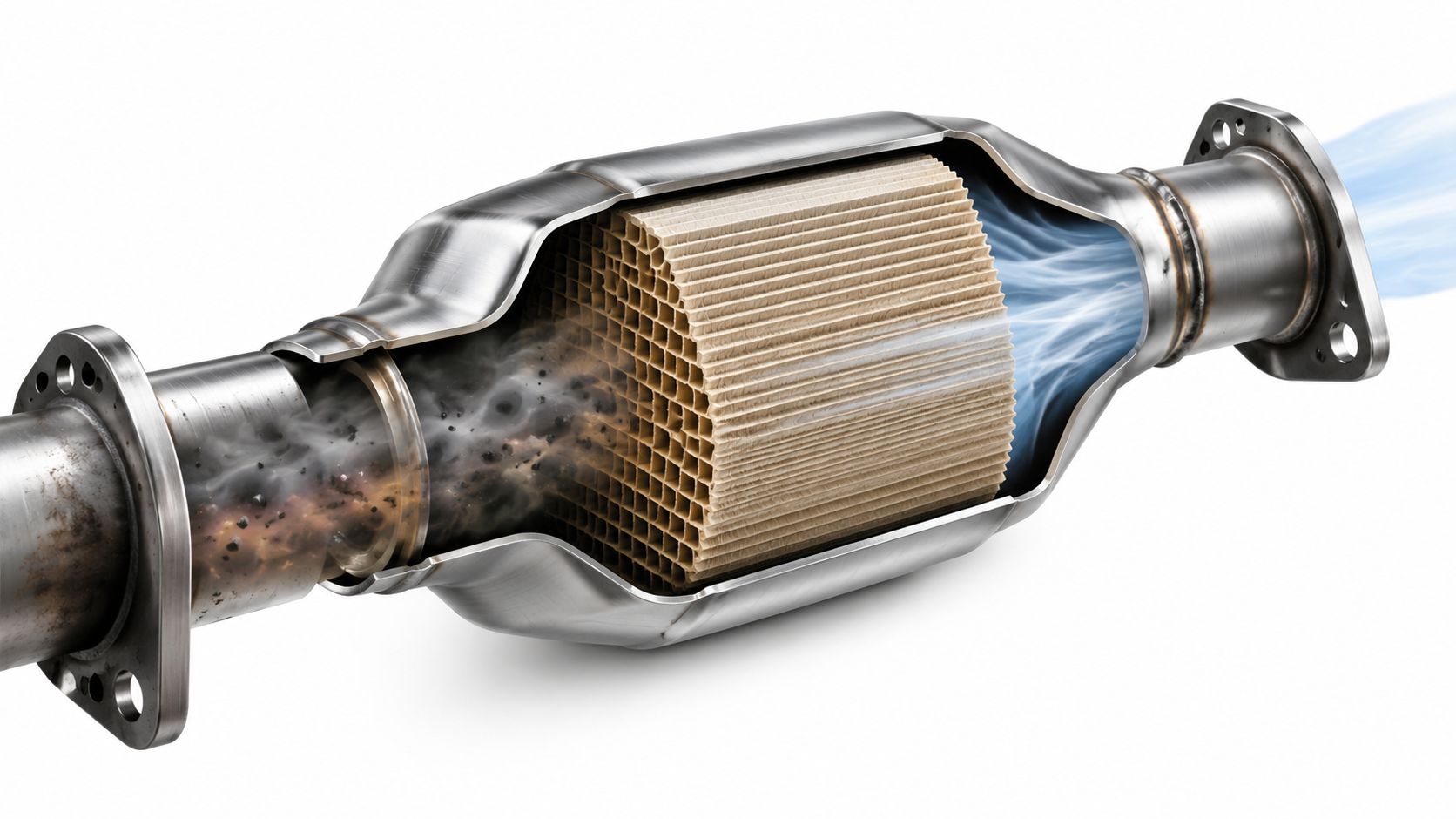
Take a 2005 sedan that fails with a catalyst efficiency code after months of ignored misfires. Replacing the converter alone would waste money, because raw fuel from the misfire is what killed it. The owner repairs the ignition fault first, then installs a California compliant converter, and passes. Understanding how a catalytic converter functions makes that sequence easier to follow when a shop explains the estimate.
Protecting a replacement converter
- Fix misfires and oil leaks first: Both poison or overheat a new converter quickly.
- Confirm CARB compliance: A cheap out of state converter that isn't approved for California can fail the visual inspection.
- Listen for rattles: A rattle at idle or a sudden loss of acceleration can mean the internal substrate has broken apart.
4. Faulty Oxygen (O2) Sensors
Oxygen sensors tell the computer how much unburned oxygen is left in the exhaust, and the computer trims fuel delivery based on that signal. Upstream sensors, mounted before the converter, control the air fuel mixture in real time. Downstream sensors sit after the converter and mostly watch whether it's doing its job. When a sensor gets lazy, responding slowly instead of switching crisply, the mixture drifts rich or lean and emissions climb before you feel anything wrong.
The tricky part is that a dying sensor and a dying converter can look similar. A downstream sensor that's lying can trigger a catalyst code on a healthy converter. A good technician watches live sensor data and compares upstream and downstream waveforms before condemning either part. That diagnostic step is the trade-off. Guessing is faster, but guessing wrong on a converter is an expensive lesson.
Here's a common scenario. A driver notices fuel economy slipping, then the check engine light appears. The scan shows a slow upstream sensor, and after replacement the fuel trims settle back to normal and the emissions reading drops. Reading up on how oxygen sensors affect your smog test helps you ask the right questions about which sensor failed and why.
- Match the position: Upstream and downstream sensors aren't interchangeable, so order by exact location and connector.
- Keep silicone away: Silicone based gasket makers near the exhaust can contaminate sensor elements.
- Respect service intervals: On high mileage vehicles, replacing worn sensors at the manufacturer's recommended interval protects the converter downstream.
A sensor is a wear item, not a lifetime part. Treating it that way prevents bigger bills.
5. EVAP System Leaks
Your gas tank constantly produces fuel vapor, and the EVAP system exists to keep that vapor out of the air. It stores vapor in a charcoal canister, then purges it into the engine to be burned when conditions are right. Any leak in the hoses, canister, purge valve, vent valve, or filler cap lets vapor escape, and the OBD II EVAP monitor is sensitive enough to catch very small leaks. Codes like P0442 for a small leak or P0455 for a large one are smog failures.
Start with the cheapest suspect. A vehicle fails with an EVAP code, the technician inspects the gas cap, and the rubber seal is cracked and flattened. A new cap, a few drive cycles, and the monitor passes. It doesn't always end that easily, but you'd be surprised how often it does.
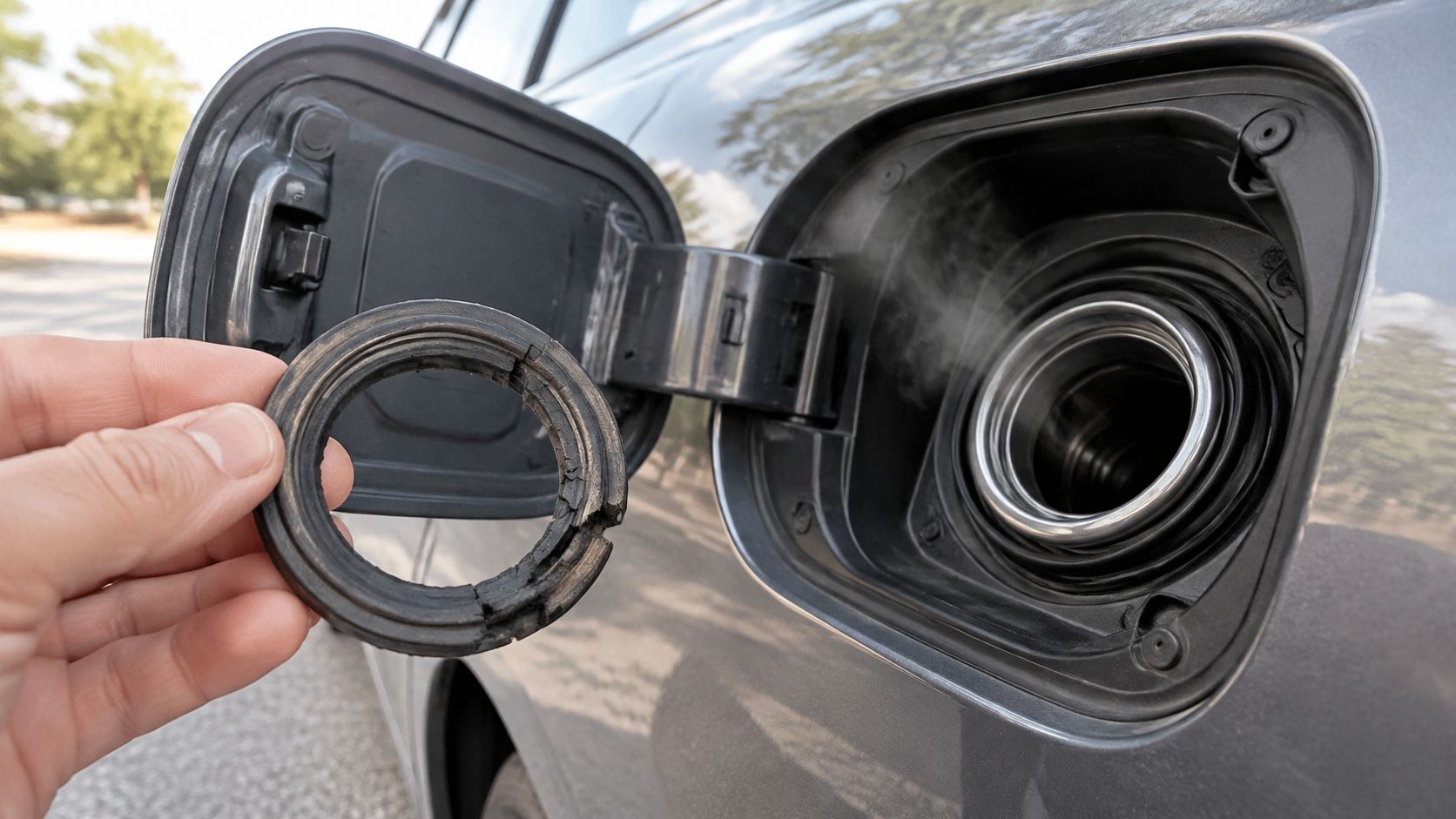
When the cap isn't the culprit, a smoke test is the honest way forward. The shop fills the system with visible smoke and watches where it escapes, which beats replacing valves one at a time on suspicion.
Simple checks before you book a repair
- Click the cap: Tighten it until it clicks and inspect the seal for cracks or a flattened edge.
- Stop at the first click at the pump: Overfilling pushes liquid fuel into the canister and can ruin it.
- Ask for a smoke test: If the leak isn't obvious, pinpointing it first is cheaper than swapping parts.
EVAP failures reward patience. Test, find the leak, fix that one thing, and confirm the monitor completes.
6. Engine Misfires and Ignition System Faults
A misfire means a cylinder didn't burn its fuel charge properly. Worn spark plugs, a failing ignition coil, damaged plug wires, or a fuel delivery problem are the usual causes. That unburned fuel travels into the exhaust, hydrocarbon emissions spike, and the extra fuel burning inside the catalytic converter can overheat it. Of everything on this list, an active misfire does collateral damage the fastest.
Codes help narrow it down. P0300 means random misfires across cylinders. P0303 points at cylinder three specifically, which tells the technician where to start swapping coils or inspecting plugs to see if the misfire follows the part.
Picture a car with a shaky idle that fails for a cylinder three misfire. The shop moves that cylinder's coil to another cylinder, the code follows the coil, and the diagnosis is confirmed. New coil, fresh plugs all around since they're the same age, and the car passes its retest with the converter still intact because the owner didn't keep driving on it.
- Replace plugs on schedule: Follow the interval in your owner's manual and use the exact plug type specified for your engine.
- Don't drive on a flashing light: A flashing MIL during a misfire is the car telling you the converter is at risk right now.
- Fix the whole pattern: If one plug is worn out, the rest aren't far behind, so replacing the set makes sense.
That last point is where people cut corners and end up back in the shop a month later with a different cylinder misfiring.
7. Vacuum Leaks
Engines measure incoming air carefully, and a vacuum leak sneaks in air the computer never counted. Cracked rubber hoses, a failed intake manifold gasket, or a leaking brake booster all create that unmetered air. The mixture goes lean, idle gets rough or hunts up and down, and the computer compensates by adding fuel until it runs out of adjustment range and sets lean or fuel trim codes like P0171. On tailpipe tested vehicles, that lean condition can push hydrocarbons and nitrogen oxides over the limit.
Your ears are a legitimate diagnostic tool here. A driver hears a faint hiss near the intake, follows it to a split PCV hose that's gone brittle with heat, and replaces a part that costs very little. Idle stabilizes, the lean code clears after driving, and the retest passes. Spanish speaking drivers and visual learners alike benefit from seeing the inspection process, and this walkthrough shows what a hose inspection looks like.
Not every leak announces itself. Small cracks that open only when the engine is hot, or leaks under the intake manifold, hide from a visual check. That's when a smoke machine earns its keep, pressurizing the intake so leaks reveal themselves as wisps of smoke.
- Inspect rubber closely: Squeeze hoses and look for brittleness, cracking, or loose clamps.
- Replace proactively on older cars: Aging hoses are cheap insurance on high mileage vehicles.
- Smoke test the stubborn ones: If inspection finds nothing, stop guessing and test.
8. Malfunctioning EGR (Exhaust Gas Recirculation) Valve
The EGR valve routes a measured amount of exhaust gas back into the intake. That dilutes the intake charge, lowers combustion temperatures, and cuts nitrogen oxides, or NOx, which form when combustion gets too hot. It's a simple idea with a dirty working environment, because exhaust deposits carbon everywhere it goes.
Failure cuts both ways. A valve stuck closed, or passages clogged with carbon, sends NOx climbing, which shows up clearly on dynamometer and tailpipe tests for older vehicles. A valve stuck open leaks exhaust into the intake at idle when it shouldn't, causing rough running, stalling, and lost power. Codes in the P0400 range point to flow problems, but the code alone doesn't tell you whether the valve, the passages, or the control solenoid is at fault.
A typical case involves a vehicle with a rough idle and a high NOx reading. The technician removes the EGR valve, finds the pintle and passages packed with carbon, cleans them, tests valve movement, and the next test comes in within limits. Cleaning works when the valve itself still functions. When the diaphragm is torn or the electronic actuator has failed, cleaning is wasted labor and replacement is the honest fix.
Before you authorize EGR work
- Confirm how you're tested: EGR's role in your inspection varies by model year and test type, so ask the technician.
- Clean first if it's sticking: Carbon removal is worthwhile when the valve tests functional.
- Watch the early signs: Rough idle, pinging under load, or a new check engine light often appear before a hard failure.
NOx failures on older vehicles point here more often than anywhere else.
8 Common Smog Check Failures Compared
| Item | 🔄 Complexity | ⚡ Typical resources or effort | 📊 Expected smog-check impact | 💡 Ideal next step | ⭐ Key advantage |
|---|---|---|---|---|---|
| Illuminated Check Engine Light (MIL) | Moderate; depends on the stored fault | OBD II scan and potentially targeted repairs | Lit MIL or emissions-related codes can cause automatic failure | Read and diagnose codes before testing; allow readiness monitors to complete after repairs | Provides an early warning and often points toward the affected system |
| Incomplete OBD II Readiness Monitors | Low; usually requires driving | Several days of varied driving; avoid clearing codes | Test may be rejected or fail if too many monitors are incomplete | Ask which monitors are incomplete and follow an appropriate drive cycle | Often resolves without repairs |
| Failing Catalytic Converter | High; diagnosis and replacement can be costly | Diagnostic testing and a California-compliant replacement if needed | Reduced conversion efficiency can raise emissions and cause failure | Fix misfires or fluid leaks first; verify replacement parts are CARB-compliant | A functioning converter substantially reduces tailpipe pollutants |
| Faulty Oxygen (O2) Sensors | Moderate; correct sensor and location must be identified | Code and sensor testing; replacement is often less costly than a converter | Incorrect fuel control or catalyst monitoring can lead to failure | Confirm the sensor fault before replacing parts | Repair may improve emissions, fuel economy, and drivability |
| EVAP System Leaks | Low to moderate; locating small leaks can take time | Gas cap inspection; smoke testing may be needed | Failed leak detection can cause an OBD II failure | Check the gas cap seal; request a smoke test if the leak is not obvious | Some causes are inexpensive and simple to fix |
| Engine Misfires and Ignition System Faults | Low to high; depends on the cause | Scan tool and ignition or fuel-system diagnosis | Unburned fuel raises emissions and may damage the converter | Address flashing Check Engine lights promptly and diagnose the misfire | Repair can restore smooth operation, fuel economy, and emissions |
| Vacuum Leaks | Low to moderate; locating hidden leaks may require tools | Hose inspection, fuel-trim checks, or smoke testing | Unmetered air can disrupt combustion and trigger failure-related codes | Inspect hoses and intake connections; use a smoke test if needed | Small hose repairs can improve idle and fuel economy |
| Malfunctioning EGR Valve | Moderate; deposits or related passages may need attention | Inspection, cleaning, or valve replacement | Excess NOx can cause failure, particularly on applicable tailpipe tests | Check whether EGR testing applies to the vehicle and inspect the valve and passages | Restoring EGR operation helps control NOx emissions |
Fix It Fast and Pass Your Retest
Knowing What Fails a Smog Check is only useful if it changes what you do before the test. Run through a short checklist a week out. Confirm the check engine light is off and has been off through several days of normal driving, not just since this morning. Make sure you haven't disconnected the battery or cleared codes recently, and if you have, drive a mix of city streets and freeway miles with full cool downs in between so the readiness monitors can complete. Click the gas cap tight, top up your maintenance, and arrive with the engine fully warmed up after a real drive rather than a two minute trip from home.
That preparation matters more than most drivers realize. California's newer readiness expectations mean a repaired car can still fail if its monitors haven't rerun, even with no active code present. The statewide failure rate for 2000 and newer vehicles was about 7% in calendar years 2024 to 2025, and the updated rule applies to gasoline vehicles model year 1996 and newer and diesel vehicles model year 1998 and newer, according to BAR's explanation of the new OBD readiness monitor regulations. In plain terms, repairing the fault and proving the repair are two separate steps, and the inspection checks both.
If you've already failed, don't guess. Read your Vehicle Inspection Report and identify the exact failure category, whether that's OBD codes, readiness, visual, functional, or tailpipe emissions. That category tells the repair shop where to start and keeps you from paying for parts the car doesn't need. After the repair, resist the urge to drive straight back. Complete the drive cycle, verify monitor status with a scanner if you can, and then retest. Drivers who skip that verification step are the ones who fail twice for two different reasons.
Shop advice: Bring your failed inspection report to the repair shop. It turns a vague conversation into a specific work order.
East Bay drivers who want the testing side handled efficiently can visit Speedy Smog in San Leandro, a STAR Certified station that tests 2000 and newer models, 1999 and older vehicles, diesels, and hybrids. Whether you're coming in for a first test or returning after a repair, going in with the light off, the monitors ready, and the gas cap clicked puts the odds firmly in your favor.
If your renewal deadline is coming up or you're returning after fixing a check engine light, incomplete monitor, or EVAP leak, bring your vehicle to Speedy Smog in San Leandro for STAR Certified testing for newer cars, older vehicles, diesels, and hybrids. The team will run your inspection efficiently, explain your Vehicle Inspection Report in plain English if anything doesn't pass, and help you understand what to fix before a retest. Stop by and get certified so you can finish your DMV registration without another wasted trip.