DMV Smog Check Near Me: Your East Bay Guide to Speedy Smog
For most East Bay drivers, a required DMV smog check can be finished in about 10 to 15 minutes at a certified station like Speedy Smog if you're driving a model-year 2000 or newer vehicle. If your car falls into the regular California renewal cycle, that visit usually comes around every 2 years once a gas-powered vehicle is 8 model years old or older.
That's why so many people end up searching for DMV smog check near me at the exact same moment. The registration notice shows up, the deadline feels closer than it should, and suddenly you need a nearby shop that can handle the inspection without turning a simple errand into half your day.
In the East Bay, the easiest path is usually not finding the cheapest listing or the closest pin on a map. It's finding a certified station that can handle the right type of inspection, tell you whether your car is ready, and get the result to the DMV without extra back-and-forth. That's where a little preparation saves a lot of annoyance.
Table of Contents
- That DMV Smog Notice Is Here What Now
- Is a STAR Certified Station Required for You
- How to Prepare Your Car for a Fast Pass
- The Speedy Smog Experience in San Leandro
- Decoding Your Smog Check Results
- Frequently Asked Smog Check Questions
That DMV Smog Notice Is Here What Now
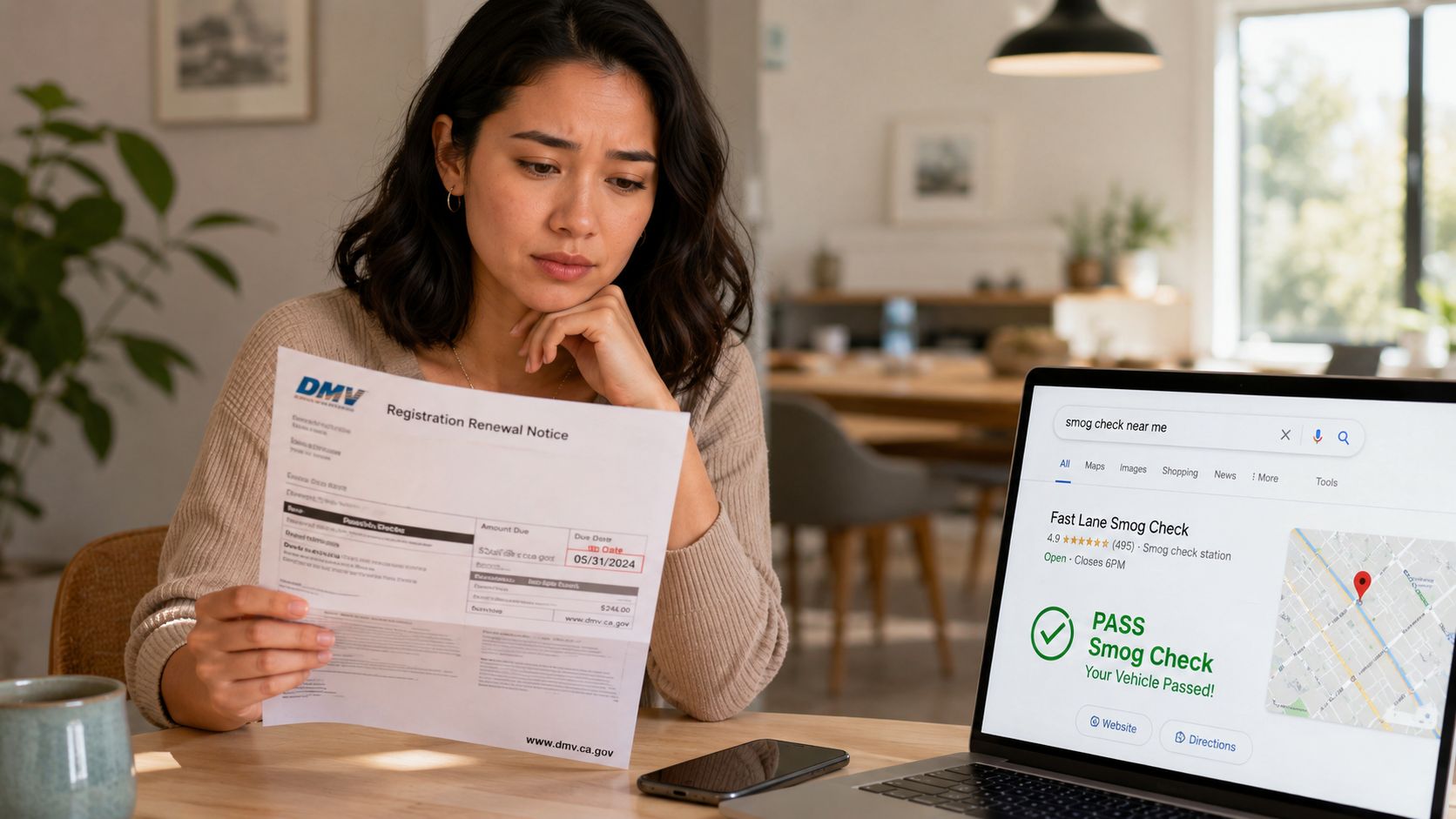
When that renewal notice lands in your hand, the first move is simple. Check whether smog certification is required, then handle it before the registration deadline starts crowding everything else on your calendar.
Why this keeps coming up
California ties the Smog Check program directly to registration. According to California's overview of state services and smog program access, gas-powered vehicles that are 8 model years old or older and 1976 or newer generally need a Smog Check every 2 years. That repeating cycle is the reason this search shows up again and again for East Bay drivers.
That matters because individuals seeking a DMV smog check near me aren't shopping for an optional maintenance item. They're clearing a registration requirement. Once you look at it that way, the job becomes more straightforward. You need the right station, the right timing, and a car that's ready for the test.
Practical rule: Treat the smog check like part of registration paperwork, not like a separate repair visit.
What to do first
A clean, low-stress smog visit usually starts with three checks:
- Read the notice carefully: Look for whether smog is required at renewal and whether the notice says STAR.
- Think about your car's recent history: If the battery was disconnected, the check engine light came on recently, or repairs were just done, timing matters.
- Choose a nearby certified station: In the East Bay, convenience matters because this is usually a quick compliance stop, not an all-day appointment.
The biggest mistake is waiting until the last minute, then rushing into the first station you see online. A little planning turns this from “another DMV headache” into a short stop on the way home or during a lunch break.
Is a STAR Certified Station Required for You
Not every smog check is the same. One detail changes where you should go, and whether a regular station will work at all. That detail is STAR certification.
Where to look on your renewal notice
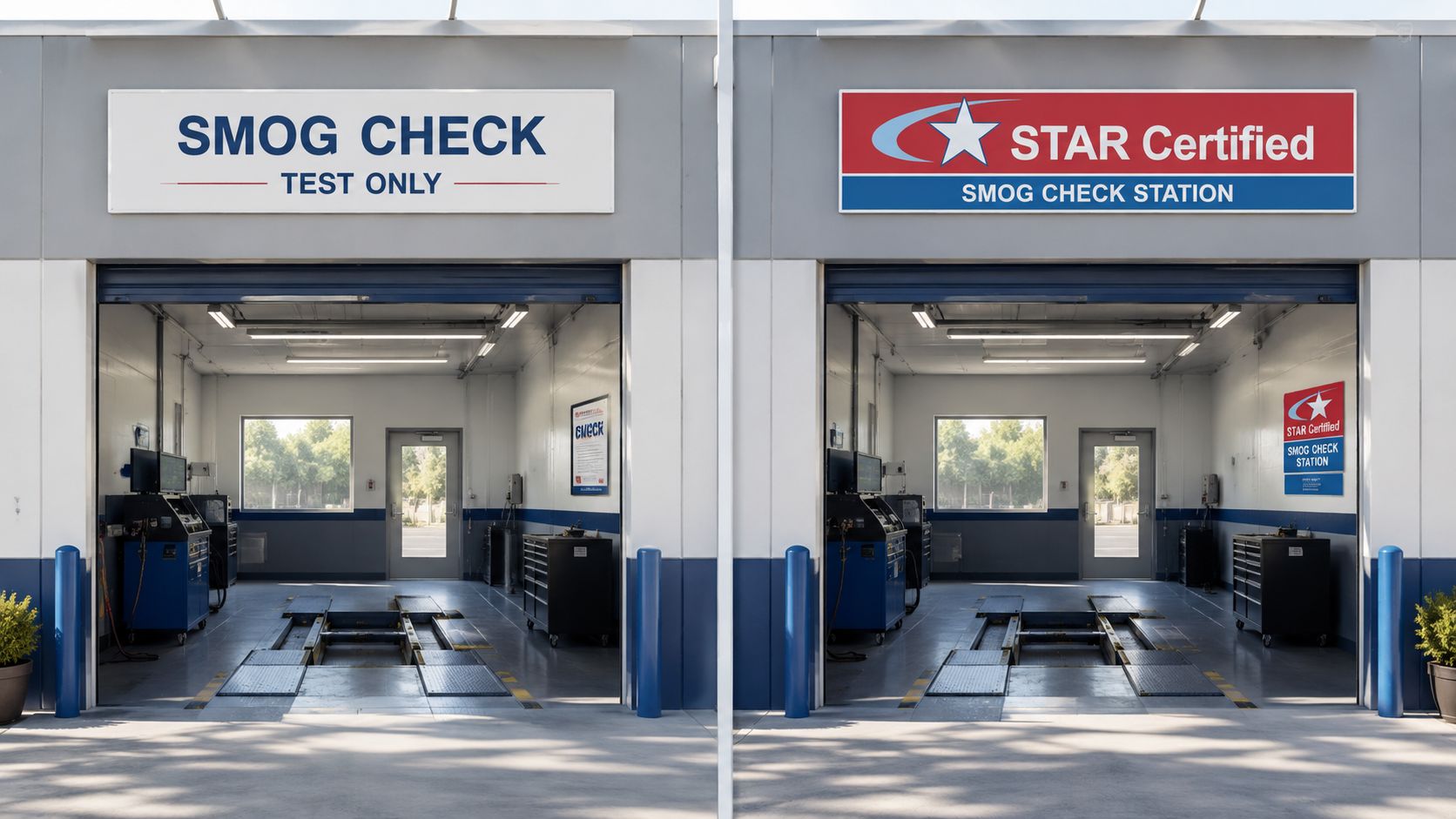
If your DMV paperwork says STAR is required, don't ignore it. A standard station won't help if the notice directs you to a STAR location.
California's smog framework relies on licensed stations as part of the compliance path, and STAR stations matter because they meet additional performance standards within that system. If you want a plain-language breakdown of what that means in practice, this explanation of what a Smog STAR station is is useful.
Why drivers get tripped up here
A lot of people search for DMV smog check near me and assume the nearest result can handle any inspection. Sometimes that's true. Sometimes it wastes a trip.
Here's the decision test that works:
| Notice says | What you need |
|---|---|
| Smog required | A licensed smog check station |
| STAR required | A STAR Certified station |
| You're unsure | Call first and read the notice exactly as written |
This is one of those trade-offs that matters more than price shopping. Saving a few minutes on the drive doesn't help if you show up at the wrong kind of facility and still need to go somewhere else.
If your renewal notice says STAR, believe the notice and choose accordingly.
Why local matters in the East Bay
A nearby STAR station is useful for a simple reason. Smog checks are often a same-day errand squeezed between work, school pickup, or another stop. Drivers in San Leandro, Oakland, Hayward, and the surrounding East Bay usually want one visit, one inspection, and no guesswork.
When you're choosing a station, ask practical questions instead of marketing questions:
- Can they handle the exact inspection listed on your notice?
- Do they work on the vehicle type you're bringing in?
- Can you get in and out without turning this into a half-day task?
That's what separates a useful local option from a random search result.
How to Prepare Your Car for a Fast Pass
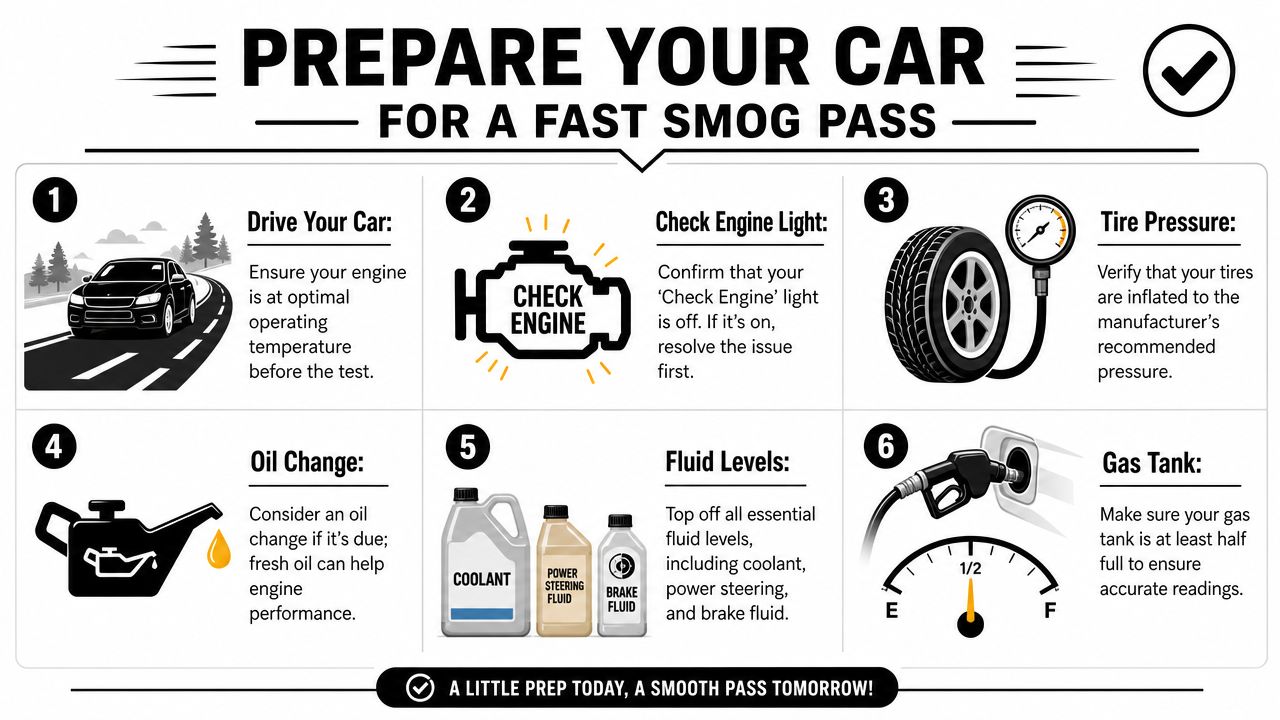
A smog check usually goes quickly when the car is ready for inspection. The drivers who lose time are usually dealing with one of two problems. A check engine light is on, or the vehicle computer was recently reset and has not finished its self-checks.
The two issues that cause avoidable trouble
In the shop, this is what catches East Bay drivers most often. The car seems fine, it starts, it drives normally, and there is no obvious symptom. But if the check engine light is on, or if codes were just cleared after a repair or battery disconnect, the inspection can still fail or come back as not ready.
That second issue frustrates people because it does not always feel like a real problem. It is still a real smog problem.
A quick warm-up helps too. Bring the car in after normal driving, not after it has been sitting cold in the driveway all morning. If you want a realistic sense of timing once you arrive, this guide on how long a smog check usually takes in San Leandro sets expectations well.
What works before you arrive
- Look at the dash before you leave: If the check engine light is on, deal with that first.
- Drive the car long enough to fully warm it up: A short errand with a cold engine is not the ideal setup.
- Do not clear codes right before testing: Turning the light off is not the same as making the car ready.
- Wait after battery replacement or disconnect: Many vehicles need regular driving before the monitors reset and report properly.
- Bring the car after everyday use: Highway and city driving are usually better prep than idling for a few minutes.
A car can drive perfectly and still be unready for an OBD-based smog inspection.
That is why the cheapest option is often waiting one more day and testing once, instead of rushing in and paying again.
To see the basic process visually, this walkthrough helps:
How to avoid paying twice
The practical sequence is simple:
- Fix the warning-light issue first.
- Drive the vehicle enough for readiness monitors to complete.
- Test the car only after it is ready.
I have seen plenty of drivers clear a code, see the light disappear, and head straight to a station. That move saves nothing. It often leads to a second trip, another fee, and more irritation than the original repair.
If you want the fastest visit at a place like Speedy Smog, show up with a warmed-up car, no warning lights, and no recent reset unless you know the monitors are ready. That is the closest thing to a first-time pass formula.
The Speedy Smog Experience in San Leandro
A good local smog visit feels boring in the best way. You pull in, the technician confirms what your vehicle needs, the inspection happens, and you're on your way.
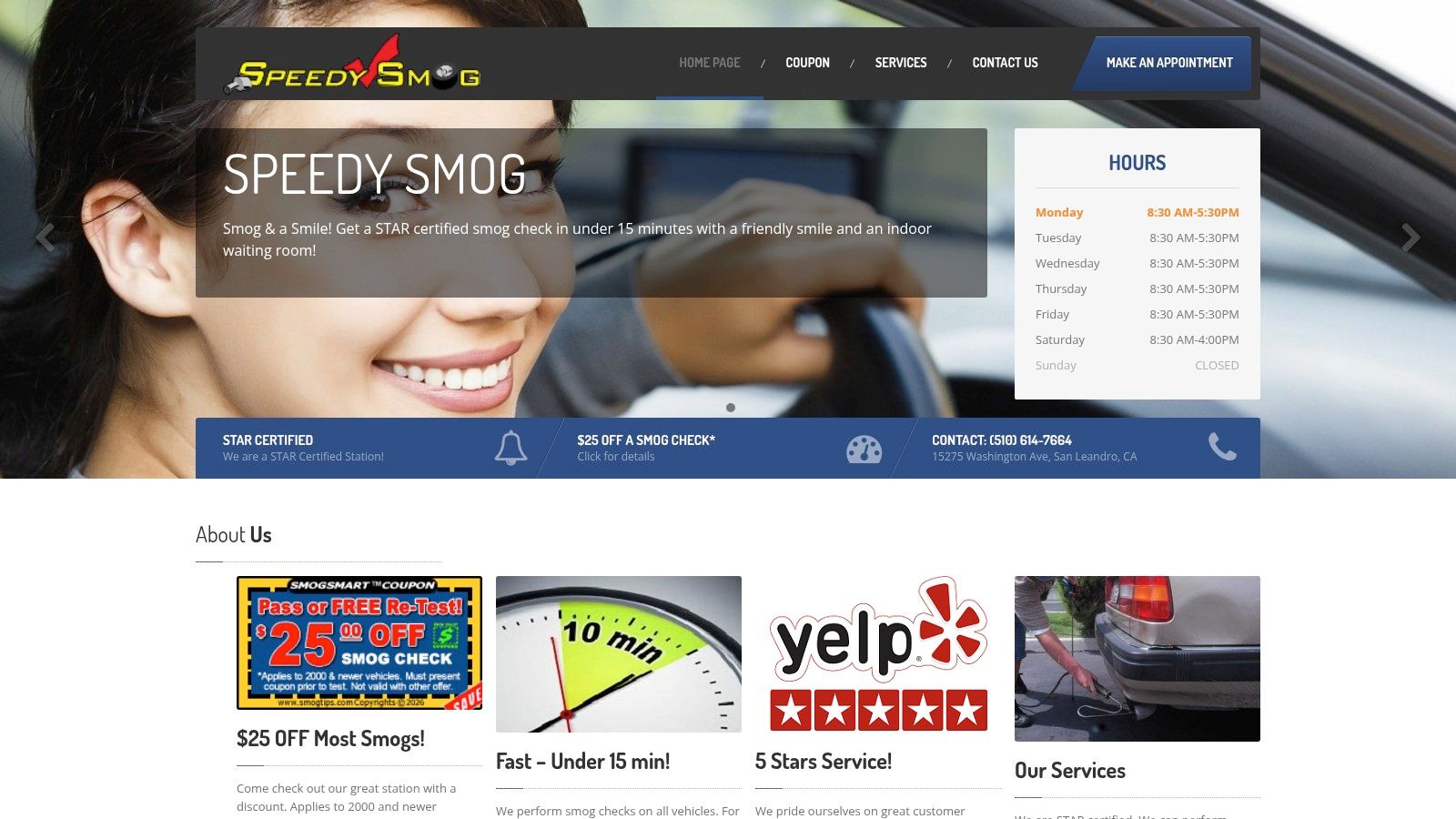
What the visit usually looks like
At a San Leandro station like Speedy Smog, the process is built around fast DMV compliance for local drivers. The shop is located at 15275 Washington Ave, San Leandro, CA 94579, and it handles inspections for many common vehicle types, including newer cars, older vehicles, diesels, and hybrids.
For timing expectations, this page on how long a smog check takes matches what many drivers want to know before they leave the house. For many 2000 and newer vehicles, the visit is commonly a short stop rather than a drawn-out appointment.
Cost, comfort, and trade-offs
In California markets, this California smog FAQ says smog checks for model-year 2000 and newer vehicles typically cost between $45 and $70, inclusive of the certificate. That's why speed, location, and getting it done correctly matter more than turning the search into an hour of comparison shopping.
The practical trade-off is simple:
- Cheaper isn't always faster
- Closer isn't always the right certification
- A quick, clean visit usually depends on showing up prepared
A nearby station with a comfortable indoor waiting area also changes the experience more than people expect. If you're handling this between errands, comfort matters.
Estimated test times by vehicle type
Here's a practical way to think about turnaround:
| Vehicle Type | Estimated Test Time | Notes |
|---|---|---|
| 2000 and newer | About 10 to 15 minutes | Common quick-turn inspection for many everyday vehicles |
| 1996 to 1999 | About 25 minutes | Often takes longer than newer OBD-focused tests |
| 1995 and older | About 35 minutes | Older vehicles usually need more time |
| Diesel or hybrid | Varies | Call ahead to confirm the exact process for your vehicle |
That range helps set expectations. If you drive a newer car and it's ready, this can be one of the easier tasks on your registration list.
Decoding Your Smog Check Results
Once the inspection is done, you only have two outcomes that matter. You passed, or you didn't. Either way, the next step is straightforward when the station explains it clearly.
If your vehicle passes
When a car passes, the useful part is convenience. The station handles the certification process electronically, so you don't need to turn a successful inspection into another paperwork chase.
That's one reason drivers prefer established DMV-focused stations. The pass result moves directly into the registration workflow instead of leaving you wondering what to upload, print, or mail.
A passing smog check should feel like a box checked, not the start of another task.
If you want a clearer breakdown of what the paperwork and status usually mean, this explanation of smog test results gives a simple reference point.
If your vehicle doesn't pass
A failed inspection is annoying, but it isn't mysterious. You'll typically get a Vehicle Inspection Report, often called a VIR, that shows why the car didn't pass.
From there, focus on the reason listed on the report. Don't guess. Don't approve random parts replacement without diagnosis. If the issue is a warning light, unresolved code, or readiness problem, the fix path is different from an actual emissions hardware problem.
A calm next-step checklist looks like this:
- Read the VIR carefully
- Repair the actual cause
- Make sure the vehicle is ready before returning
- Retest after the underlying issue is addressed
California also offers repair-assistance pathways in some cases through its Consumer Assistance Program, which can be worth checking if the repair burden is larger than expected.
Frequently Asked Smog Check Questions
What should I bring to a smog check
Bring the car, and bring your renewal notice if you have it. That notice helps the station confirm whether DMV is asking for a regular test or a STAR inspection. If you have current registration paperwork in the glove box, keep that handy too. It can speed up check-in and clear up name, plate, or VIN questions fast.
Do I need an appointment
Not always.
A lot of East Bay drivers want a walk-in because smog checks usually land in the middle of a workweek, right when you are already juggling enough. Calling first is still smart, especially if the vehicle is older, diesel, hybrid, or tied to an unusual registration issue. A quick phone check can save you a wasted trip.
What if my car recently had the battery disconnected
Wait until the car is ready to test. A recent battery disconnect or code clear can reset the vehicle's emissions monitors, and that can stop a pass even if the car feels fine.
This catches people all the time. The car runs normally, no obvious problem shows up, then the test gets delayed because the system has not finished its self-checks. If that happened recently, say so before the inspection starts.
What if my car fails
Start with the VIR. That report tells you what failed.
Do not guess, and do not approve random parts replacement just because someone says it is probably a sensor. A check engine light, an incomplete monitor, and an actual emissions component failure all point to different repair paths. Fix the specific problem, then return once the car is ready for retest.
Are some vehicles exempt from smog inspection
Yes. Some vehicles are exempt based on age, fuel type, weight, or model year rules. Electric vehicles are generally exempt, and older specialty categories may be exempt as well. If you want the current California rule set for your exact vehicle, check the California DMV smog inspections page.
How do I make this as fast as possible
The fastest smog check usually starts before you leave home:
- Confirm you need the test
- Check whether your notice says STAR
- Make sure no warning lights are on
- Do not show up right after a battery reset or code clear
- Drive the car long enough to get fully warmed up
That routine saves time, cuts down on repeat visits, and gives you the best shot at getting it done right the first time.
If you want a local station that handles California smog compliance without a lot of hassle, Speedy Smog is a practical East Bay option for drivers who want a certified inspection, a short visit, and a straightforward path to getting registration moving again.