What Is a Smog STAR Station: Your 2026 Guide
A STAR station is a California smog check facility that meets higher performance standards set by the Bureau of Automotive Repair, and some vehicles are specifically required by the DMV to go to one. The program was launched in 2013 after Assembly Bill 2289 created it, and for many drivers the only practical difference is that your renewal notice may say you need a STAR-certified shop instead of just any smog station.
If you're reading this, there's a good chance your DMV renewal notice mentioned a STAR station and immediately made a routine smog check feel more complicated. That reaction is normal. Most drivers don't spend time thinking about BAR rules, station categories, or which shops can test versus repair until the DMV puts that word in front of them.
The good news is that STAR isn't a different test you have to study for, and it doesn't mean your car is in trouble by default. It mostly tells you where you need to go, what kind of station the state wants handling your inspection, and how to avoid wasting time at the wrong shop.
Table of Contents
- Your DMV Renewal and the STAR Mandate
- The STAR Program Explained
- STAR Station vs Regular Smog Check What's the Difference
- How to Find a STAR Station and What to Expect
- Your Local STAR Station in the East Bay Speedy Smog
- East Bay Driver FAQs About STAR Smog Checks
Your DMV Renewal and the STAR Mandate
Your registration notice shows up, you scan the page, and one line jumps out: your vehicle must be tested at a STAR station. For many East Bay drivers, that sounds like extra hassle right away. The practical meaning is simpler. The DMV is telling you where to get the smog check so your renewal stays on track.
That detail matters because it affects your time, your appointment choice, and sometimes your total cost. If you go to a shop that is not STAR-certified when your notice requires STAR, you may end up paying for a test that does not satisfy the DMV requirement.
What your notice is really telling you
Read the notice as a location instruction. If STAR is required, book your smog check at a station with current STAR certification.
For the driver, that means one clear action step. Choose the right shop first, then show up for the inspection with your vehicle and payment, just as you would for a regular renewal-related smog visit.
A lot of confusion starts with the word "STAR." It sounds like a special test category with extra steps. In day-to-day terms, your notice is pointing you to a qualified type of station. The practical question is not "What new test do I need?" The practical question is "Am I booking with the right station so I do not waste a trip?"
Practical rule: If your renewal notice says STAR, confirm the shop's STAR status before you book.
Why the DMV sends some vehicles to STAR stations
California uses STAR stations for vehicles the system wants inspected under closer performance oversight. From the driver's seat, that translates into a straightforward requirement on your renewal paperwork.
The visit itself usually feels familiar. You make an appointment or walk in, the car gets inspected, and the result is reported for your registration. What changes for you is the shop selection.
That is where the primary driver decision comes in, especially in the East Bay. A nearby STAR station with fast scheduling can save you half a day. A station that is clear about pricing can save you frustration. And if your car might need follow-up emissions work, it helps to know whether you are choosing a test-only shop or a test-and-repair shop before you arrive.
Keep these takeaways in mind:
- Follow the notice exactly: STAR on the renewal means pick a STAR-certified station.
- Plan around convenience: Hours, wait time, and location matter just as much as the inspection itself.
- Ask about the shop type: Test-only and test-and-repair stations serve different needs.
For many drivers, the smartest move is simple. Find a local STAR station that explains the process clearly, gives you a realistic wait time, and helps you get the renewal done without extra back-and-forth.
The STAR Program Explained
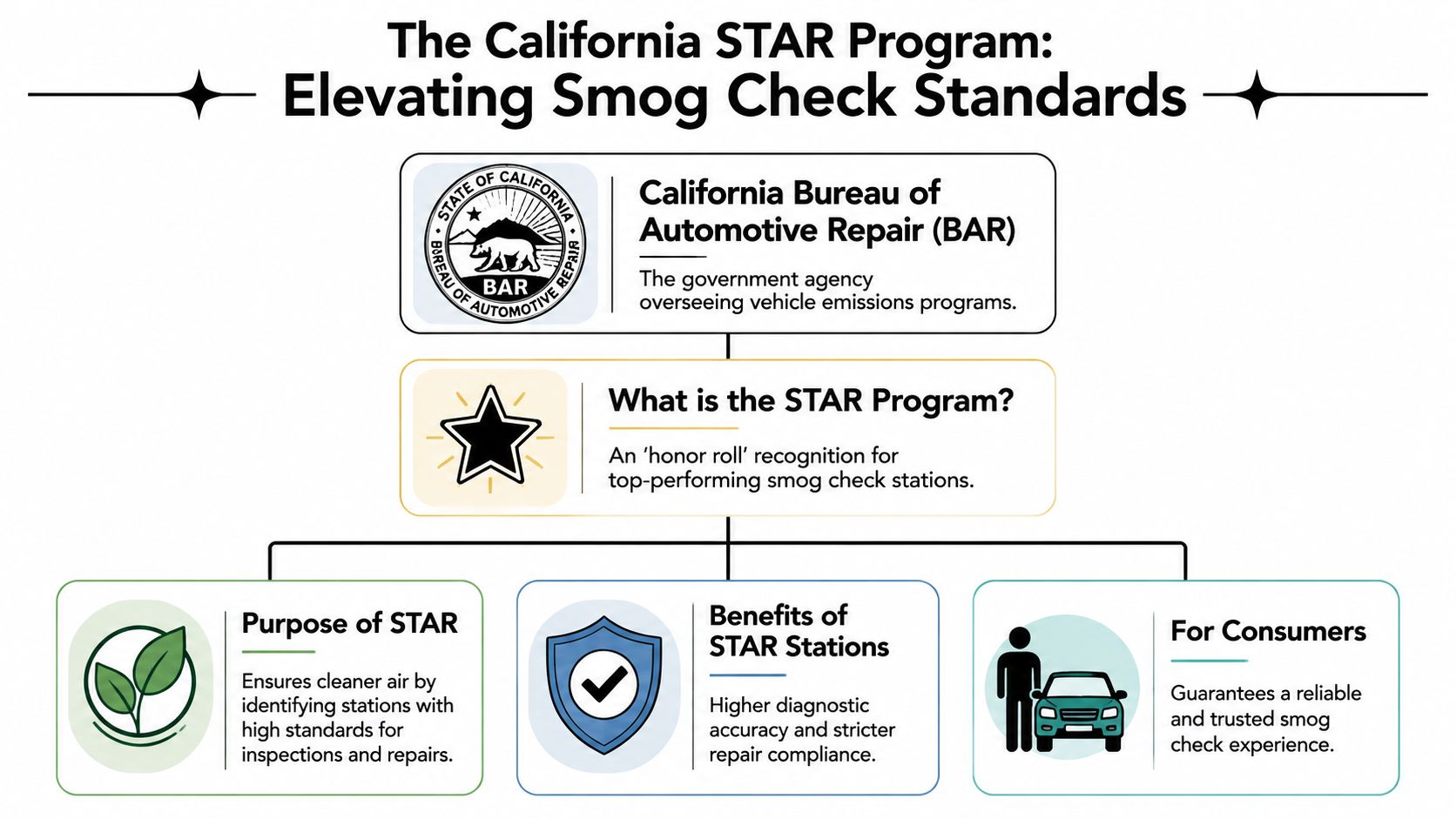
If your renewal notice says STAR, the part that matters to you is simple: California wants your smog check done at a shop that the Bureau of Automotive Repair watches more closely.
That program did not appear out of nowhere. California replaced the older Gold Shield label with STAR, so drivers who have been doing smog checks for years may recognize the old name and wonder what changed. The practical answer is mostly about oversight. The state wanted a clearer way to identify stations that consistently perform inspections to BAR's standards.
What the program is trying to do
Smog checks only help if the inspection process is dependable from shop to shop. The STAR program is BAR's way of keeping a closer eye on station performance so the results drivers receive are more consistent and trustworthy.
A good way to read the official jargon is this: BAR is grading the shop's inspection habits, recordkeeping, and overall performance. It is not adding a new layer of paperwork for you as the customer.
Why that matters to a driver
From the counter at a smog shop, STAR affects your choice of location more than anything else. You still need to book the visit, bring the car, and complete the inspection. But if your notice requires STAR, picking the wrong station can cost you time because you may have to leave and start over somewhere else.
That is the practical point many articles skip. For you, the STAR program is about avoiding wasted trips, controlling the day's schedule, and choosing a station that can get the job done without confusion.
Here is the plain-English version:
- BAR monitors these stations more closely.
- The program is meant to improve inspection reliability.
- Your main job is choosing a qualified shop if your notice calls for STAR.
If you are in the East Bay, that practical angle matters a lot. A nearby STAR station with clear pricing and realistic wait times can make the renewal process feel routine instead of annoying.
STAR is a state quality-control program for smog stations. For drivers, it mainly changes where you need to go and how carefully you should choose the shop.
STAR Station vs Regular Smog Check What's the Difference
Much confusion arises when drivers often hear "STAR" and assume the machine, the inspection steps, or the standards for the vehicle itself must be completely different.
Usually, the biggest difference is the station category, not the customer experience. A STAR station is not a separate emissions test type. It's a California smog-check station category that BAR monitors more closely, and the DMV may direct potentially higher-emitting vehicles there for inspection, as explained on the BAR Smog Check program page.
Side by side comparison
| Feature | Regular Smog Station | STAR Certified Station |
|---|---|---|
| Station status | Standard smog check station | BAR-monitored station category with higher performance standards |
| Type of test | Standard California smog check | Not a separate test type |
| DMV requirement | Fine if your notice doesn't require STAR | Required when the DMV directs your vehicle to STAR |
| Oversight | Standard program oversight | Closer BAR monitoring |
| Who can use it | Drivers whose vehicles qualify for a regular station | Any driver can generally use one, and some drivers must use one |
The table clears up the biggest myth. Your car isn't taking a "STAR test." You're taking the same basic smog-check path through a station that has a different certification status.
Test-only and test-and-repair
Another place drivers get tripped up is assuming every STAR station does the same kind of work. They don't.
The SmogTips explanation of the STAR station program notes that STAR-certified stations are split into test-only and test-and-repair models. Test-only stations can inspect and certify but can't perform emissions repairs. Test-and-repair stations can inspect, repair, and certify once the vehicle passes.
That distinction matters more than many people realize.
- If you want separation of duties: A test-only station keeps inspection separate from repair work.
- If you want one-stop convenience: A test-and-repair shop can handle the issue and the certification process in the same place.
- If you drive a diesel: The same source notes that diesel vehicles model year 1998 and newer are part of the Smog Check program.
If your notice says STAR, the smartest question isn't just "Which shop is nearby?" It's also "Do I need test-only or test-and-repair?"
So who actually needs a STAR station
There are two broad situations.
First, some drivers are directed by the DMV to a STAR station. If that's you, your notice should make it clear. In that case, a regular station isn't the safe choice.
Second, some drivers choose a STAR station even when they aren't required to. They do that because they want a shop operating under the stricter STAR category, or because a nearby STAR station is the most convenient option.
For the average East Bay driver, the practical decision tree looks like this:
- Read the renewal notice.
- If it says STAR, book STAR.
- If it doesn't, you can still use a STAR station if that location works for you.
How to Find a STAR Station and What to Expect
Finding the right station is easier once you stop treating STAR like a mystery label. It's mainly a matter of verifying that the shop has the certification your renewal notice requires.
How to check before you drive over
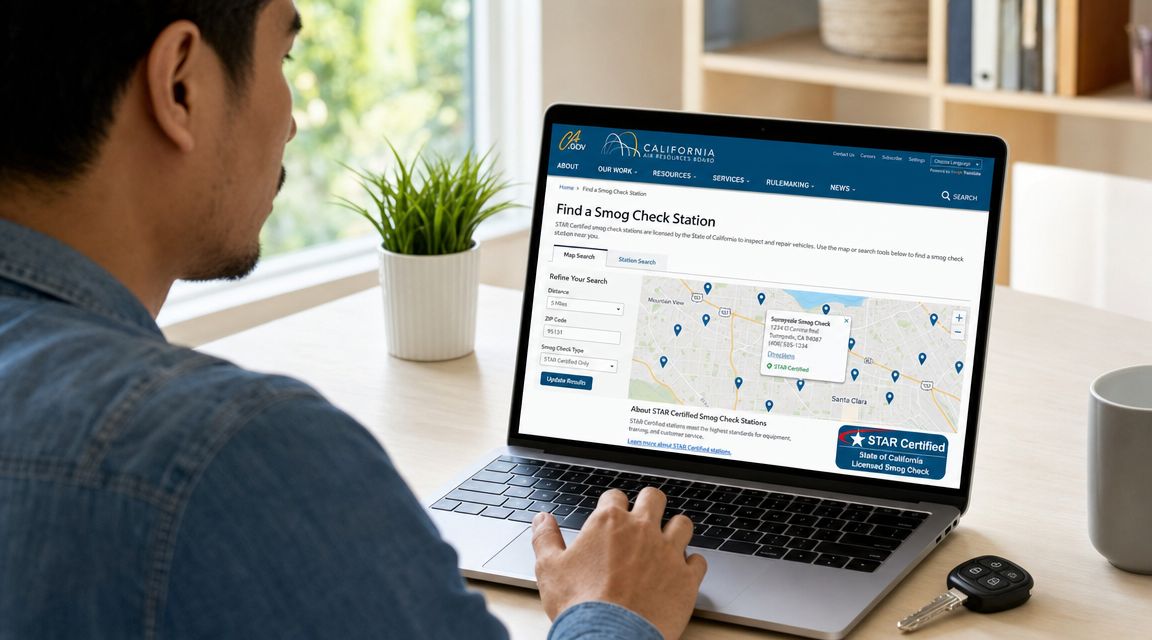
Use the state's official station lookup and confirm the shop is currently listed as STAR-certified. That's the fastest way to avoid showing up at a location that can't handle your DMV requirement.
A simple process works well:
- Start with your notice: Check whether it says STAR is required.
- Verify the station category: Use BAR's public tools to confirm the shop's certification before booking.
- Ask one direct question: When you call, ask whether they are a current STAR station and whether they are test-only or test-and-repair.
As covered earlier, STAR is about the station's status, not a separate test for you to prepare for.
What the visit usually feels like
From the customer side, a STAR appointment is usually familiar. You arrive, provide the needed vehicle information, and the station completes the inspection process according to California smog-check rules.
You don't need to show up expecting a tougher front-desk experience just because the shop is in the STAR category. The point of the program is better oversight of the station, not making drivers jump through extra hoops.
A short explainer can help if you want to see the process visually:
What to bring and what to ask
Bring the basics you would for any smog appointment, especially your renewal notice if the DMV directed you to STAR. That notice helps the station confirm what category your vehicle needs.
A few practical questions can save time:
- Can you test my vehicle type? Helpful if you drive a diesel, hybrid, or older vehicle.
- Are you test-only or test-and-repair? Important if repairs may become part of the process.
- Do you take appointments or walk-ins? This can affect your wait more than the STAR label itself.
For most drivers, the hardest part isn't the inspection. It's choosing the right station before leaving home.
Your Local STAR Station in the East Bay Speedy Smog
You open your DMV renewal notice, see that STAR is required, and the key question hits fast. Where can you get this done without burning a lunch break or losing a Saturday?
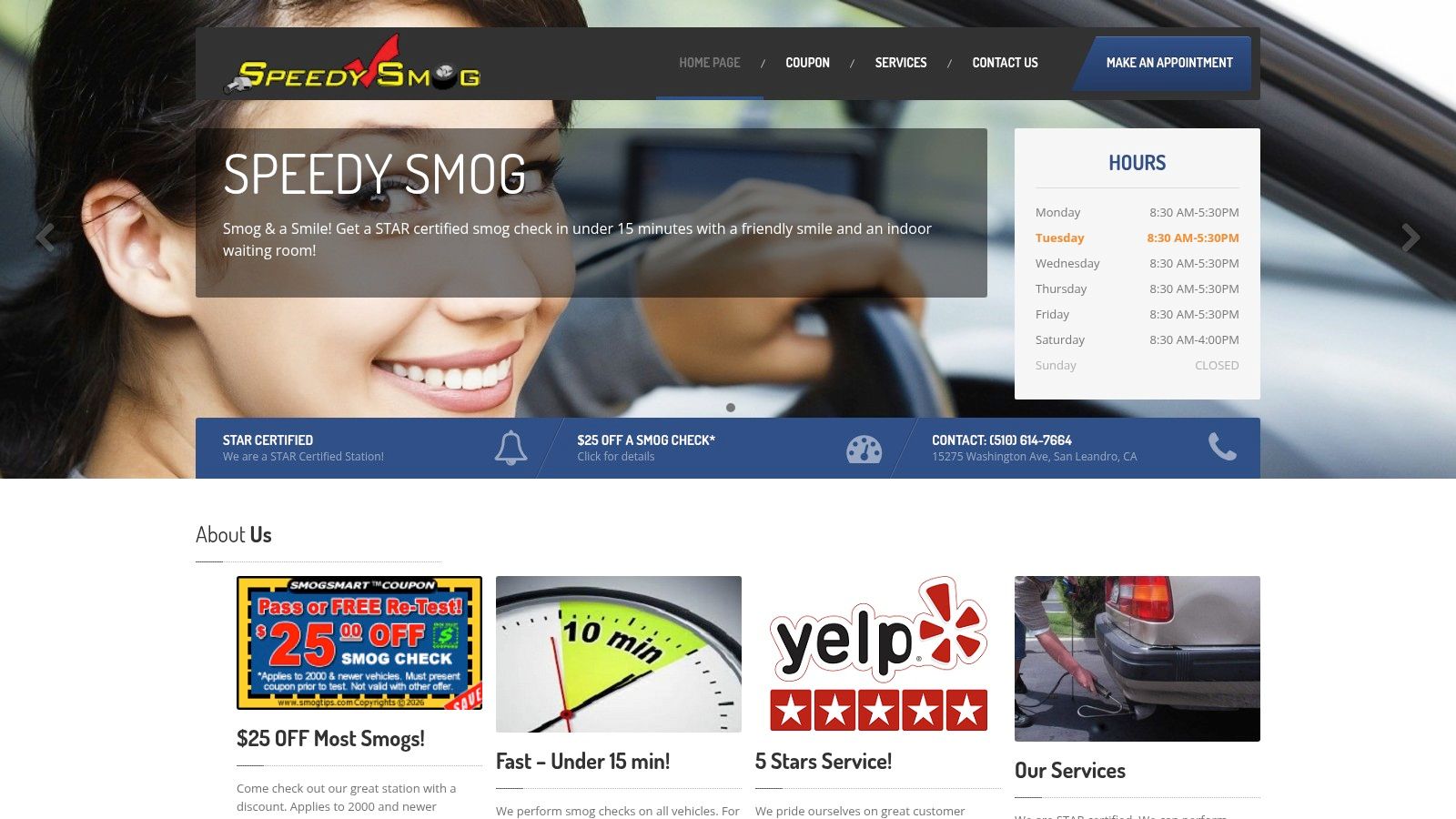
For East Bay drivers, that is what this decision usually comes down to. You need a station that meets the DMV requirement, works with your vehicle type, and keeps the visit practical. In San Leandro, Speedy Smog is one local STAR-certified option at 15275 Washington Ave. Based on the business details provided by the publisher, the shop serves a wide mix of vehicles, including 2000 and newer models, 1999 and older vehicles, diesels, and hybrids.
What matters to a busy driver
Drivers rarely compare smog shops the way the state describes them. They compare them the way a busy weekday feels.
Will the shop handle an older car without hesitation? Can it test a diesel or hybrid? If you need to wait a bit, will you be standing outside or sitting somewhere decent? Those are the practical details that shape the experience more than the STAR label by itself.
Based on the publisher details, Speedy Smog focuses on those day-to-day concerns:
- Fast service for many newer cars: Typical tests for 2000+ vehicles are completed in about 10 to 15 minutes.
- Useful vehicle coverage: The shop serves newer vehicles, older vehicles, diesels, and hybrids.
- A basic waiting area: Customers have access to a clean indoor waiting room.
Matching the Station to Your Needs
A STAR station is a category. The right shop is a fit.
That distinction helps if you are choosing between East Bay options. One driver just wants a quick pass-and-go visit near work. Another has an older vehicle and wants a station that regularly handles that kind of car. A diesel owner has a different checklist again. The smart move is to match the station to your car and your schedule, not just to the DMV label.
For many East Bay drivers, the best choice is the station that checks three boxes: STAR-certified, equipped for the vehicle you drive, and organized enough to keep the visit moving.
Cost and coupon mindset
Many drivers see the word STAR and assume the price automatically goes up. Usually, the bigger factors are the shop's location, local competition, and whether the business is built around quick inspections or a broader repair workflow.
The publisher notes that Speedy Smog periodically offers a $25-off coupon for most smogs on newer vehicles and aims for clear pricing. For a driver comparing East Bay stations, that kind of detail affects the actual decision more than the acronym on the building.
The shop also describes its service approach as "Smog & a Smile." In plain English, that suggests a place trying to keep the process efficient and friendly, which is exactly what many drivers want from a required DMV errand.
East Bay Driver FAQs About STAR Smog Checks
Will a STAR smog check cost more
Not necessarily. The most accurate answer is that shops set their own prices, and STAR certification itself is mainly a quality-control layer rather than a premium consumer add-on, as explained in Diamond Certified's smog check FAQ guide.
That means price differences usually have more to do with the shop's location and business model than the STAR label alone.
Does a STAR station take longer
It can, but not because the word STAR automatically means a slower inspection. In practice, timing often depends on appointment availability, walk-in traffic, staffing, and whether your vehicle needs anything beyond a straightforward inspection.
If your DMV notice requires STAR, your main timing issue may be that your list of eligible stations is narrower.
What happens if my car fails at a STAR station
The next step depends on the kind of station you visited. A test-only station can't perform emissions repairs, while a test-and-repair station can handle both functions if your vehicle qualifies for that workflow.
Your inspection result tells you what needs attention. From there, the repair path depends on the station type and the condition of the vehicle.
Can I go to a STAR station even if my notice doesn't require it
In many cases, yes. A STAR station isn't reserved only for DMV-directed cars. The key is making sure the shop handles your vehicle type and offers the service model you want.
What's the simplest way to avoid mistakes
Use this checklist:
- Read the DMV notice closely: Look for any STAR requirement before booking.
- Confirm current certification: Verify the station is listed as STAR-certified.
- Match the station to your needs: Decide whether test-only or test-and-repair makes more sense for your situation.
If your renewal notice says STAR and you want a local option in San Leandro, Speedy Smog offers STAR-certified smog check service for many East Bay drivers, including newer cars, older vehicles, diesels, and hybrids. It's a straightforward place to start if you want a shop that matches the DMV requirement and keeps the process simple.