
CT Emissions Test: What Every Driver Should Know
Connecticut requires most vehicles to pass an emissions test before registration renewal — and if you've never done one before, the process can feel unclear. You might have seen "ctemission test" or "CT emission test" in your search bar and wondered what it actually involves, how often you need one, and what happens if your car doesn't pass.
This guide walks you through everything: what the CT emission test checks, which vehicles need it, how to prepare, and what your options are if you fail.
What Is a CT Emissions Test?
A CT emission test — sometimes typed as "ctemission test" in search engines — is a state-mandated inspection that measures the pollutants your vehicle releases into the air. Connecticut's Department of Motor Vehicles (DMV) requires it as part of the vehicle registration process to make sure cars on the road meet air quality standards set by the Environmental Protection Agency.
The test checks for harmful gases like hydrocarbons (HC), carbon monoxide (CO), and nitrogen oxides (NOx). These are the byproducts of combustion that contribute to smog and respiratory health problems. The CT emission test exists because Connecticut is part of the Northeast Ozone Transport Region, an area where air quality standards are stricter than federal minimums.
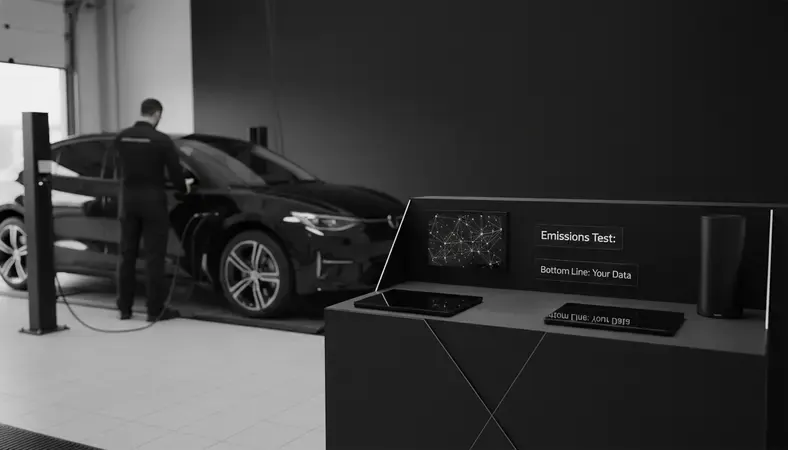
Here's the bottom line: if your car runs clean, the CT emission test takes about 15 minutes and you're done. If something is off with your engine or exhaust system, the test reveals it — and you'll need repairs before you can renew your registration.
Why It Matters: Connecticut's emission testing program has reduced vehicle-related air pollution by over 30% since its introduction, according to the state's Department of Energy and Environmental Protection (DEEP).
Why Do You Need a CT Emissions Test?
Connecticut law ties your vehicle registration renewal directly to emission test compliance. You can't renew your registration renewal notice if your car hasn't passed its required CT emission test within the testing cycle.
Beyond the legal requirement, the CT emission test serves a real environmental purpose. Vehicles are one of the largest sources of air pollution in Connecticut, and a single car running with a faulty catalytic converter or oxygen sensor can emit 10 to 20 times the pollutants of a properly functioning vehicle.
The test also protects you financially. A failing vehicle often has an underlying issue — a bad sensor, a vacuum leak, a worn-out catalytic converter — that will get worse and more expensive over time. The CT emission test catches those problems early.
How Often Is a CT Emissions Test Required?
Connecticut requires a CT emission test every two years. The testing cycle aligns with your vehicle's registration renewal, which also runs on a two-year schedule for most passenger vehicles.
Your registration renewal notice will tell you whether an emission test is required for your current renewal cycle. If you bought a new car, you're exempt for the first four years — new vehicles don't need their first CT emission test until they're at least four model years old.
CT Emission Test Schedule at a Glance
| Vehicle Age | CT Emission Test Required? | Notes |
|---|---|---|
| 0–3 years old | No | New vehicle exemption applies |
| 4+ years old | Yes, every 2 years | Tied to registration renewal |
| Diesel vehicles | Varies | Check CT DMV for current rules |
| Antique/Historic vehicles | No | Vehicles 20+ years with antique plates exempt |
| Electric vehicles | No | Zero-emission vehicles are exempt |
This schedule applies to most passenger cars and light trucks. Diesel vehicles and commercial vehicles may follow different rules — the Connecticut DMV website has the current specifics for those categories.
What Vehicles Need to Pass an Emissions Test?
Most gasoline-powered passenger vehicles registered in Connecticut need to pass the CT emission test. Here's a breakdown of what's required and what's exempt:
Vehicles that need the CT emission test:
* Gasoline-powered cars, trucks, and SUVs that are 4 model years old or older
* Vehicles registered in Connecticut and used on public roads
* Vehicles with a gross vehicle weight rating (GVWR) under 10,001 pounds
Vehicles that are exempt:
* New vehicles (within the first 3 model years)
* Electric vehicles and plug-in hybrids that run purely on electricity
* Vehicles registered with antique or historic plates (typically 20+ years old)
* Motorcycles (Connecticut does not require emission testing for motorcycles)
* Diesel-powered vehicles under certain weight thresholds (verify current rules with CT DMV)
If you're unsure whether your vehicle needs a CT emission test, your registration renewal notice will state it clearly. You can also check online through the Connecticut DMV portal.

How to Prepare Your Vehicle for a CT Emissions Test
Most cars pass the CT emission test without any preparation. But if your check engine light is on, or if your car has been sitting for a while, a little preparation can save you a failed test and a return trip.
Check for Warning Lights First
If your check engine light is on, your car will almost certainly fail the CT emission test. The light means the vehicle's onboard diagnostics (OBD-II system) has detected a fault. Emission test stations read this data directly — a lit check engine light is an automatic failure.
Get the code read first. Many auto parts stores will read OBD-II codes for free. Once you know what's wrong, you can decide whether it's a quick fix or something that needs a mechanic.
Drive the Car Before the Test
Connecticut's CT emission test reads your vehicle's OBD-II system, which needs to complete its internal readiness monitors to give accurate results. If you've recently had the battery disconnected, or if a mechanic recently cleared codes, those monitors may not be complete.
Drive your car for at least 100–200 miles of mixed city and highway driving before the test. This gives the system time to run its self-checks and set all readiness monitors to "ready."
Check These Items Before You Go
- Gas cap: A loose or cracked gas cap causes evaporative emission failures. Make sure it's tight and in good condition.
- Oil level: Low or dirty oil can affect combustion efficiency and emissions.
- Tire pressure: Properly inflated tires improve fuel efficiency and reduce emissions slightly.
- Recent maintenance: If your car is due for a tune-up (spark plugs, air filter), getting it done before the test can help.
What Happens During a CT Emissions Test?
The CT emission test process is straightforward. Here's exactly what to expect when you pull into a vehicle emissions testing station:
-
Check-in: You hand over your registration or provide your license plate number. The technician confirms your vehicle is due for a CT emission test.
-
OBD-II scan: For most modern vehicles (1996 and newer), the technician plugs a scanner into your car's OBD-II port — usually located under the dashboard on the driver's side. This reads your vehicle's onboard computer data, including readiness monitors and any stored fault codes.
-
Visual inspection: The technician checks for obvious issues — a missing gas cap, visible exhaust problems, or a check engine light that's illuminated.
-
Tailpipe test (older vehicles): Vehicles made before 1996 may undergo a tailpipe test where a probe measures exhaust gases directly. This method is less common now that most vehicles use OBD-II scanning.
-
Results: You receive a pass or fail result on the spot. A passing vehicle gets a certificate you'll use to complete your registration renewal. The whole process typically takes 15 minutes or less.
The CT emission test doesn't involve removing any parts, draining fluids, or any invasive procedures. It's a read-and-report process for modern vehicles.
What If Your Vehicle Fails the Emissions Test?
Failing the CT emission test isn't the end of the road. Connecticut has a structured process for vehicles that don't pass.
Find Out Why You Failed
Your test results will include the specific reason for failure. Common causes include:
- Check engine light on: An active diagnostic trouble code (DTC) caused a failure
- Readiness monitors not set: The OBD-II system hasn't completed its self-checks
- Catalytic converter failure: A worn or damaged catalytic converter causes high HC and CO readings
- Oxygen sensor failure: Bad O2 sensors affect fuel mixture and emissions
- EGR valve problems: A stuck or faulty exhaust gas recirculation valve increases NOx emissions
Get the Repairs Done
Take your vehicle to a licensed repair shop. Show them the failure report — it tells them exactly what the CT emission test flagged. Once repairs are complete, you'll return for a retest.
The Waiver Option
If you've spent at least $800 on qualifying repairs and your car still fails the CT emission test, you may qualify for a waiver. A waiver allows you to register your vehicle for one year even though it hasn't passed — giving you more time to complete repairs without losing your registration.
The waiver threshold and qualifying repair requirements are set by the Connecticut Department of Energy and Environmental Protection. Check their current guidelines, as the minimum repair cost threshold can change.
Emissions Close to Me
If you're searching for an emissions testing station, Connecticut maintains a network of state-run and private test-only stations. You can find emissions close to me by checking the CT DMV's station locator tool online. Some private shops also offer vehicle emissions testing as part of a broader vehicle inspection service.
Common Questions About the CT Emissions Test
Can I renew my registration without passing the CT emission test?
No. If your vehicle is required to pass the CT emission test, you can't complete your registration renewal until you have a valid passing certificate — or an approved waiver. Driving with an expired registration is a ticketable offense in Connecticut.
How much does the CT emission test cost?
The cost for a CT emission test at a state-operated station is set by the Connecticut DMV. Private testing stations may charge different rates. Check the current fee schedule on the CT DMV website, as fees are subject to change.
What if I just bought a used car and the CT emission test is due?
If you purchase a used vehicle and a CT emission test is required for registration, you'll need to pass the test before the registration can be transferred to your name — unless the vehicle qualifies for an exemption. If the previous owner recently passed the test, that certificate may transfer with the vehicle.
Does jiffy lube do emissions testing in Connecticut?
Some Jiffy Lube locations offer vehicle emissions testing depending on the state. In Connecticut, emission testing is primarily conducted at state-authorized stations. A Jiffy lube emissions test may be available at select locations, but you should call ahead to confirm whether a specific location is authorized to conduct the official CT emission test for registration purposes.
What's the difference between an emissions test and a smog check?
The terms are often used interchangeably. A smog check is the common name used in states like California — California smog check requirements differ from Connecticut's program in some specifics, but both measure vehicle emissions to meet air quality standards. Connecticut uses the term "emissions test" officially. The underlying goal — measuring and limiting vehicle air pollution — is the same.
What This Means for You
If your registration renewal is coming up and your vehicle is four or more years old, a CT emission test is part of the process. The test is fast, straightforward, and most vehicles pass without any preparation. Book your smog check at Speedy Smog — STAR certified, most vehicles done in under 15 minutes, open 6 days a week, and you'll save $25 on your visit.