Emission Testing Station: What You Need to Know
Your vehicle registration renewal in California comes with a requirement most drivers dread — the smog check. If your car fails or you're not sure where to go, understanding how an emission testing station works makes the whole process less stressful.
Finding a reliable auto emission testing station doesn't have to be complicated. This guide covers exactly what happens during a test, which vehicles need one, what it costs, and how to find a station near you.
What Is an Emission Testing Station?
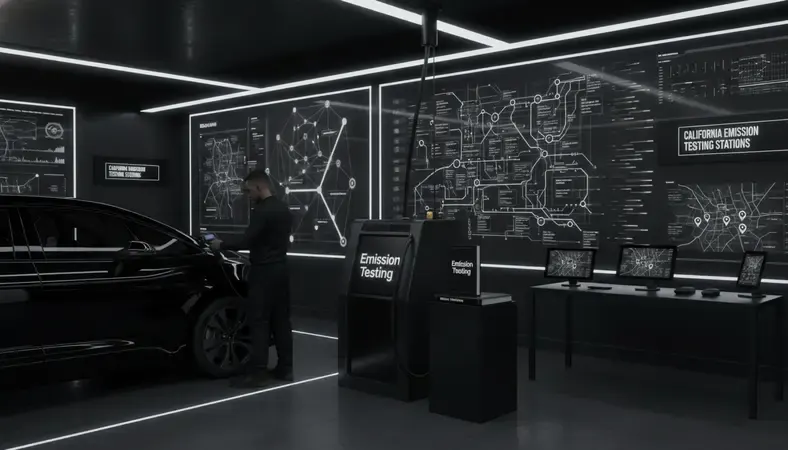
An emission testing station is a licensed facility where trained technicians measure the pollutants your vehicle's engine releases into the air. These stations use specialized equipment to analyze exhaust gases and determine whether your car meets the pollution standards set by your state's environmental agency.
In California, emission testing stations are regulated by the California Bureau of Automotive Repair (BAR), which licenses and inspects every station operating in the state. Not all stations are created equal — you'll see two main types:
Regular smog check stations vs. STAR certified stations
| Station Type | What It Does | Who Must Use It |
|---|---|---|
| Regular smog station | Performs standard smog checks and repairs | Most vehicles |
| STAR certified station | Meets higher BAR performance standards | Vehicles directed by DMV, older vehicles, or those with prior failures |
| Test-Only station | Tests only — no repairs performed | Vehicles requiring an independent test |
| Test and Repair station | Tests and fixes emissions issues | Most consumers — one-stop convenience |
California's STAR program identifies the highest-performing smog stations based on accuracy and compliance. If your DMV registration notice specifically directs you to a STAR station, you cannot use a regular smog shop — the test won't be accepted. Speedy Smog is STAR certified, which means it's accepted for all vehicle types, including those with prior failures or DMV-directed requirements.
Why Do You Need Emission Testing?
Vehicle exhaust contains carbon monoxide, hydrocarbons, nitrogen oxides, and particulate matter — all of which contribute to smog and respiratory illness. California has some of the strictest vehicle emissions standards in the country, driven by decades of air quality problems in cities like Los Angeles and the Bay Area.
The state requires most vehicles to pass a smog check before:
- Registering a vehicle for the first time in California
- Renewing registration every two years (for most vehicles)
- Selling or transferring ownership of a vehicle
The Air Resources Board estimates that motor vehicles account for roughly 40% of smog-forming emissions in California. Emission testing stations are the enforcement mechanism that keeps high-polluting vehicles off the road and holds owners accountable for maintaining their cars.
Beyond environmental reasons, failing to pass a smog check means you can't legally register your vehicle. That makes the emission testing station a practical necessity, not just a bureaucratic hurdle.
How Emission Testing Works
The test itself is straightforward and takes most vehicles under 15 minutes. Here's what happens step by step:
-
Visual inspection: The technician checks that your vehicle's emissions control components — catalytic converter, gas cap, EGR valve, and others — are present and haven't been tampered with.
-
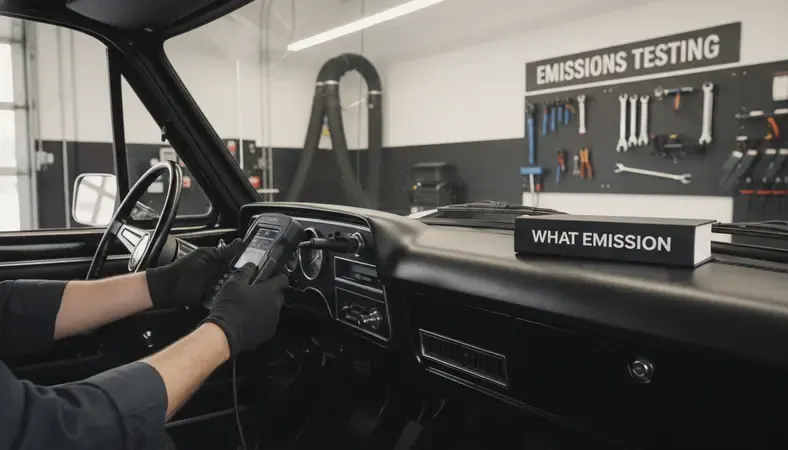
OBD-II scan: For vehicles made in 1996 or later, the technician plugs a scanner into your car's onboard diagnostic port (usually located under the dashboard). This reads your vehicle's computer for any stored fault codes or readiness monitor failures.
-
Functional checks: The technician verifies that the check engine light illuminates at startup (confirming the system works) and checks for visible smoke from the exhaust.
-
Results and documentation: The station transmits your test results electronically to the BAR database. If you pass, you receive a certificate. If you fail, the station provides a Vehicle Inspection Report explaining what failed and why.
For older vehicles (typically pre-1996), some stations use a tailpipe probe test that directly measures exhaust gases. Diesel vehicles and hybrids follow slightly different procedures depending on the model year.
Key Insight: If your check engine light is on before you arrive, your vehicle will almost certainly fail the OBD-II portion of the test. Address that warning light before booking your smog check — it saves you the test fee and a return trip.
What Vehicles Require Emission Testing?
Not every vehicle in California needs a smog check. Here's how the rules break down:
Vehicles that require smog checks:
* Gasoline-powered cars and trucks 1976 and newer
* Diesel-powered vehicles 1998 and newer with a GVWR under 14,000 lbs
* Vehicles being registered in California for the first time
* Vehicles changing ownership
Vehicles exempt from smog checks:
* Electric vehicles (zero emissions — no test needed)
* Gasoline-powered vehicles that are eight model years old or newer (these fall under the "new vehicle" exemption in California — the first eight years are exempt)
* Vehicles manufactured before 1976
* Motorcycles
* Trailers
The eight-year exemption is worth knowing. If you drive a 2020 model year vehicle, you won't need a smog check until the 2028 registration cycle. After that, it's every two years.
Diesel vehicles have their own set of rules. Those registered in certain high-pollution counties must comply with the Smog Check Program, while others may be subject to different inspection requirements under the California Air Resources Board regulations.
How to Find an Emission Testing Station Near You
Finding a legitimate emission testing station takes about two minutes. Here are the most reliable methods:
-
Use the BAR's official station locator
The California Bureau of Automotive Repair maintains a searchable database at bar.ca.gov where you can filter by station type (STAR, Test-Only, Test and Repair) and ZIP code. This is the most accurate source because it reflects current license status. -
Check your DMV registration notice
If your DMV renewal notice directs you to a specific type of station — particularly a STAR station — the notice will say so explicitly. Don't ignore this. Using the wrong station type means your test result won't be accepted. -
Search for auto emission testing stations locally
A quick map search for "auto emission testing stations near me" will surface nearby options with reviews and hours. Look for STAR certification if your vehicle has had prior failures or if your DMV notice requires it. -
Call ahead
Not all stations test all vehicle types. Diesel vehicles, motorhomes, and vehicles over a certain weight may require a specialized station. A quick call confirms they can handle your vehicle before you make the trip.
If you're in San Leandro or the surrounding East Bay area, you can make an appointment at Speedy Smog to reserve your time slot and avoid waiting.
What to Expect During Your Emission Test
Most people's anxiety about the smog check comes from not knowing what to expect. Here's the honest breakdown:
Before you arrive:
* Make sure your check engine light is off
* Drive your vehicle at highway speeds for 15–20 minutes before the test — this ensures your catalytic converter is at operating temperature and your OBD-II monitors are in a "ready" state
* Don't fill your gas tank more than 3/4 full the day before — a too-full tank can cause evaporative system failures
* Bring your vehicle registration or the DMV renewal notice
During the test:
* You'll hand over your keys and wait while the technician runs the inspection
* Most tests at a modern emission testing station take 10–15 minutes for a standard passenger vehicle
* You don't need to be present in the vehicle during the test
After the test:
* If you pass, the station transmits the results to the DMV electronically. You'll receive a paper certificate as well.
* If you fail, you'll get a Vehicle Inspection Report listing every failed item. A Test and Repair station can often address the issues the same day. A Test-Only station will refer you elsewhere for repairs.
One thing most people don't realize: if you fail and spend more than $650 on qualifying repairs at a licensed station without achieving a passing result, you may qualify for a waiver that allows you to register your vehicle anyway. This is called a cost limit waiver, and your repair station can help you apply.
How Much Does Emission Testing Cost?
Smog check prices vary by station and vehicle type, but the range is fairly consistent across California.
Typical smog check costs:
* Standard passenger vehicle: $30–$60 for the test itself
* STAR certified stations: similar range, sometimes slightly higher due to certification overhead
* Diesel vehicles: often $50–$80 due to the additional inspection requirements
* Gross Polluter inspections: fees vary
California also charges a smog abatement fee ($20–$25) collected at registration, separate from the station's test fee. Some stations advertise low test prices but charge additional fees — always ask for the all-in cost before you hand over your keys.
Speedy Smog offers a $25 savings on smog checks — call (510) 614-7664 or visit speedysmogchecksanleandro.com to confirm current pricing and availability.
Common Questions About Emission Testing Stations
What happens if my car fails the smog check?
You'll receive a Vehicle Inspection Report listing what failed. You have 30 days to make repairs and return for a retest. If you used a Test-Only station, you'll need to take the repair report to a licensed repair facility. After repairs, return to any licensed emission testing station for the retest — you don't have to go back to the same place.
Can I get a smog check if my check engine light is on?
Technically yes, but you'll fail. The OBD-II portion of the test reads your vehicle's computer, and an active check engine light means a fault code is stored. The technician will note the failure and you'll pay the test fee without getting a passing certificate. Fix the underlying issue first, then retest.
How often do I need a smog check in California?
Most vehicles need a smog check every two years, timed to your registration renewal cycle. Vehicles eight model years old or newer are exempt. When you buy a used vehicle, a smog check is required at the point of sale regardless of when the last one was done.
Does my electric vehicle need a smog check?
No. Fully electric vehicles produce zero tailpipe emissions and are permanently exempt from California's smog check requirement. Plug-in hybrids that also have a gasoline engine may still be subject to testing — check your DMV registration notice to confirm.
What is a STAR certified station and why does it matter?
STAR is a California BAR designation for smog stations that meet higher performance standards based on their testing accuracy and compliance history. Some vehicles — particularly those directed by the DMV, older vehicles, or those with prior failures — are required to test at a STAR station. A test performed at a non-STAR station won't count for these vehicles. Speedy Smog holds STAR certification, so it's accepted for all vehicle categories.
What This Means for You
If your registration renewal is coming up and you need a smog check, go to a STAR certified station — it covers every vehicle type and removes any risk of your results being rejected. Book your smog check at Speedy Smog in San Leandro — STAR certified, most vehicles done in under 15 minutes, open 6 days a week, with $25 in savings available when you call (510) 614-7664. Ready to get started? Visit Speedy Smog to learn more.