
Essential Vehicle Inspection Tips for Every Driver
Most drivers only think about a vehicle inspection when a registration renewal notice shows up in the mail. By then, you're already on a deadline — and if your car fails, you've got a problem.
A vehicle inspection is a formal check of your car's safety systems, mechanical condition, or emissions output, depending on where you live and why you need one. Whether you're renewing registration, buying a used car, or responding to a fix-it ticket, understanding what inspections cover — and what happens when you fail one — saves you time, money, and stress. This guide covers everything.
What Is a Vehicle Inspection?
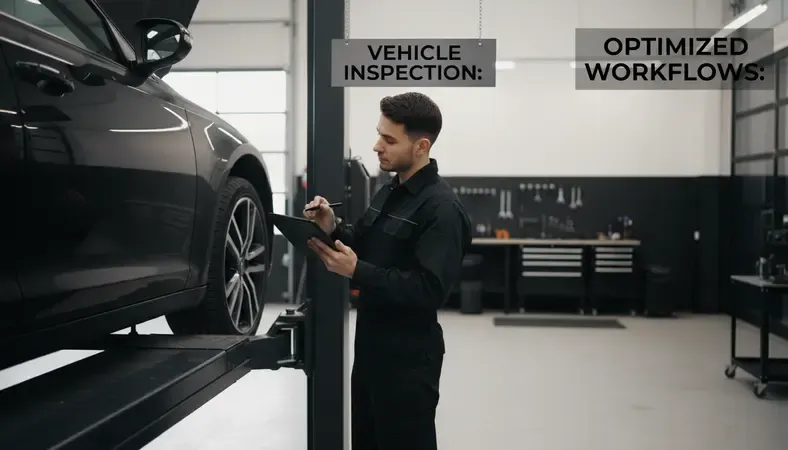
A vehicle inspection is an official examination of a car, truck, or motorcycle to confirm it meets minimum standards for safety, emissions, or both. Depending on your state and situation, an inspection might be required annually, at the point of sale, or when a vehicle is first registered.
The term "car inspection" covers a broad category. Some inspections focus entirely on whether your vehicle's mechanical systems — brakes, tires, lights, steering — are safe enough to operate on public roads. Others check what your engine is pumping out of the exhaust pipe. Many states require both.
Key Insight: A vehicle inspection isn't a repair service — it's a pass/fail evaluation. The inspector tells you whether your car meets the standard. What you do next is up to you.
The agency overseeing inspections varies by state. In California, the Bureau of Automotive Repair administers the Smog Check Program. In other states, the Department of Motor Vehicles or Department of Transportation sets the rules. Each state gets to design its own program, which is why inspection requirements differ so much across the country.
Types of Vehicle Inspections
Not all vehicle inspections are the same. The type you need depends on your state, your vehicle's age, and your specific situation.
Comparison of Common Vehicle Inspection Types
| Inspection Type | What It Checks | Who Typically Needs It |
|---|---|---|
| Safety inspection | Brakes, lights, tires, steering, wipers | Required in roughly 17 states for registration |
| Emissions / smog check | Exhaust pollutants, OBD-II system | Required in high-pollution areas and most major metro regions |
| Combined safety + emissions | Both mechanical and exhaust systems | Required in states like Virginia and Texas |
| Pre-purchase inspection | Full mechanical condition assessment | Anyone buying a used vehicle |
| VIN verification | Vehicle identity confirmation | Out-of-state transfers, rebuilt titles |
Each type serves a different purpose. A state inspection for registration renewal is about legal compliance. A used car pre-purchase inspection is about protecting your wallet. An emissions test is about air quality standards.
Safety inspections
A safety inspection checks the mechanical systems that directly affect your ability to control the vehicle and avoid accidents. Inspectors look at brake pad thickness, tire tread depth, headlights, taillights, turn signals, horn function, windshield wipers, and steering response. If any of these fall below the required standard, the vehicle fails.
About 17 states currently require annual or biennial safety inspections for passenger vehicles. States like Pennsylvania, New York, and Virginia have well-established state inspection programs. Other states, including California, have eliminated mandatory safety inspections and rely on emissions testing instead.
Emissions testing (smog checks)
An emissions test — often called a smog check — measures the pollutants your vehicle's engine produces. Inspectors connect a diagnostic tool to your car's OBD-II port (the same port mechanics use) or, for older vehicles, insert a probe directly into the exhaust pipe.
California runs one of the most rigorous emissions programs in the country. Most gasoline-powered vehicles model year 1976 and newer need a smog check every two years or when ownership changes. Vehicles registered in high-pollution counties face stricter testing requirements.
Used car pre-purchase inspection
A used car pre-purchase inspection is something you arrange voluntarily before buying a vehicle. You pay an independent mechanic — not the seller's mechanic — to examine the car thoroughly. This isn't a state-mandated process, but it's one of the smartest things you can do before writing a check for a used vehicle.
A good pre-purchase inspection takes 60–90 minutes and covers the engine, transmission, suspension, brakes, fluid levels, frame condition, and electronics. The cost is typically between $100 and $200 — a fraction of what a hidden problem could cost you after purchase.
Why Vehicle Inspections Are Important
Vehicle inspections exist because individual drivers don't always catch problems that develop gradually. Brake wear happens slowly. Tire tread wears down over thousands of miles. Emissions systems degrade without any obvious symptom you'd notice from the driver's seat.
From a public safety standpoint, inspections catch dangerous vehicles before they cause accidents. The National Highway Traffic Safety Administration (NHTSA) estimates that tire-related failures contribute to approximately 11,000 crashes annually in the United States. A tire inspection that catches dangerously low tread can prevent one of those crashes.
From an air quality standpoint, a single malfunctioning vehicle can produce emissions equivalent to dozens of properly functioning ones. California's smog check program has been credited with reducing vehicle-related smog by more than 70% since the 1970s, according to the California Air Resources Board.
For individual car owners, passing inspection means you can legally register and drive your vehicle. Failing means you have a repair deadline — and in most states, you can't renew your registration until you pass.
What Gets Checked During a Vehicle Inspection?
The specific checklist varies by inspection type and state, but here's what you can expect across the most common scenarios.
During a smog check / emissions test
- OBD-II scan: The inspector plugs a scanner into your car's diagnostic port and reads any stored fault codes. If your check engine light is on, the car will almost certainly fail — the light indicates a fault code is present.
- Readiness monitors check: Your car's computer runs self-tests on emissions-related systems. If too many monitors show "not ready" (common after a battery disconnect or recent repair), the car fails even without a check engine light.
- Visual inspection: The inspector checks that your catalytic converter is present and that there are no obvious exhaust leaks or tampering.
- Tailpipe test (for older vehicles): Cars made before 1996 typically don't have OBD-II systems, so inspectors measure exhaust output directly with a probe.
During a safety inspection
- Brakes: Pad thickness, rotor condition, brake fluid level, and parking brake function
- Tires: Tread depth (minimum 2/32" in most states), sidewall condition, inflation
- Lights: Headlights, brake lights, turn signals, reverse lights, and hazard lights
- Steering and suspension: Play in the steering wheel, shock absorber condition
- Windshield and wipers: Cracks that obstruct the driver's view, wiper blade effectiveness
- Horn: Must be audible and functional
- Mirrors: Side and rearview mirrors must be present and properly positioned
Vehicle Inspection vs Emissions Testing: What's the Difference?
People use these terms interchangeably, but they're not the same thing.
A vehicle inspection is the broader category. It can refer to any formal check of a vehicle — safety systems, emissions, identity verification, or all three combined.
An emissions test (or smog check) is one specific type of vehicle inspection. It focuses exclusively on what your engine emits — hydrocarbons, carbon monoxide, nitrogen oxides, and particulate matter — and whether those levels fall within legal limits.
Here's the practical difference: your car can pass an emissions test while still having dangerous brakes or bald tires. And it can pass a safety inspection while failing an emissions test because of a faulty oxygen sensor or catalytic converter.
In states that require both, you need to pass both to register your vehicle. In California, the mandatory requirement is emissions-focused — the smog check — not a full safety inspection. This means a California smog check station like Speedy Smog is testing your emissions system, not inspecting your brakes or headlights.
How Often Do You Need a Vehicle Inspection?
The answer depends entirely on your state and vehicle type.
- California smog check: Every two years for most vehicles, or when you transfer ownership. Vehicles less than eight model years old are typically exempt.
- New York state inspection: Annually, covering both safety and emissions.
- Texas inspection: Annually, combining safety and emissions for most vehicles.
- Pennsylvania inspection: Annually for safety, plus emissions testing in certain counties.
- Florida: No state-mandated safety or emissions inspection for most passenger vehicles.
If you've recently moved to a new state, check your new state's DMV requirements — you may need to get a vehicle inspection done within 30 to 90 days of establishing residency.
For used car purchases, a pre-purchase inspection has no mandatory schedule — you do it before you buy, regardless of when the seller last had the car inspected.
If you're unsure whether your vehicle is due, you can Make an Appointment at a licensed inspection station and they'll confirm what your specific vehicle requires based on its year, make, and registration status.

What Happens If Your Vehicle Fails Inspection?
Failing a vehicle inspection isn't the end of the road — but it does require action.
After failing an emissions test
If your car fails a smog check, you'll receive a Vehicle Inspection Report listing the specific reason for the failure. Common causes include:
- Check engine light on (active fault codes)
- Readiness monitors not set (too many "not ready" systems)
- Catalytic converter failure
- Faulty oxygen sensor
- EVAP system leak
You'll need to have the problem diagnosed and repaired, then return for a retest. In California, if you've spent $150 or more on qualifying repairs and your car still fails, you may qualify for a smog repair assistance program or a one-time waiver through the Bureau of Automotive Repair.
After failing a safety inspection
A failed safety inspection means you have a specific list of items to repair. You typically have a set window — often 30 days — to make the repairs and return for a reinspection. Driving a vehicle with known safety defects after a failed inspection creates legal liability if you're involved in an accident.
Registration consequences
In states where inspection is required for registration, a failed inspection means you cannot legally renew your registration until you pass. Driving with an expired registration adds another citation risk on top of the inspection failure.
The smartest move after any failed inspection is to get a clear repair estimate, prioritize the repairs that caused the failure, and schedule your retest promptly. Many stations offer free or reduced-cost retests within a certain timeframe.
Common Questions About Vehicle Inspections
Can I drive my car if it fails inspection?
Technically, you can drive home from the inspection station. But driving a vehicle with a failed safety inspection — especially one with brake or tire problems — is both dangerous and legally risky. If you're pulled over or involved in an accident, a known inspection failure works against you. Get the repairs done before driving the vehicle beyond what's necessary.
Does a check engine light automatically fail an emissions test?
Yes, in virtually every state with an OBD-II-based emissions program. A check engine light means a fault code is stored in your car's computer. The emissions test reads those codes directly, and any active fault code results in a failure. Clear the light by fixing the underlying problem — not by disconnecting the battery, which resets readiness monitors and causes a different type of failure.
How long does a vehicle inspection take?
A smog check typically takes 15–30 minutes for most vehicles. A full safety inspection takes 30–60 minutes. A comprehensive pre-purchase inspection takes 60–90 minutes. At Speedy Smog, most smog checks are completed in under 15 minutes.
What's the difference between a STAR station and a regular smog station in California?
California's Bureau of Automotive Repair designates certain stations as STAR certified — these stations meet higher performance standards and are authorized to test vehicles that have been directed to a STAR station by the DMV. If your registration renewal notice says "STAR station required," you must go to a STAR-certified location. Speedy Smog is a STAR-certified station, which means it can test any vehicle, including those directed by the DMV.
Is a pre-purchase inspection worth the cost?
A pre-purchase inspection almost always pays for itself. A $150 inspection that reveals a $2,000 transmission problem gives you the information to negotiate the price down, ask the seller to fix it, or walk away entirely. Skipping the inspection to save $150 and then discovering a major mechanical problem after purchase is one of the most common and avoidable car-buying mistakes.
Do electric vehicles need a smog check?
No. Battery electric vehicles (BEVs) produce zero tailpipe emissions and are exempt from smog check requirements in California and other states with emissions programs. Plug-in hybrid vehicles (PHEVs) typically do require smog checks because they have a gasoline engine.
Key Takeaways
A vehicle inspection — whether it's a smog check, a safety check, or a pre-purchase evaluation — protects you, other drivers, and the air everyone breathes. Know your state's requirements, keep up with your inspection schedule, and address failures promptly.
Book your smog check at Speedy Smog — STAR certified, most vehicles done in under 15 minutes, open 6 days a week in San Leandro. Save $25 on your visit by calling (510) 614-7664. Ready to get started? Visit Speedy Smog to learn more.