
Emissions Testing: What Every Driver Should Know
Emissions testing is required for millions of vehicles across the United States every year — and if you've never gone through it before, the process can feel confusing. What exactly does the inspector check? What happens if your car fails? How much does it cost?
This guide answers every question a driver typically has about emissions testing, from what the test actually measures to how to make sure your car passes on the first try.
What Is Emissions Testing?
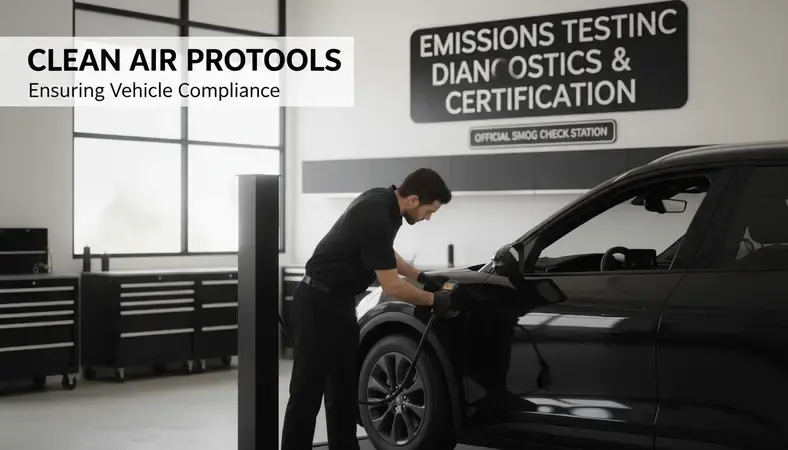
Emissions testing — also called a smog check or car emissions inspection — is an official evaluation of the pollutants your vehicle releases through its exhaust system. The test measures gases like hydrocarbons (HC), carbon monoxide (CO), nitrogen oxides (NOx), and particulate matter. These pollutants contribute to smog, respiratory illness, and ground-level ozone.
Every vehicle burns fuel to generate power, and that combustion process produces exhaust gases. A properly functioning engine with a healthy catalytic converter processes those gases and significantly reduces harmful output before they exit the tailpipe. Emissions testing verifies that this system is working as designed.
The test is not about how your car looks or sounds. It's specifically about what comes out of the exhaust — and whether those levels fall within the legal limits set by your state.
California, for example, has among the strictest emissions standards in the country. The California Air Resources Board (CARB) administers the Smog Check Program, which requires most vehicles to pass a smog check every two years. Other states follow federal EPA standards, which are somewhat less strict but still mandatory in areas with significant air quality concerns.
Why Is Emissions Testing Required?
The short answer: air quality is a public health issue, and vehicles are one of the largest sources of air pollution in the U.S.
According to the U.S. Environmental Protection Agency, transportation accounts for roughly 28% of total greenhouse gas emissions in the United States — making it the single largest contributor. Within that category, passenger cars and light-duty trucks represent the majority of the output.
Emissions testing programs exist to catch vehicles that are polluting significantly more than they should. An older car with a failing catalytic converter or a misfiring engine can emit 10 to 20 times the pollutants of a properly functioning vehicle. Without regular testing, those cars stay on the road indefinitely.
States with mandatory emissions testing programs have documented measurable improvements in air quality over time. The EPA's vehicle inspection and maintenance (I/M) programs are specifically designed to identify high-emitting vehicles and require repairs before those vehicles can be registered.
For drivers, the practical consequence is simple: no passing emissions test, no vehicle registration renewal in states that require it.
How Often Do You Need Emissions Testing?
Testing frequency depends on your state and, in some cases, your vehicle's age and type.
Emissions testing frequency by situation
| Situation | Typical Requirement |
|---|---|
| California (most vehicles) | Every 2 years, tied to registration renewal |
| New vehicles in CA | Exempt for first 8 model years |
| Diesel vehicles | Subject to separate inspection standards |
| Out-of-state transfers | Required upon initial registration in CA |
| Change of ownership | Required before transfer in most CA counties |
| Vehicles 1975 or older | Typically exempt from smog check in CA |
In California, your registration renewal notice will tell you whether a smog check is required for that cycle. If it is, you'll need to pass before the DMV will process your renewal.
Some states require annual testing. Others only require it when you move to a new county, buy a used car, or register a vehicle for the first time. A few states have no mandatory emissions testing at all — though this is becoming less common as federal air quality standards tighten.
If you recently moved to California or purchased a used vehicle, a smog check is almost certainly required before you can complete the registration process.
What Happens During an Emissions Test?
The actual inspection takes about 15 to 20 minutes for most vehicles. Here's what the technician does:
-
Visual inspection: The technician checks that your vehicle's emissions-related components are present and haven't been tampered with. This includes the catalytic converter, fuel cap, air injection system, and exhaust gas recirculation (EGR) valve.
-
OBD-II scan: For vehicles 1996 and newer, the technician plugs a scanner into your car's onboard diagnostics port (OBD-II). This port is usually located under the dashboard near the steering column. The scanner reads your vehicle's computer for any stored fault codes and checks whether all emissions-related monitors have completed their self-tests.
-
Functional checks: The technician verifies that your check engine light illuminates when the ignition is on and turns off when the engine is running. A check engine light that stays on is an automatic failure.
-
Tailpipe test (older vehicles): Vehicles from 1995 and older that don't have OBD-II systems undergo a tailpipe probe test, where a sensor is inserted into the exhaust pipe to directly measure pollutant levels while the engine runs at various speeds.
-
Results: The station generates a report showing pass or fail, along with the specific readings. If you pass, the station submits the results electronically to the DMV. If you fail, you receive a detailed report showing which components or readings caused the failure.
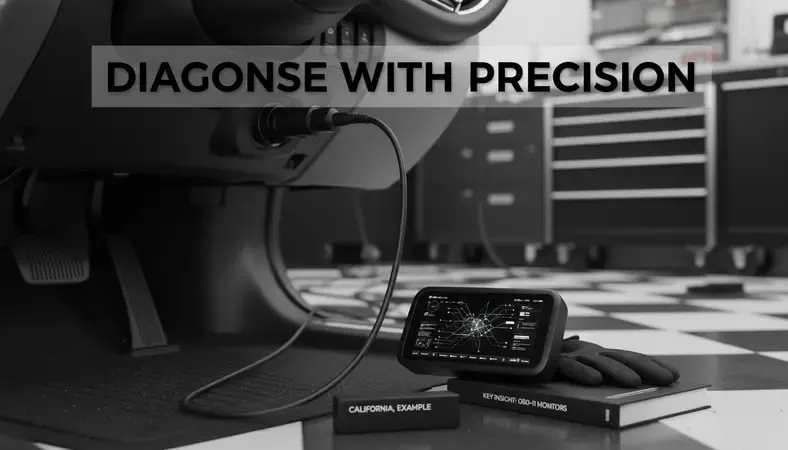
Key Insight: The OBD-II monitors are the most common failure point for modern vehicles. If your car's computer hasn't completed all its self-tests — often because the battery was recently disconnected or the car hasn't been driven enough — the test will result in an "incomplete" status, which counts as a failure.
How Much Does Emissions Testing Cost?
Emissions test cost varies by state, station type, and vehicle class.
In California, the smog check fee is set partly by the state and partly by individual stations. The state-mandated certificate fee is $8.25, paid directly to the Bureau of Automotive Repair. Stations set their own labor fees on top of that, and prices typically range from $29.95 to $69.95 for a standard passenger vehicle smog check.
STAR-certified stations — like Speedy Smog in San Leandro — are authorized to test and certify all vehicles, including those directed by the DMV for a smog check at a specific station type. Non-STAR stations can test but cannot certify directed vehicles.
A few factors that affect your final emissions test cost:
- Vehicle type: Diesel vehicles and larger trucks often cost more to test than standard passenger cars.
- Station certification level: STAR-certified stations may charge slightly more but can service a wider range of vehicles.
- Location: Urban areas with higher overhead costs tend to have higher test fees.
- Repairs: If you fail and need repairs before retesting, those are separate costs. Some stations offer a free retest if you have repairs done at the same location.
What Causes a Vehicle to Fail Emissions Testing?
Failures fall into a few predictable categories. Knowing them in advance helps you avoid surprises.
Check engine light is on
This is the single most common reason vehicles fail emissions testing. A stored diagnostic trouble code (DTC) in your vehicle's computer triggers the check engine light. The code points to a specific system malfunction — anything from an oxygen sensor failure to a loose gas cap.
You cannot pass a smog check with the check engine light illuminated. Get the code read first (many auto parts stores do this for free) and address the underlying issue before your test.
Incomplete OBD-II monitors
Your car's computer runs continuous self-tests on emissions-related systems. These are called "readiness monitors." If your battery was recently disconnected, or if you had a recent repair that cleared the codes, the monitors may not have completed their cycles yet.
The fix is to drive the vehicle through a specific pattern of highway and city driving — called a "drive cycle" — that allows the monitors to complete. This typically takes 50 to 100 miles of varied driving.
Catalytic converter failure
The catalytic converter converts harmful exhaust gases into less harmful compounds. A failing or missing catalytic converter will cause dramatically elevated HC and CO readings. Replacement is expensive but unavoidable if the converter has failed.
Fuel system leaks or a faulty gas cap
A loose or damaged gas cap allows fuel vapors to escape, which registers as excessive hydrocarbon emissions. This is one of the cheapest fixes — a new gas cap costs $10 to $30.
Oxygen sensor failure
Oxygen sensors monitor exhaust composition and help the engine management system adjust the fuel-air mixture. A failed O2 sensor causes the engine to run rich (too much fuel) or lean (too little), both of which increase emissions.
How to Prepare Your Vehicle for Emissions Testing
Most vehicles pass emissions testing without any preparation. But if your car is older, has high mileage, or has had recent electrical work, a few steps reduce the chance of a preventable failure.
Before your appointment:
- Check for the check engine light. If it's on, don't go yet. Get the code read and address the issue first.
- Make sure your gas cap is tight. Sounds minor, but a loose cap causes real failures.
- Drive the car for at least 30 minutes before the test. Cold engines don't perform optimally. A warm engine runs more efficiently and produces cleaner exhaust during the test.
- Check your oil level. Burning oil significantly increases hydrocarbon readings.
- Avoid a recent battery disconnect. If you just replaced your battery or had it disconnected for any reason, drive the car for several days before testing to allow the OBD-II monitors to complete.
If you recently had repairs:
Drive at least 100 miles before your smog check appointment. This gives the vehicle's computer time to run through all its self-tests and confirm that the repaired systems are functioning correctly.
Consider a pre-inspection tune-up for older vehicles:
If your vehicle is more than 10 years old and hasn't had a tune-up recently, fresh spark plugs and a new air filter can meaningfully improve combustion efficiency — which translates directly to lower emissions readings.
When you're ready to schedule, you can make an appointment at a STAR-certified station to ensure your vehicle gets tested by technicians qualified to handle any vehicle type the DMV sends your way.
Common Questions About Emissions Testing
What if my car fails emissions testing?
You'll receive a Vehicle Inspection Report detailing exactly what failed. You then have the option to have repairs done and return for a retest. In California, if you spend at least $650 on qualifying repairs and still can't pass, you may qualify for a Consumer Assistance Program waiver or vehicle retirement assistance through the Bureau of Automotive Repair.
Are electric vehicles exempt from emissions testing?
Yes. Battery electric vehicles (BEVs) produce zero tailpipe emissions and are fully exempt from smog check requirements. Plug-in hybrid vehicles (PHEVs) are also exempt in California. Standard hybrids that run on gasoline are generally not exempt and follow the same testing schedule as conventional vehicles.
Can I sell a car without a smog certificate in California?
Generally, no. California law requires the seller to provide a valid smog certificate — issued within 90 days — at the time of sale for most vehicles. Exceptions include vehicles sold to licensed dealers, vehicles four or fewer model years old, and diesel vehicles from 1997 or older. If you're buying a used car, confirm that a current smog certificate is included in the transaction.
How long does a smog certificate stay valid?
In California, a smog certificate is valid for 90 days from the date of the test. If you don't use it within that window — for example, if your registration renewal is delayed — you'll need to retest.
Does my car need a smog check if I just bought it?
If you purchased a vehicle that is eight or fewer model years old in California, it's exempt from the smog check for that registration period. If the vehicle is older than eight model years, a smog check is required before you can complete the registration transfer. The seller is typically responsible for providing a current smog certificate at the point of sale.
Wrapping Up
Emissions testing exists to protect air quality — and for most drivers with a well-maintained vehicle, passing is straightforward. Knowing what the test checks, what causes failures, and how to prepare takes most of the uncertainty out of the process.
Book your smog check at Speedy Smog — STAR certified, most vehicles done in under 15 minutes, open 6 days a week in San Leandro. Save $25 on your visit by calling (510) 614-7664.