
Same Day Smog Check Near Me: Your Fast-Track Guide
A same-day smog check at a STAR-certified station like Speedy Smog in San Leandro can take roughly 20 to 30 minutes including paperwork for a 2000-and-newer vehicle, but the bottleneck is usually vehicle readiness, not station speed. If your DMV notice is due, your vehicle needs the correct monitors ready, no active check-engine light, and the right station type before you leave home.
You're staring at a renewal notice, the deadline is close, and your calendar already has school pickup, commuting, errands, and a meeting packed into it. Searching “same day smog check near me” sounds like a search for the fastest test, but that's only half the problem. The wrong station, an unready vehicle, or missing paperwork can turn a short inspection into a second or third trip.
California generally ties smog checks to a recurring registration cycle. The DMV requires a Smog Check every other year for registration renewal, while vehicles less than four model years old can pay a smog abatement fee instead of receiving an inspection for the first eight years they're registered, as explained in the California DMV smog inspection requirements. Your notice, vehicle history, and station eligibility should guide the decision before you start driving.
Table of Contents
- Why Same Day Smog Is Really About Total Errand Time
- Understanding the Smog Test Process for Your Vehicle
- Booking, Calling Ahead, and What to Bring
- Why STAR Certification Determines Whether Your Visit Is a One-Stop Errand
- Preparing Your Car the Day Before the Test
- Pricing, Coupons, and What a Smooth Visit Looks Like
- Your One-Trip Smog Checklist
Why Same Day Smog Is Really About Total Errand Time
A Hayward commuter might try to squeeze a smog stop between school pickup and a 4 p.m. meeting. The inspection may be brief, but the actual errand includes checking whether the station is open, confirming that it's STAR certified, driving to San Leandro, completing paperwork, waiting for the bay, paying, and making sure the result reaches the DMV system.
That's why I tell East Bay drivers to stop measuring the job only by test duration. A station that saves a few inspection minutes can still cost you the afternoon if it can't handle your vehicle's eligibility or if you arrive without the information needed to complete the certificate.
Practical rule: Choose the station before you leave home, then confirm that it can perform the exact test your DMV notice requires.
The California DMV also lets drivers check prior smog history by VIN or license plate through its online lookup. That's useful when you're unsure whether a test is due, especially before ownership transfer, first-time California registration, or a renewal deadline. Checking the record first can prevent an unnecessary stop.
Build the visit around the whole route
A reliable same-day plan has four parts:
- Verify the requirement: Read the DMV notice and check the vehicle's prior test history.
- Confirm the station type: Ask whether the station is STAR certified and whether it can inspect directed or gross-polluting vehicles.
- Prepare the paperwork: Keep the notice, registration information, payment method, and vehicle details together.
- Ask about electronic submission: Confirm that the station will transmit the passing result to the DMV system while you're there.
The inspection itself is only one event inside the registration workflow. California DMV field-office pages illustrate why the total errand matters, since even routine DMV visits can involve substantial no-appointment waits, including 40 minutes at Oakland Coliseum and 46 minutes at Poway, while appointments have shorter waits, according to the Oakland Coliseum DMV field-office page. Avoiding a separate DMV stop is often more valuable than shaving a few minutes off the test.
For a practical estimate of inspection duration and preparation, review this guide to how long a smog check takes. The best same-day choice is the station that can test the vehicle, process the paperwork, and transmit the result without sending you across town.
Understanding the Smog Test Process for Your Vehicle
The test bay does more than plug in a scanner. Your vehicle's year, fuel type, and the wording on the DMV notice determine which inspection the station can perform, so provide the year, make, model, and fuel type before you drive over. A nearby station that cannot handle your vehicle or certification requirement turns a same-day errand into another trip.
For most gasoline vehicles from 2000 onward, the technician connects to the OBDII port and reviews the vehicle's emissions data. The scan checks whether required readiness monitors report complete, looks for stored or active emissions fault codes, and confirms that the check-engine light operates correctly. An active check-engine light or a qualifying emissions fault code causes an immediate failure. The technician then completes the required visual and functional checks, rather than relying on the scan alone.
California's BAR Smog Check guidance explains the standard inspection framework. A straightforward OBD-based test generally takes about 30 minutes, though the total visit also depends on the queue, paperwork, and whether the station is authorized for your vehicle and DMV requirement.
Older gasoline vehicles may require tailpipe measurement alongside visual and functional inspection. The technician checks required emissions equipment and verifies that the systems operate as required for that model year. An older vehicle may therefore need different equipment and bay setup from a newer OBDII vehicle.
Match your vehicle to the station
| Vehicle Type | Year Range | Test Procedure | Typical Time |
|---|---|---|---|
| Gasoline vehicle | 2000 and newer | OBD-based inspection, visual checks, and required functional checks | About 30 minutes according to BAR |
| Older gasoline vehicle | 1999 and older | Tailpipe emissions testing with visual and functional inspection | Depends on vehicle and station procedure |
| Diesel vehicle | Varies by vehicle type and year | Diesel-specific inspection, including smoke and emissions checks | Depends on inspection path |
| Hybrid vehicle | Varies by vehicle type and year | Applicable emissions and visual procedures for the hybrid system | Confirm with station before arrival |
Diesel testing follows its own sequence. The BAR procedure includes a crankcase test, idle smoke observation, and final snap tests. Visible smoke during the idle or crankcase checks can fail the vehicle. A smoke plume that remains visible beyond the permitted condition during a final snap test can fail it as well.
Hybrids may use reduced or specialized procedures, but the station still must identify the vehicle correctly. A shop that handles common passenger cars may not have the right process for a diesel pickup or hybrid.
The DMV notice decides whether the vehicle requires STAR handling. Confirm that before choosing a station. Eligibility comes first, test speed second.
Booking, Calling Ahead, and What to Bring
A same-day visit fails when the station can test the car but cannot complete the required certification, accept the vehicle type, or honor the expected coupon. Call before leaving, and make the conversation specific. Ask for same-day capacity, then say, “My DMV notice says STAR is required. Is your station currently STAR certified, and can you complete this certification today?”
Give the vehicle's year, fuel type, and model. If the station cannot handle a diesel, hybrid, older vehicle, or another less common configuration, ask directly: “Can you inspect this vehicle, or should I call a different station?” A clear answer prevents a second trip.
Confirm the money before reserving the arrival window: “Do you have a coupon for this vehicle, and can I use it for a same-day appointment?” Ask whether the coupon has vehicle, payment, or appointment restrictions. Then ask how early to arrive, whether walk-ins are accepted, and whether the result is transmitted electronically after a pass.
A useful call also covers recent work. Tell the technician if you replaced the battery, cleared diagnostic codes, repaired the emissions system, or performed engine work. Ask, “Could that affect the readiness monitors or prevent a valid test today?” Hiding recent work only creates a surprise at the bay.
Bring the documents that support the conversation:
- DMV notice: Use it to confirm whether STAR handling is required.
- Registration information: Keep the vehicle and owner details available for verification.
- Payment method: Bring the form you confirmed by phone.
- Prior certificates: Include them after a recent sale or transfer.
- Repair records: Use them to explain recent battery, engine, or emissions work.
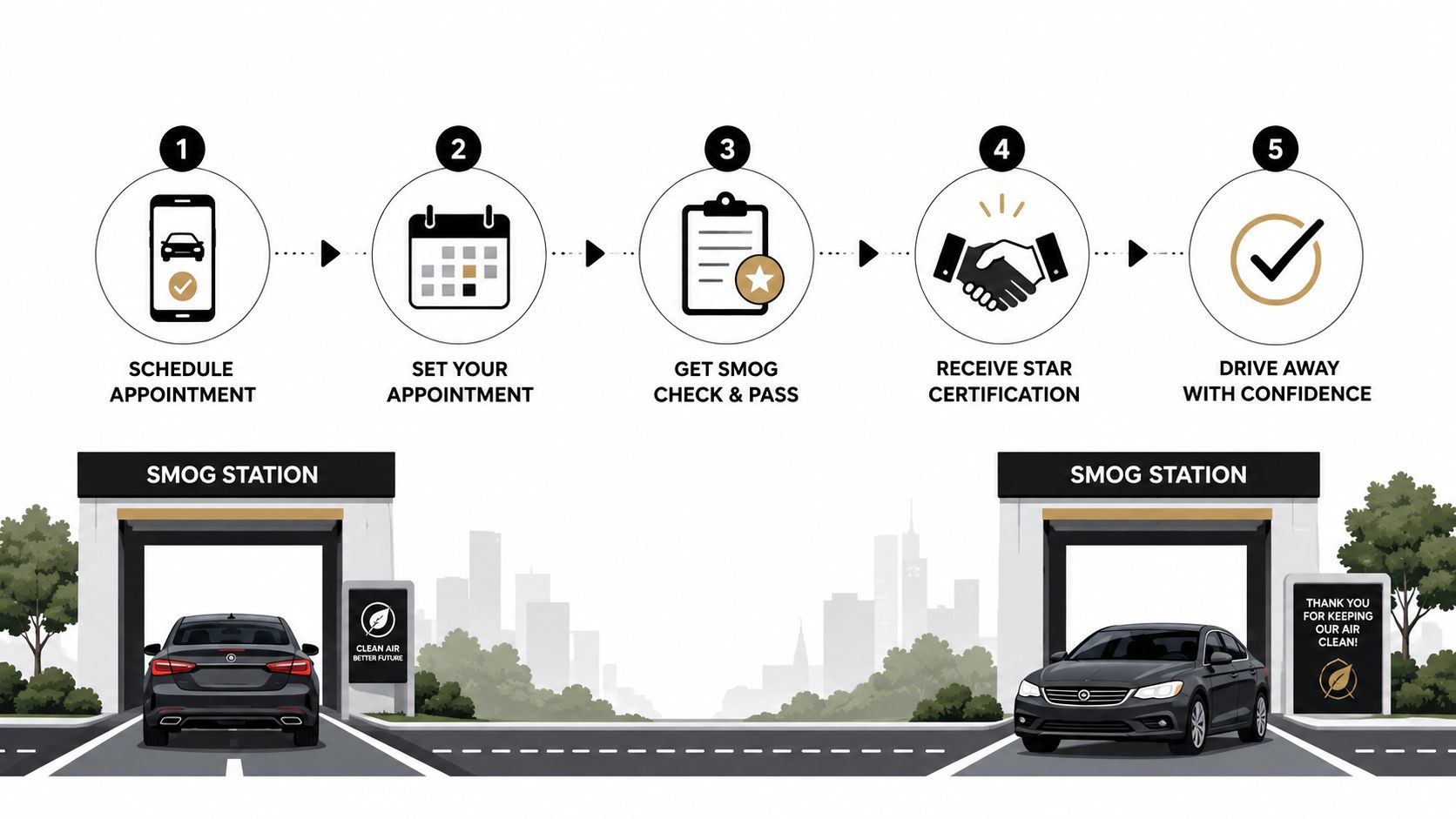
Before handing over the keys, ask, “If it passes, when will the result be uploaded to the DMV?” The answer tells you whether registration can proceed without another paperwork stop.
Use the station's smog check appointment page to set the visit. Booked or walking in, arrive with the confirmed station, the right vehicle information, and the coupon terms already settled. That is how you turn a same-day test into one completed errand.
Why STAR Certification Determines Whether Your Visit Is a One-Stop Errand
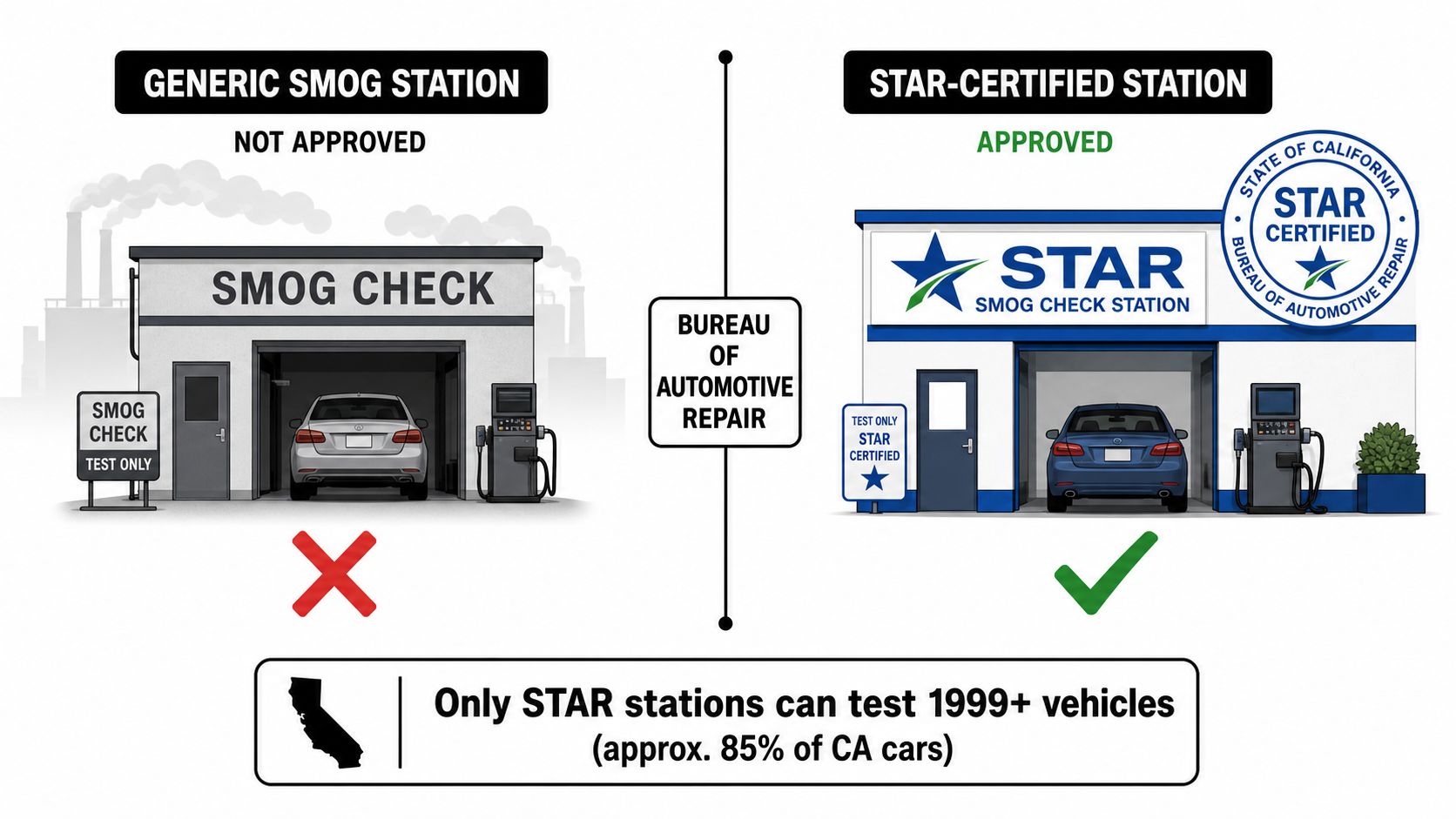
The nearest licensed smog station may not be able to complete your vehicle's required certification. STAR certification is a Bureau of Automotive Repair designation that determines which vehicles a station may inspect. Choosing the wrong station can turn a same-day errand into extra driving, another appointment, and a second wait.
California established the STAR program under Assembly Bill 2289 in 2010, and it began on January 1, 2013, replacing the earlier Gold Shield Program. STAR stations are voluntary BAR-certified test-only or test-and-repair stations that meet higher inspection-based standards. The BAR STAR program information explains the program and its station requirements.
Your DMV renewal notice decides whether STAR service is required. Only STAR stations may inspect directed and gross-polluting vehicles. These can include vehicles that previously failed for high emissions and vehicles California identifies as statistically likely to fail the next test.
The closest station is not necessarily the correct station. Read the notice before you choose the map result.
Read the notice before booking
Look for instructions stating that the vehicle must be tested at a STAR station. If that language appears, a non-STAR shop cannot complete the required certification, even if it has an open bay and advertises same-day service. Call before leaving home and confirm that the station accepts your vehicle and handles the required procedure.
STAR status does not create a different emissions test for the driver. It confirms that the station meets the program's requirements and can inspect vehicles directed into the STAR network. A STAR test-only station performs inspections. A STAR test-and-repair station may also repair vehicles, subject to its licensing and operating scope.
The label “STAR Test-Only” matters after a failure. If you want diagnosis or repairs at the same location, ask what the station performs. A test-only shop may require a second stop, while a test-and-repair shop may keep the work in one visit. Read what a Smog STAR station is before choosing based only on distance.
Speedy Smog in San Leandro is identified by the publisher as a STAR Certified station serving newer vehicles, older vehicles, diesels, and hybrids. Confirm the exact vehicle procedure and current availability by phone. Use this diagram comparing a generic smog station with a STAR-certified station to see why the station's certification can determine whether your errand ends in one stop or stretches into three.
Preparing Your Car the Day Before the Test
If you replaced the battery or cleared a code recently, postpone the test when possible. That work can leave readiness monitors incomplete, and the vehicle may not produce a valid result. Drive it through normal conditions before the appointment so the monitors can reset. Check the BAR inspection guidance for the applicable preparation requirements.
A check-engine light must be off before you arrive. Do not disconnect the battery or erase codes to hide it. Clearing codes also erases inspection data and can leave monitors not ready. The technician can identify that condition, but the station cannot create a passing result.
Use the morning drive wisely
Start the day with enough driving to bring the engine and emissions system to operating temperature. A short trip from a cold start is poor preparation when you can plan a longer drive first. Warm-up driving helps a properly functioning vehicle arrive ready, but it will not repair a failed sensor, persistent warning light, visible smoke, or unauthorized software.
Older vehicles deserve a closer check. Look for exhaust leaks, loose emissions equipment, and obvious vacuum problems. A visual inspection can find missing, disconnected, or altered components even when the car drives normally.
Tape this checklist to the steering wheel:
- Battery history: Do not test immediately after battery replacement or code clearing.
- Warning lights: The check-engine light must be off before arrival.
- Monitor readiness: Drive the vehicle sufficiently after emissions-related work.
- Smoke and exhaust: Address visible smoke or an obviously damaged exhaust.
- Software and equipment: Keep emissions controls and approved software intact.
- Vehicle information: Have the DMV notice and registration details ready.
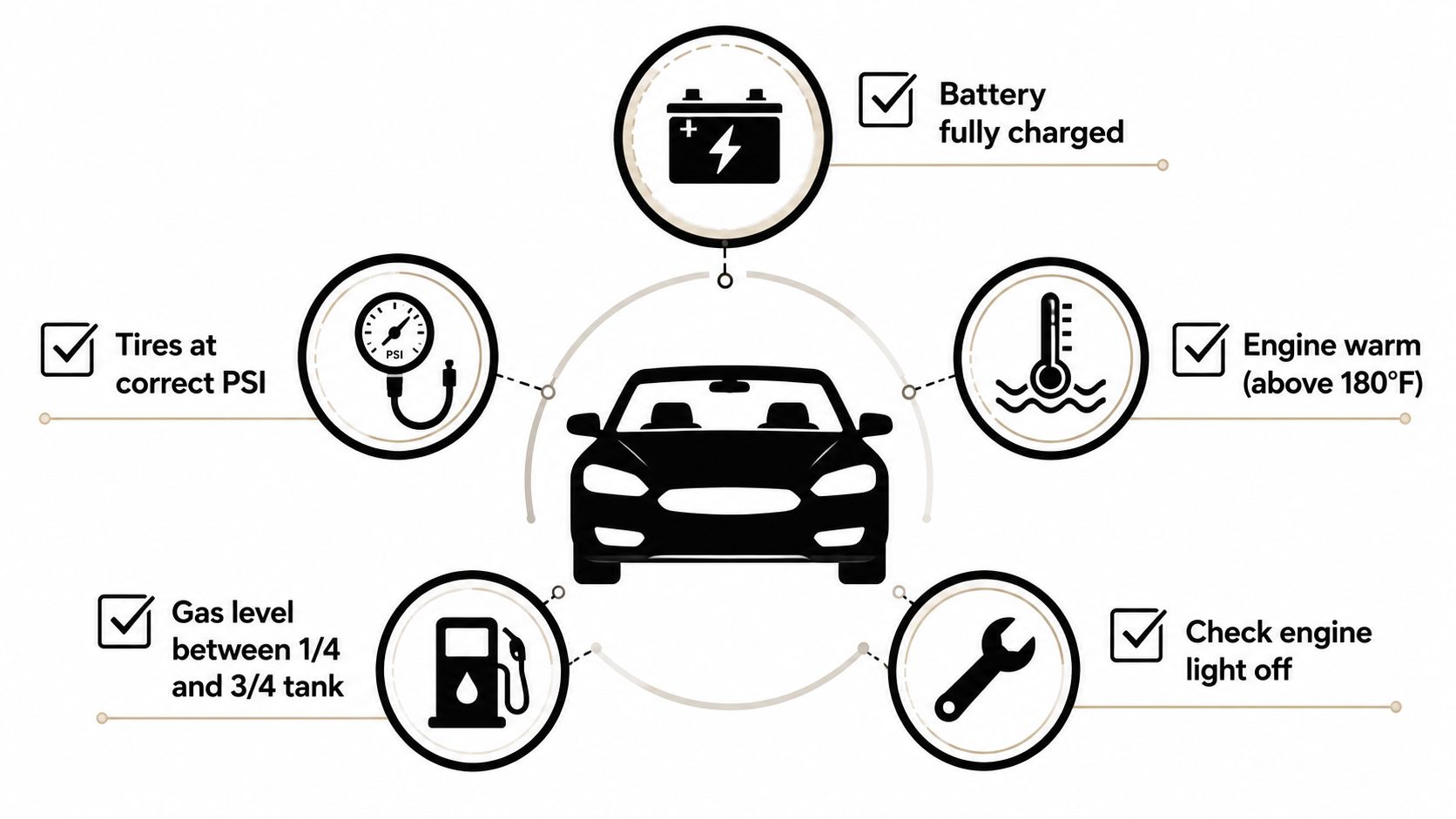
For a visual walkthrough of preparation and inspection considerations, watch the video below.
Do this preparation the day before, not in the station's parking lot. A warm engine can support a ready vehicle, but it cannot turn an unresolved emissions fault into a pass.
Pricing, Coupons, and What a Smooth Visit Looks Like
The quoted test price can hide the items that change your final bill. Ask whether it includes the inspection, required state charges, the OBD or dynamometer portion, certificate processing, and any facility fee. Also ask about re-test charges. A cheap headline price is useful only when the station states the complete out-the-door total.
Use a direct phone script: “For my vehicle, what is the total price today, including all fees, and what would I pay if it fails?” Give the year, fuel type, and notice language. If the answer is vague, call another station. Unclear pricing often creates the same wasted errand as choosing the wrong test location.
Coupons can lower the bill, but verify the offer before driving over. Confirm the expiration terms, eligible vehicle types, and whether the discount applies to a test-only visit or a repair-and-retest situation. Search results can display outdated offers, so have the station confirm the coupon and the final price.
What the visit should feel like
A well-run visit follows a predictable rhythm. You provide the vehicle information, complete the paperwork, hand over the keys, and wait while the technician performs the required visual and emissions checks. For a 2000-and-newer vehicle, the OBD connection is central to the inspection.
The vehicle may need a dynamometer procedure depending on its test path. After the inspection, the result is recorded and the certificate or electronic submission is handled. Ask when the DMV record will update before leaving, especially if registration timing depends on that submission.
A clean waiting room, Wi-Fi, restrooms, and a clear view of the service area make a short lunch-break visit easier to manage. They do not replace correct station certification or vehicle eligibility, but they improve the time spent waiting.
| Vehicle Type | Typical Price Range | Includes Re-Test? | Typical Visit Time |
|---|---|---|---|
| Newer passenger vehicle | Ask station for current quote | Confirm before testing | About 20 to 30 minutes for a straightforward visit |
| Older passenger vehicle | Ask station for current quote | Confirm before testing | Depends on the required tailpipe and visual procedures |
| Diesel vehicle | Ask station for current quote | Confirm before testing | Depends on the diesel inspection sequence |
| Hybrid vehicle | Ask station for current quote | Confirm before testing | Confirm the applicable procedure with the station |
I won't invent a price range for your vehicle. California fees, station pricing, vehicle type, and any coupon can change the final amount. Call with the year, fuel type, and notice language, then confirm the complete out-the-door price before authorizing the test.
Your One-Trip Smog Checklist
Does your renewal notice say STAR required or identify a directed vehicle? If yes, a non-STAR station can waste the entire visit. Confirm that requirement before searching for a same-day appointment. If the notice is unclear, check the vehicle's DMV history by VIN or license plate before you leave home.
Use the result you need to choose the station:
- STAR required: book only with a STAR-certified station.
- No STAR direction: confirm whether the station can test your vehicle and submit the result.
- Uncertain vehicle eligibility: provide the exact year, fuel type, and notice wording by phone.
- Recent battery disconnection or code clearing: ask whether the readiness monitors are likely to be complete before testing.
- Check-engine light on: arrange diagnosis first rather than spending the test fee on a predictable failure.
A call should answer more than “Are you open today?” Ask whether the station accepts your vehicle, has the required STAR status, can take you within your arrival window, charges for a re-test, and submits the result electronically. A vague answer about eligibility, an unclear total price, or no confirmation of the upload process is a reason to call another station.
Pack the DMV notice, registration information, payment method, and any prior test or repair records. Bring a vehicle that has been driven enough after recent work for its readiness monitors to reset. Keep the route simple, leave time for traffic, and arrive during the window the station confirmed. The goal is one complete errand, not merely a short inspection followed by another drive across town.
The 2025 BAR Smog Check Executive Summary Report records different initial failure rates for STAR Test-Only and STAR Test-and-Repair stations. Those figures do not predict your result, but they support a practical rule: if the DMV directs your vehicle to STAR, preparation and correct station selection matter. Review the 2025 BAR Smog Check Executive Summary Report for the reported program figures.
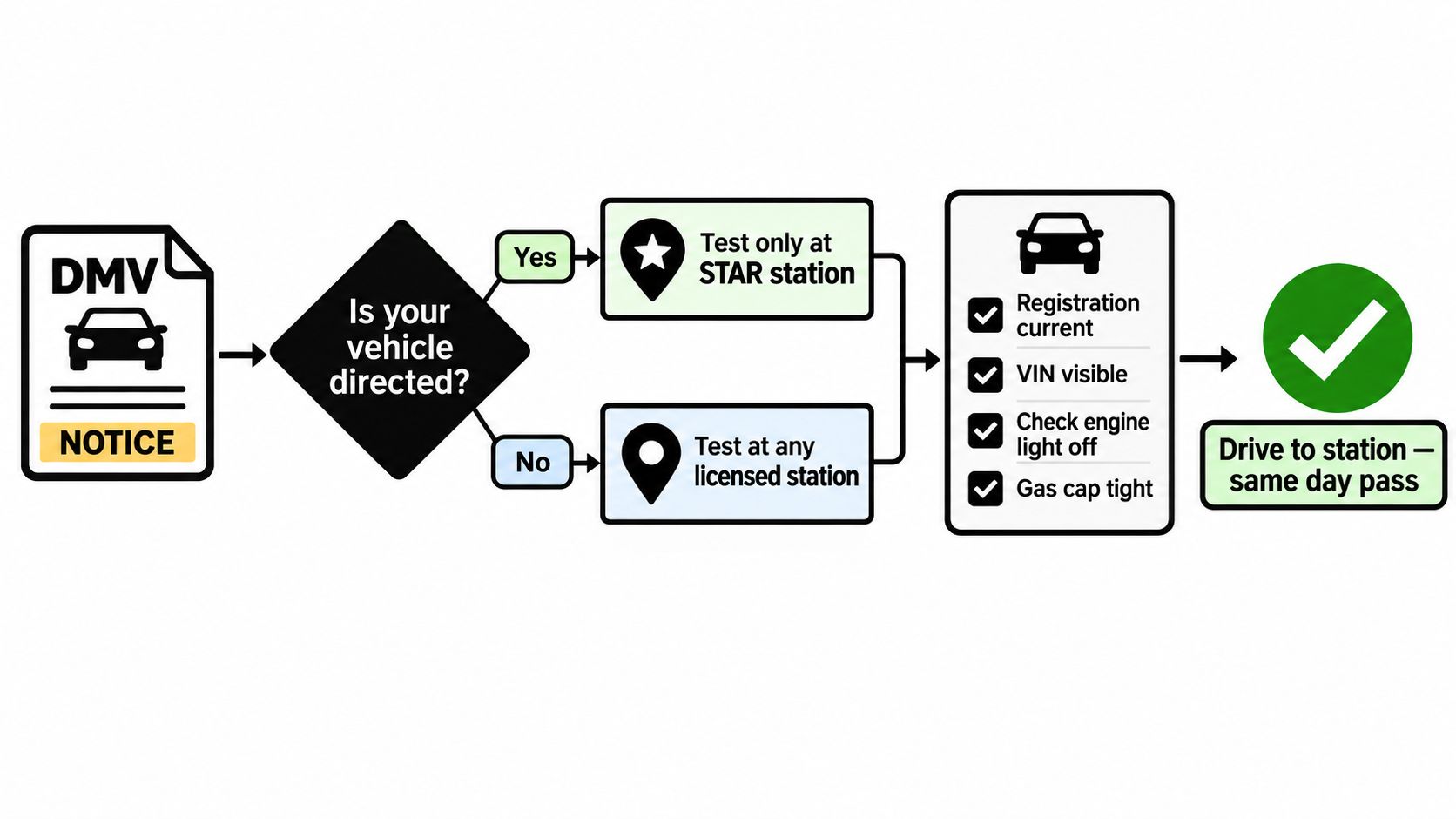
For East Bay drivers, call Speedy Smog at (510) 555-0188 with the vehicle year, fuel type, and notice language. Confirm STAR status, eligibility, arrival time, current price, and result-upload timing before driving over. That conversation prevents the most expensive delay, a visit to a station that cannot complete your test.
Speedy Smog provides STAR-certified smog inspections in San Leandro for qualifying newer and older vehicles, diesels, and hybrids, with same-day planning during operating hours. Call (510) 555-0188 to confirm the applicable procedure and availability, then visit Speedy Smog with the paperwork and a prepared vehicle.