
Speedy Smog Check Appointment: An East Bay Driver’s Guide
Your registration renewal is sitting open on the counter, and somewhere on that notice you spotted the words that send a lot of East Bay drivers into the same spiral: smog check required. Usually the first questions are practical, not technical. Do you need a smog check appointment, or can you just show up? How long is this going to take? What happens if the notice says STAR station required?
The good news is that the process is a lot more routine than it feels the first time. Once you know what the DMV is asking for, what the station checks, and how to show up prepared, the whole visit becomes simple.
Table of Contents
- Why You Received That DMV Smog Check Notice
- Booking Your Appointment Or Just Walking In
- How to Prepare Your Vehicle for a Fast Pass
- Your 15 Minute Smog Check Experience at Speedy Smog
- Passed Or Failed What Happens Next
- Answers to Your Top East Bay Smog Questions
Why You Received That DMV Smog Check Notice
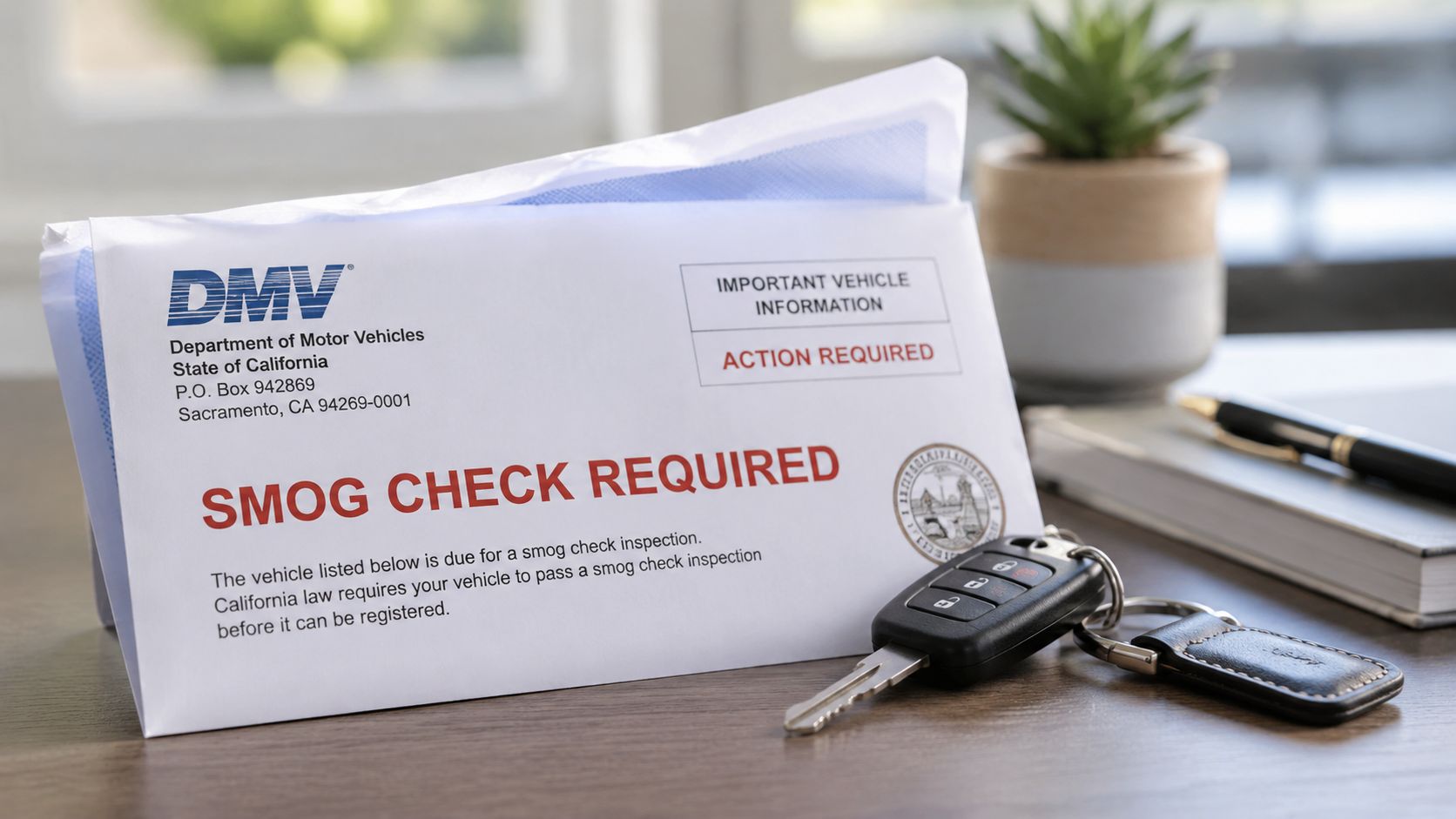
You open your registration notice, see “smog check required,” and the first question is usually the practical one. Do you need this now, or can it wait?
That notice means your registration hit one of the situations where California requires an emissions inspection. For most drivers, it comes up during renewal on the state's regular testing schedule. It can also come up during a vehicle sale or transfer, especially when the transaction is outside the immediate family.
Who usually needs a smog check
For registration renewal, California generally requires testing every other year once the vehicle reaches the point where it enters the smog program. A newer vehicle may go years without needing one, then the notice shows up and the timing feels sudden.
A change of ownership is another common trigger. If you are buying or selling a car, the smog certificate is often part of closing out the paperwork correctly.
Read the notice closely. That is the fastest way to avoid wasting time at the wrong station. In the shop, I tell customers to check one line first: whether the DMV is asking for a routine smog check or a STAR-certified station.
What the State Requires
The process is more routine than it sounds. The inspection is designed to confirm that the vehicle's emissions systems are functioning as required, and the test method depends on the vehicle. Newer cars usually go through an on-board diagnostics check. Older vehicles may need a different inspection method.
The price has two parts, and that is where confusion starts. The certificate fee on a passing test is set by the state. The shop's testing charge varies by vehicle and location. At Speedy Smog, East Bay drivers usually care less about the pricing breakdown than the total time to get compliant, which is fair. The trade-off is simple. A low advertised test price does not help much if you end up waiting, or if your notice requires STAR service and the station cannot complete it.
If your DMV notice is in hand, treat it like a registration task with a deadline. Bring the vehicle to a station that can perform the correct test the first time. In the East Bay, that usually means choosing a shop that handles walk-ins quickly, knows STAR requirements, and can get your result submitted without extra back-and-forth.
Booking Your Appointment Or Just Walking In
You get the DMV notice on a Tuesday, check your calendar, and realize you have one open window before the registration deadline. That is usually when the main question comes up. Should you lock in a smog check appointment, or just stop by and get it handled?
Around the East Bay, both options are common. The better choice comes down to time pressure, your vehicle requirement, and how much uncertainty you can tolerate that day. If the notice says STAR, that narrows the field right away. If your schedule is flexible and the car is ready, a walk-in can be the fastest path.
Why drivers get mixed messages
A lot of the confusion comes from how shops operate. Some run almost entirely on appointments. Others are built to move walk-ins through quickly. Drivers end up hearing both answers and assume there must be one rule for everyone.
There is not.
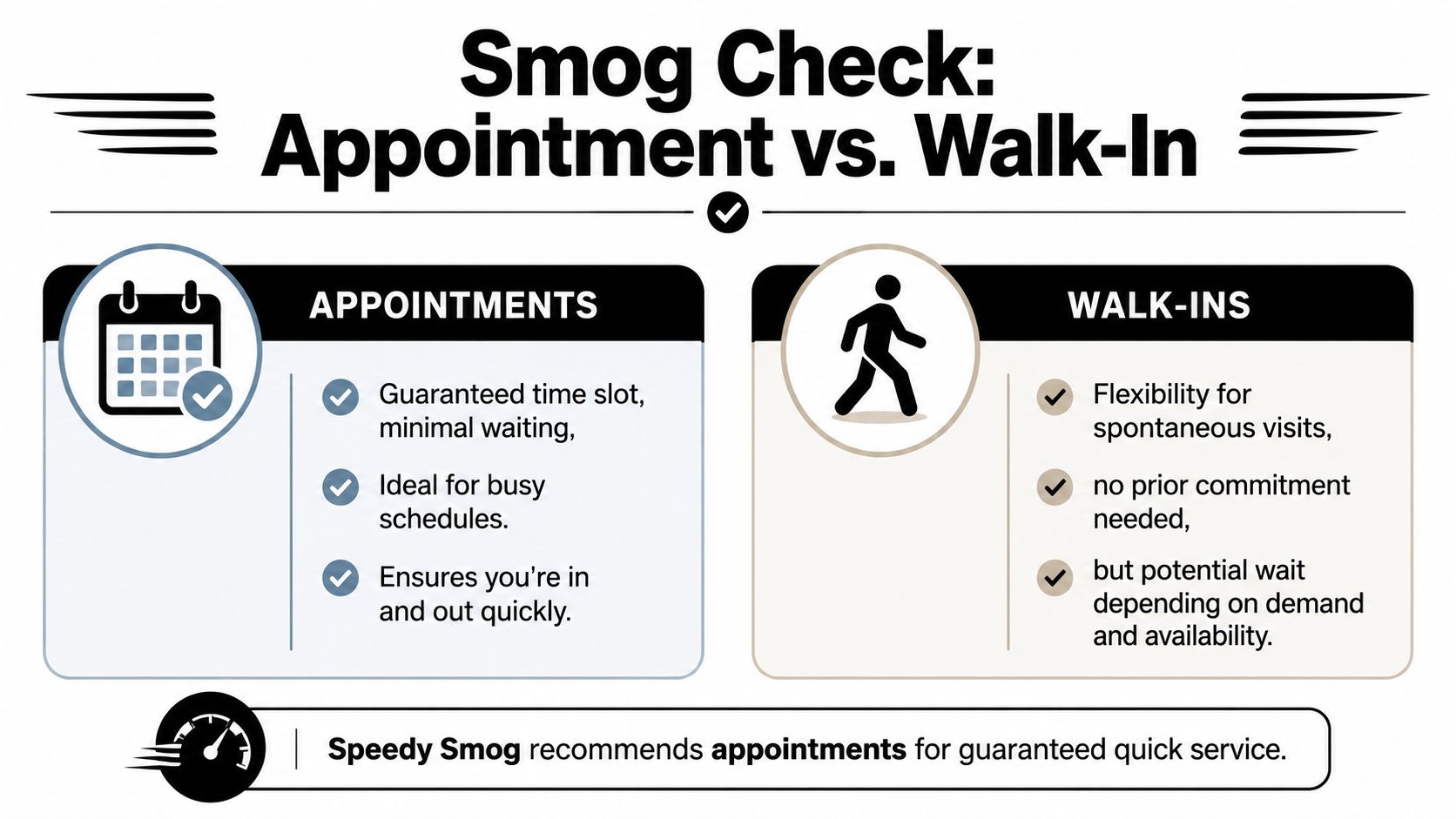
What matters is getting to a station that can perform the test your notice requires, within the time you have available. For East Bay drivers, that usually means choosing based on speed and fit, not habit. A shop that handles STAR inspections, answers the phone, and keeps walk-ins moving will save more time than chasing the lowest posted price.
When an appointment makes sense
Book a time if you need control over the day.
That is the practical answer I give customers with a tight lunch break, school pickup, or a registration deadline that is close enough to matter. An appointment reduces guesswork. You know when to arrive, and you are less likely to spend the morning calling around.
An appointment is the better move when:
- Your deadline is coming up soon
- Your notice requires a STAR-certified station
- You need the visit to fit into a narrow time block
- You want to confirm pricing or ask about a coupon before you leave
If you are the kind of driver who wants the errand done in one shot, booking ahead is usually worth it.
When a walk-in works well
Walk-ins make sense when your day opens up and the car is ready to go. That is a big part of how many East Bay drivers handle smog. They are already out running errands, they have the notice in the glove box, and they want the shortest path to compliance.
A walk-in works well if:
- You are nearby already
- Your schedule can absorb a brief wait
- You have confirmed the station can perform your required test
- You want to use an open part of the day instead of planning around a set time
At Speedy Smog in San Leandro, many customers choose this route because the shop is set up for quick walk-in service, while still handling STAR-certified inspections for drivers who need them. That combination matters. It lets you keep the process simple without gambling on whether the station can complete the job.
If your goal is speed, start with the station type your notice requires. Then pick the option that gets you in and out with the least friction that day.
My rule of thumb is simple. If the clock is tight, book it. If the car is ready and you are already in the area, walking in can be the faster choice.
How to Prepare Your Vehicle for a Fast Pass
Most smog delays don't happen in the bay. They start before the driver leaves home. A little prep makes the visit smoother and lowers the chance of wasting a trip.
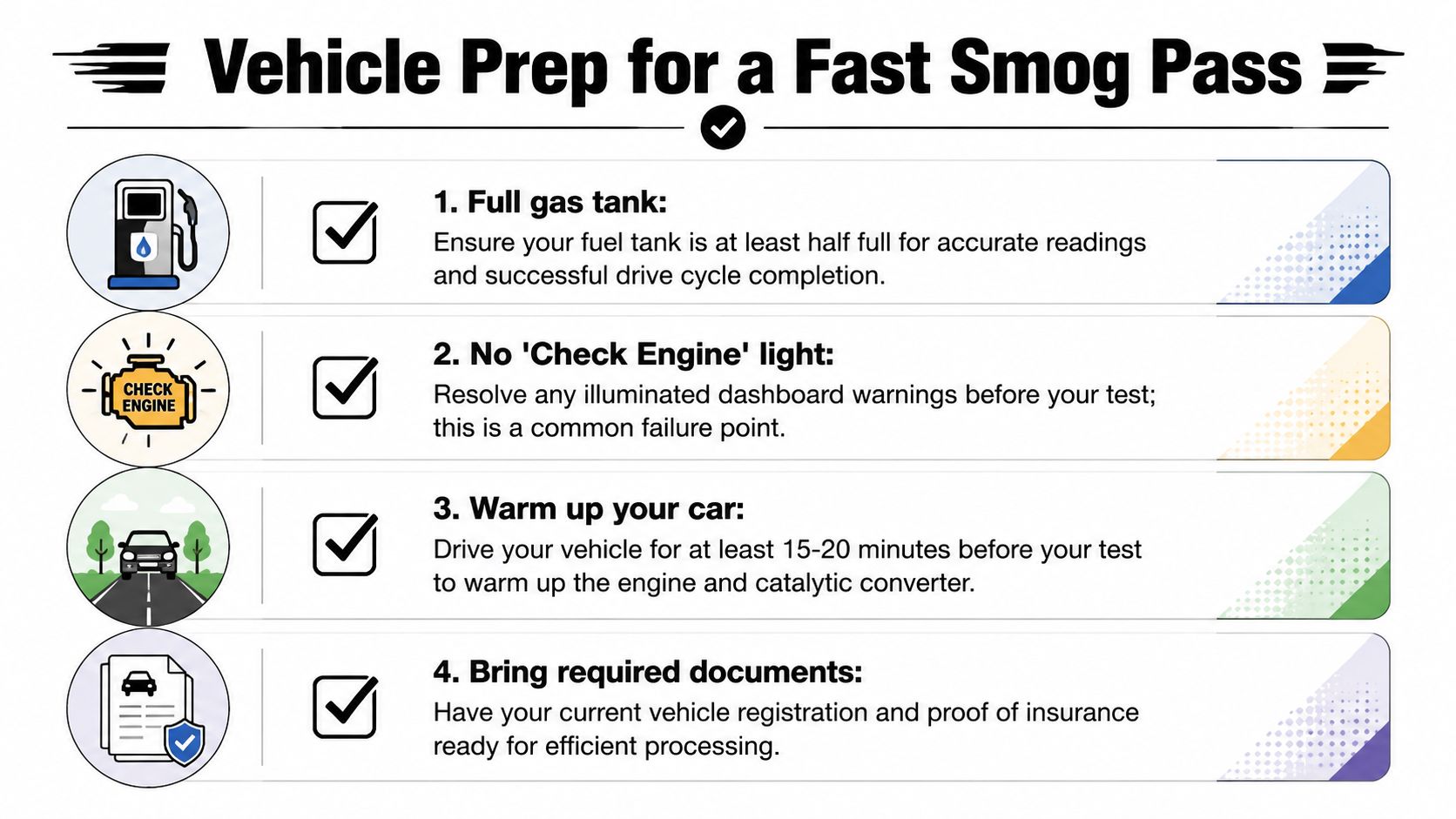
Do these checks before you leave home
Start with the obvious dashboard issue. If the Check Engine light is on, deal with that first. An active warning light is one of the most common reasons a vehicle doesn't clear inspection.
Then focus on simple readiness:
- Warm up the car: Drive it for a bit before you arrive so the engine and emissions components are at normal operating condition.
- Don't arrive right after a dead battery situation: If the battery was recently disconnected or replaced, some vehicles need normal driving before all monitor systems are ready again.
- Check basic fluid and maintenance items: You're not trying to tune the whole car in the parking lot. You're just avoiding preventable problems.
- Make sure the gas level isn't extremely low: It helps to arrive with a normal fuel level instead of running on fumes.
A prepared car usually moves through the inspection without surprises. An unprepared one turns a quick errand into a second trip.
Bring the right paperwork
Don't rely on memory at the counter. Have your documents with you.
Bring these items if you have them available:
- DMV renewal notice: This helps confirm what kind of test the state is asking for.
- Current registration: Useful for verifying vehicle information quickly.
- Driver's license: Always a smart thing to have with you for any registration-related task.
- Insurance information if you keep it handy: Some drivers like having all vehicle paperwork together in one place.
The practical goal is simple. Show up with a warmed-up vehicle, no active warning lights, and the paperwork already in your hand. That's what makes a smog check appointment feel fast instead of annoying.
Your 15 Minute Smog Check Experience at Speedy Smog
A lot of drivers expect a smog visit to drag. Most of the time, it doesn't.
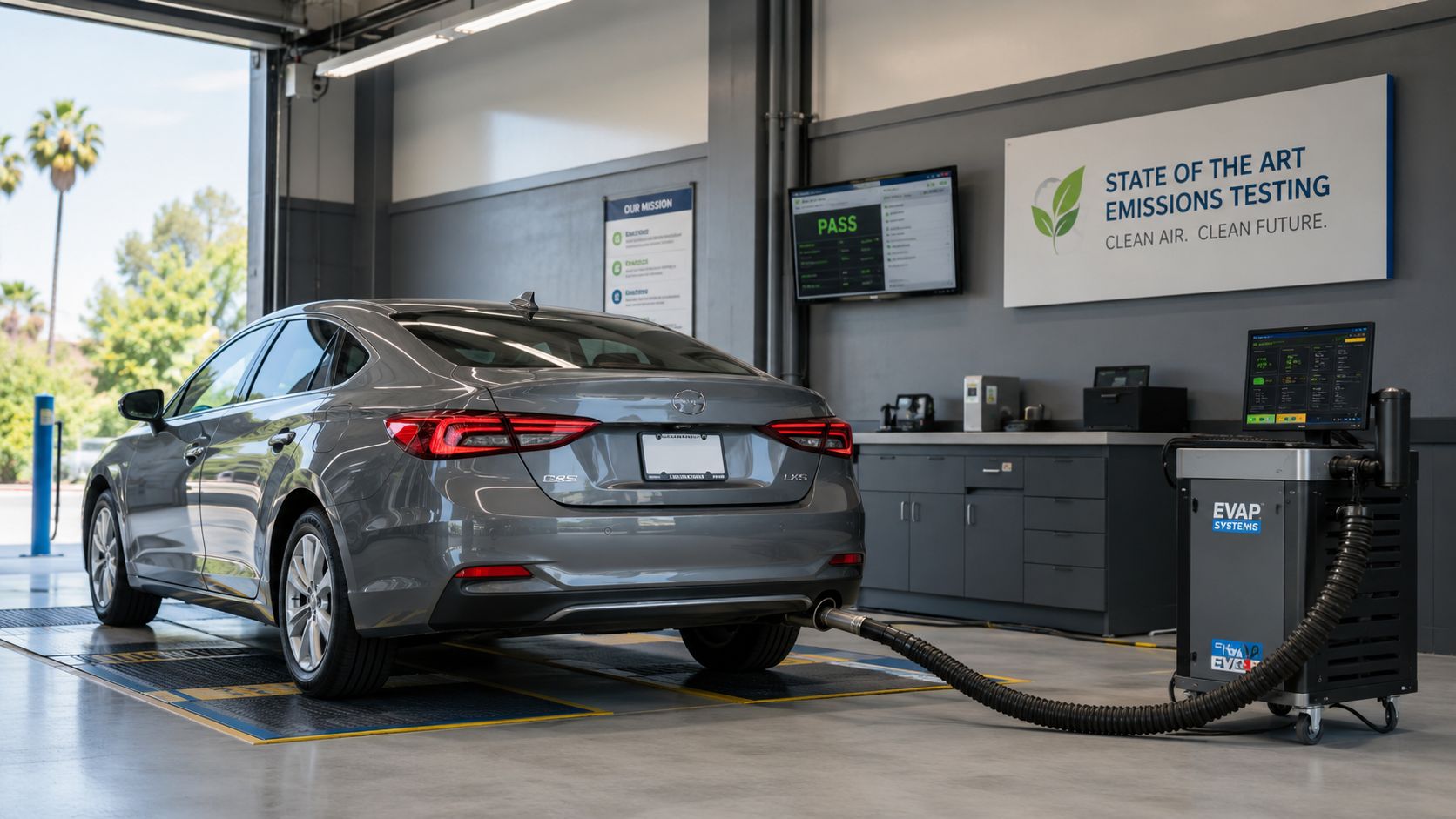
California smog inspections are fairly standardized. Most are completed within 20 to 30 minutes, and some STAR-certified stations advertise faster service for 2000 and newer vehicles in as little as 10 to 15 minutes. The same source notes that over 80% of vehicles pass on the first attempt at qualified stations, which is why the process is usually predictable rather than dramatic, according to the California smog testing FAQ from a STAR station.
What happens when you pull in
The check-in part should be brief. The technician confirms the vehicle information, reviews any DMV requirement tied to your visit, and gets the car into position for testing.
After that, the inspection follows the state process. For newer vehicles, that usually means plugging into the car's onboard diagnostic system and confirming emissions-related readiness and fault status. For older vehicles, the procedure can involve different testing steps based on the model year and setup.
Inside the shop, the experience is usually a lot calmer than people expect. You're not sitting through a repair consultation or waiting for a sales pitch. You're waiting for a test result.
Here's a look at the process in action:
Why STAR certification matters
If your notice says STAR station required, that part isn't optional. You need a station that meets the state's higher performance standard for certain inspections.
For East Bay drivers trying to keep the visit short, that detail matters because choosing the wrong shop creates the most frustrating delay of all. You drive there, wait, and then find out the station can't process the test you need.
A smoother visit usually comes down to a few practical choices:
| Situation | What works | What doesn't |
|---|---|---|
| Routine renewal | Arrive with paperwork ready and the car warmed up | Showing up with no notice and guessing about requirements |
| STAR notice | Confirm STAR capability before the visit | Assuming every station can handle it |
| Tight schedule | Use a reserved time or come during an open window in your day | Waiting until the registration deadline is already on top of you |
One detail customers appreciate at this shop is that the visit stays focused. For many 2000 and newer vehicles, the test is handled in about 10 to 15 minutes, there's an indoor waiting room, and newer-vehicle smog coupons may be available, including periodic $25-off offers described in the publisher information for this article.
Passed Or Failed What Happens Next
Once the test is done, the report tells you what to do next. There are only two paths, and neither one needs to feel mysterious.
If your vehicle passes
A passing result is the easy outcome. The certificate is transmitted electronically to the DMV, so you usually don't need to carry extra paperwork across town to prove compliance.
From there, you finish your registration using the DMV method you prefer. Most drivers just move on with the renewal and don't need any additional action related to the smog portion.
When a car passes, the smog check is basically a completed box on your registration list.
Keep your copy of the report for your records. Even when everything posts correctly, it's useful to have the document if you need to double-check timing or vehicle details later.
If your vehicle doesn't pass
A failed test feels frustrating, but it isn't a punishment. It means the vehicle showed an issue that needs correction before the state can accept the certification.
The next step is diagnosis. That may involve a repair shop identifying why the emissions system, readiness status, or a monitored component didn't meet the standard. Once the underlying problem is fixed, you return for a retest.
A calm approach works better than guessing:
- Read the report first: It points you toward the area that needs attention.
- Fix the cause, not just the symptom: Clearing codes without repairing the issue usually leads to another failed visit.
- Ask about the retest process before leaving: Policies can vary by shop, so it's worth knowing what the return visit looks like.
Most smog failures become manageable once the car gets the right repair. The expensive mistake is rushing into a second test before the vehicle is ready.
Answers to Your Top East Bay Smog Questions
A few questions come up over and over, especially when drivers are juggling commute time, registration dates, and old DMV paperwork.
My registration expires this week. Should I book or walk in
If the deadline is close, choose the option that gets you to a compliant station fastest. If you can reserve a time the same day or next day, that's usually cleaner. If you've suddenly got a free window and the car is ready, a walk-in can make sense.
Don't spend two days comparing shops if the registration clock is already ticking. Pick a station that matches your notice and go.
Do hybrids need a smog check
Some hybrids do require smog testing because the requirement depends on California registration rules, not just whether the vehicle uses gas and electricity together. The mistake is assuming "hybrid" automatically means exempt.
Check the DMV notice first. If the notice says the car needs testing, follow the notice.
What if my notice says STAR station required
Then use a STAR station. That's the whole rule.
Drivers lose time when they focus on convenience first and compliance second. For a STAR notice, reverse that order. Confirm STAR capability before you leave home, then decide whether to make a smog check appointment or walk in.
What if I'm selling the car
Smog can come up during a sale even when the registration renewal isn't due yet. California requires attention to certification in ownership transfers outside the family, and the certification window after a sale is limited. Handle that early so it doesn't slow down the transaction at the last minute.
If you're the seller, don't assume the buyer will figure it out for you. If you're the buyer, don't assume the seller already handled it correctly. Ask directly and verify what's needed before money changes hands.
If you need a straightforward path to compliance in the East Bay, Speedy Smog is a practical place to start. You can check hours, confirm STAR service, look for current coupon details, and decide whether a quick call or a walk-in makes more sense for your schedule.